


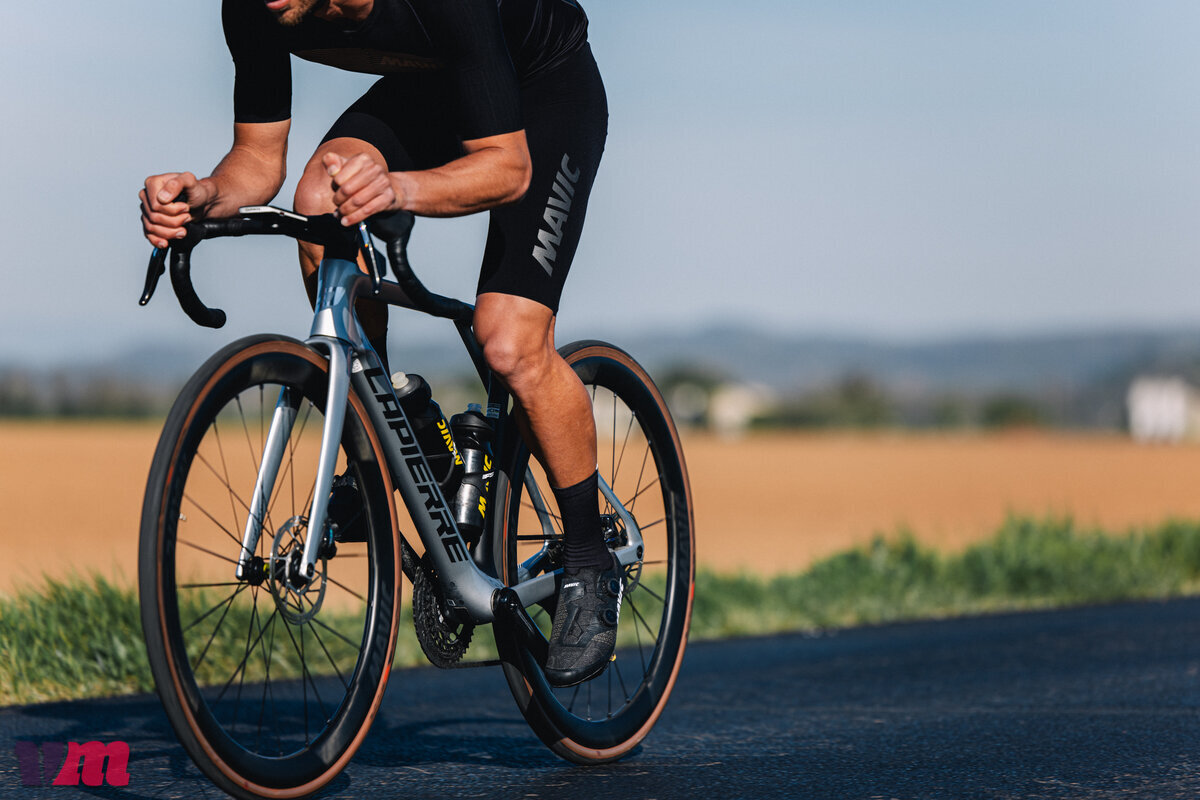
Mavic Cosmic SLR 45 review: France goes on the offensive! With the new Cosmic, the long-established manufacturer presents a wheelset that offers cutting-edge technology while being significantly more attractively priced than its direct predecessor.
Over the past few years, Mavic has gradually modernized its product line, gaining ground on its competitors. The Allroad series has been offering innovative gravel wheels with wide, lightweight aluminum and carbon rims for around years; the Cosmic S series marked a breakthrough in the budget segment: aerodynamic carbon rims, competitive weight, and solid hub technology for under €1000. The French company also covers the €1500 price point with high-quality aero wheels.
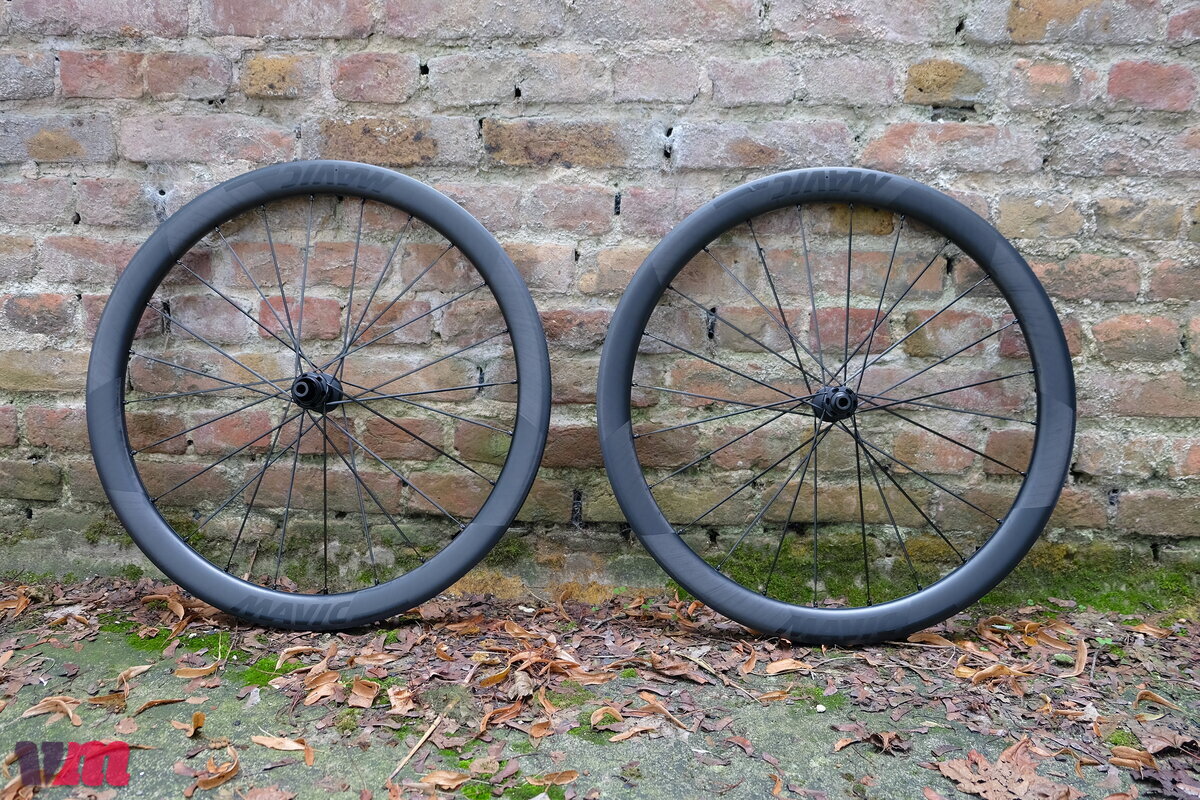
The Mavic Cosmic SLR 45 2026 for 1999 Euro now marks the entry into the premium segment. This wheelset is offered at €250 less than its direct predecessor and offers significant technological advances. Above it, only the ultra-expensive Cosmic Ultimate Disc with laminated spokes, priced at €4449, ranks. It's extremely lightweight, but out of reach for regular cyclists, and with a 19 mm rim width, it's somewhat compromised.
Mavic Cosmic SLR 45: aerodynamically optimized rim for wide racing tires
The new Cosmic SLRs are different: 32 mm maximum width and 23 mm internal width create an interesting picture in several respects. First of all, there's aerodynamics: According to the "105% rule" – established by the industry based on findings from wind tunnel tests – the rim must be 5% wider than the tire. This prevents the airflow from separating from the tire and rim combination too early, which leads to braking turbulence. However, this rule is often impossible to adhere to if modern, wider tires are to be mounted. Especially with hookless rims, the smallest permitted tire width is often larger than the rim width – anyone who values optimal aerodynamics is at a disadvantage in this case.
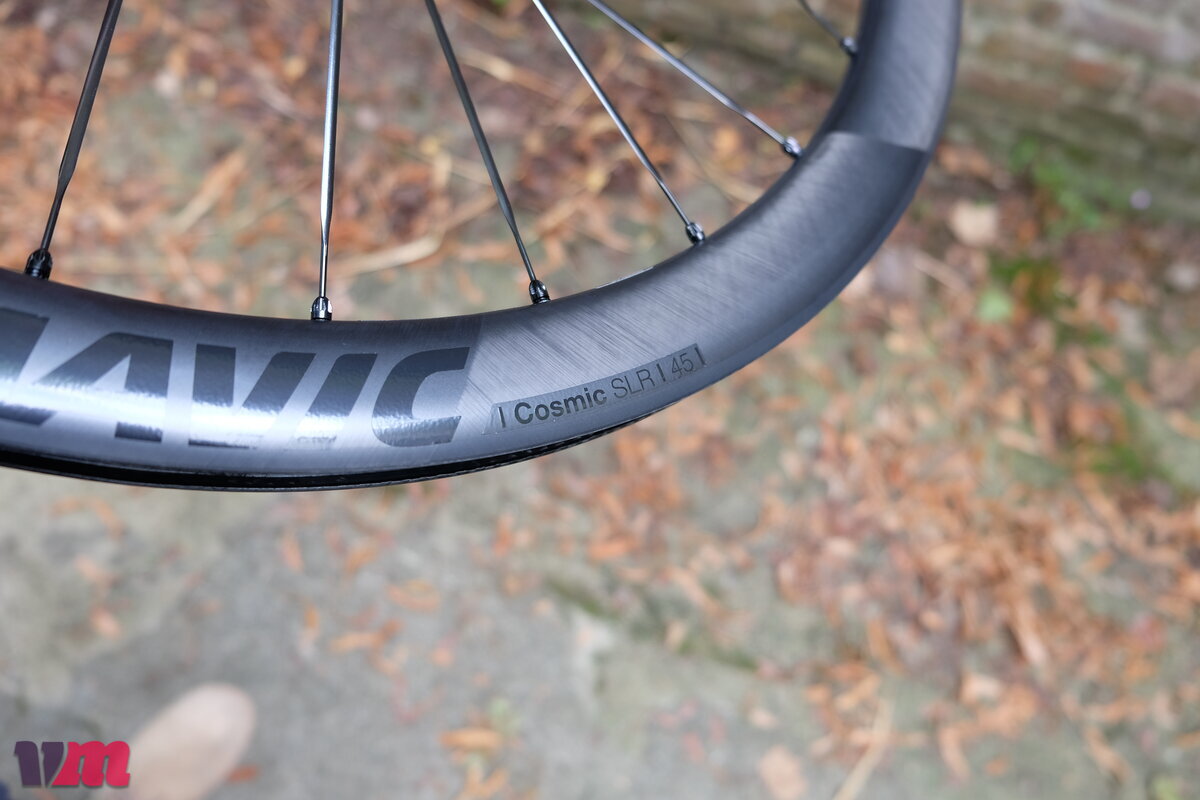
Mavic, on the other hand, does everything right: With the narrowest approved tire (28 mm), the rim-to-tire ratio is even better at 114%, and even with a 30 mm tire, it's very good at 106%. This assumes, of course, that the tire is already optimized for an internal width of 23 mm and is no wider than indicated on its sidewall. The large internal width also ensures a snug fit of the tire in the rim, providing high stability even at relatively low air pressure. So, if you're riding on poor roads, you can reduce the pressure to absorb shocks without the tires feeling spongy.
Low weight despite wide design
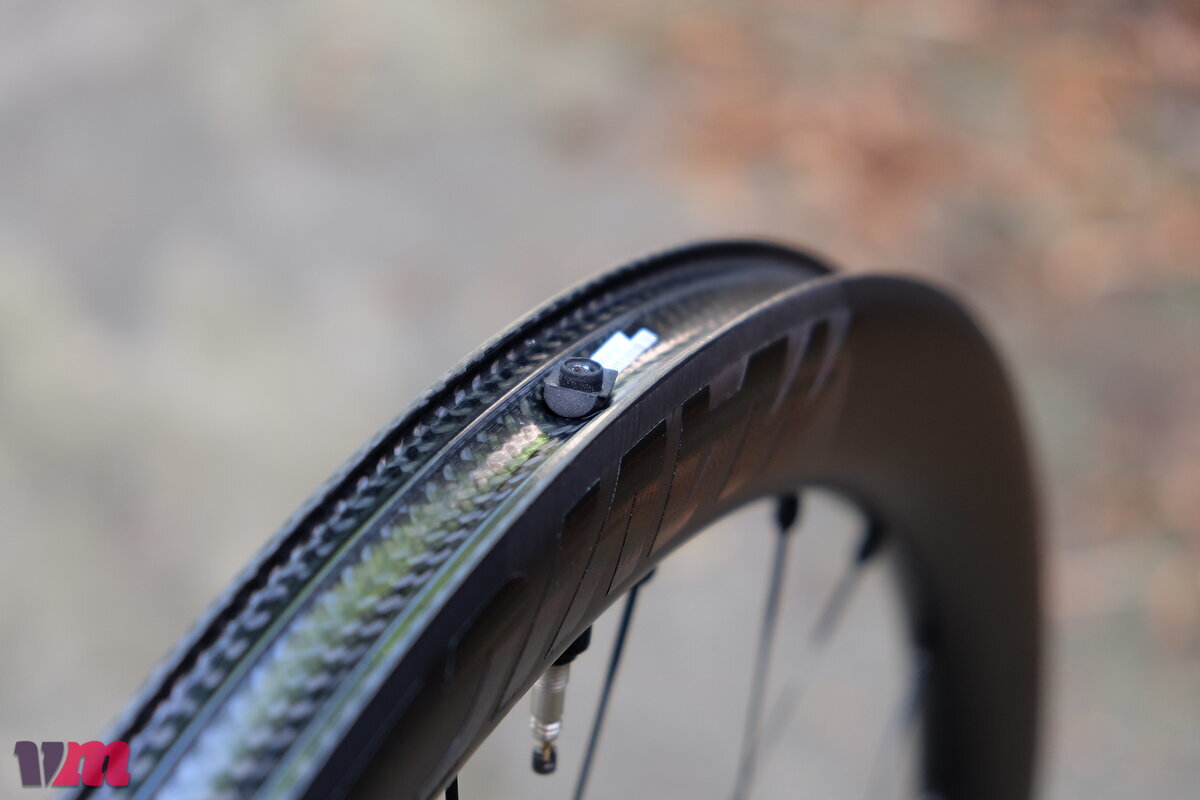
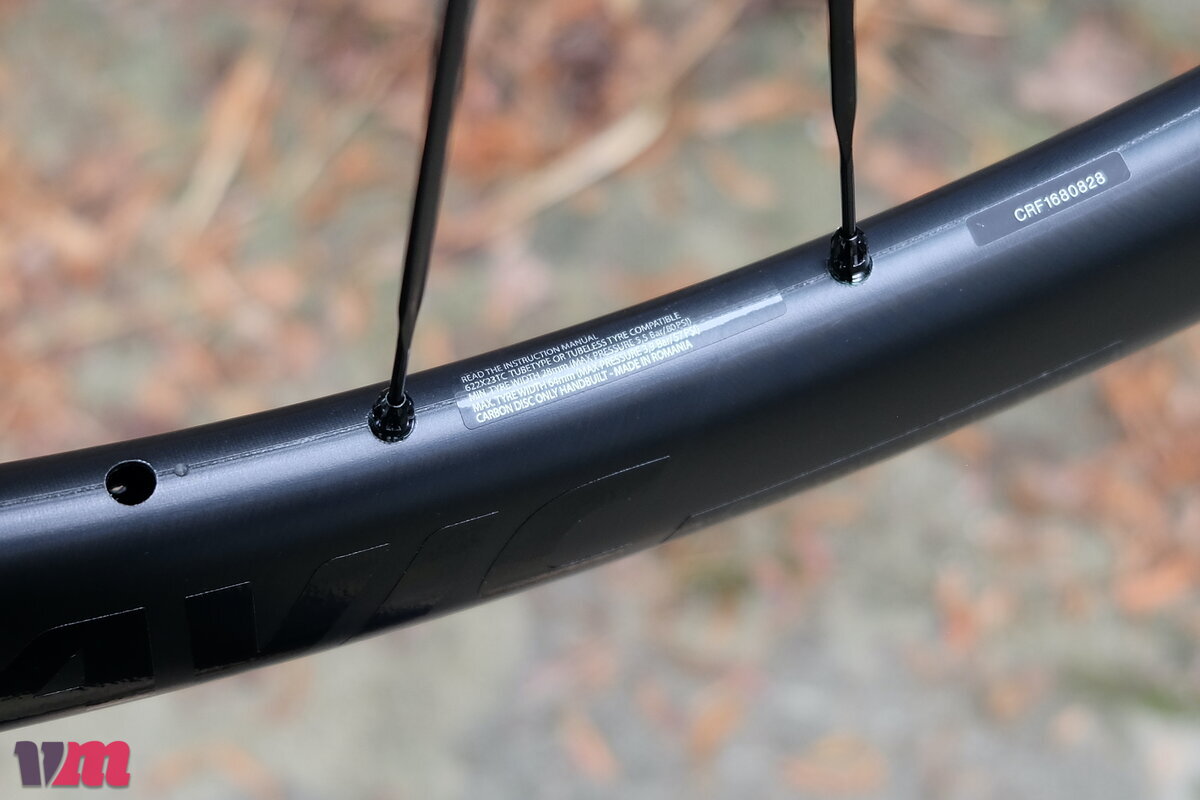
Whether the 105% rule is relevant outside of elite sport remains to be seen – in any case, it's good to know that a wheelset in this price range theoretically has the potential for optimal aerodynamics. Especially if it doesn't require any compromises elsewhere, such as weight. The test sample adheres to the weight specification down to the gram, with 683 grams for the front wheel and 797 grams for the rear wheel – together, exactly 1.480 Grams. Rim tape doesn't need to be included: As is typical with Mavic's top models, the rim bed is undrilled; the spoke nipples are screwed into laminated aluminum threaded inserts.
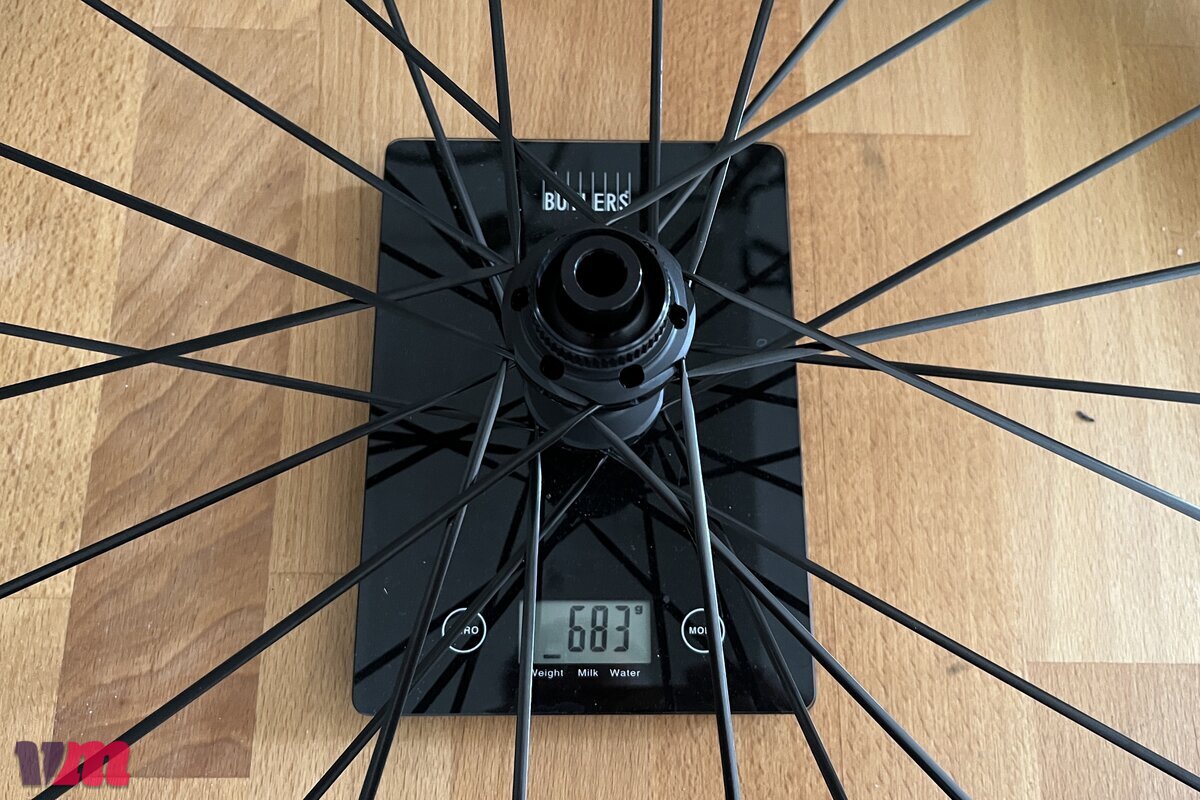
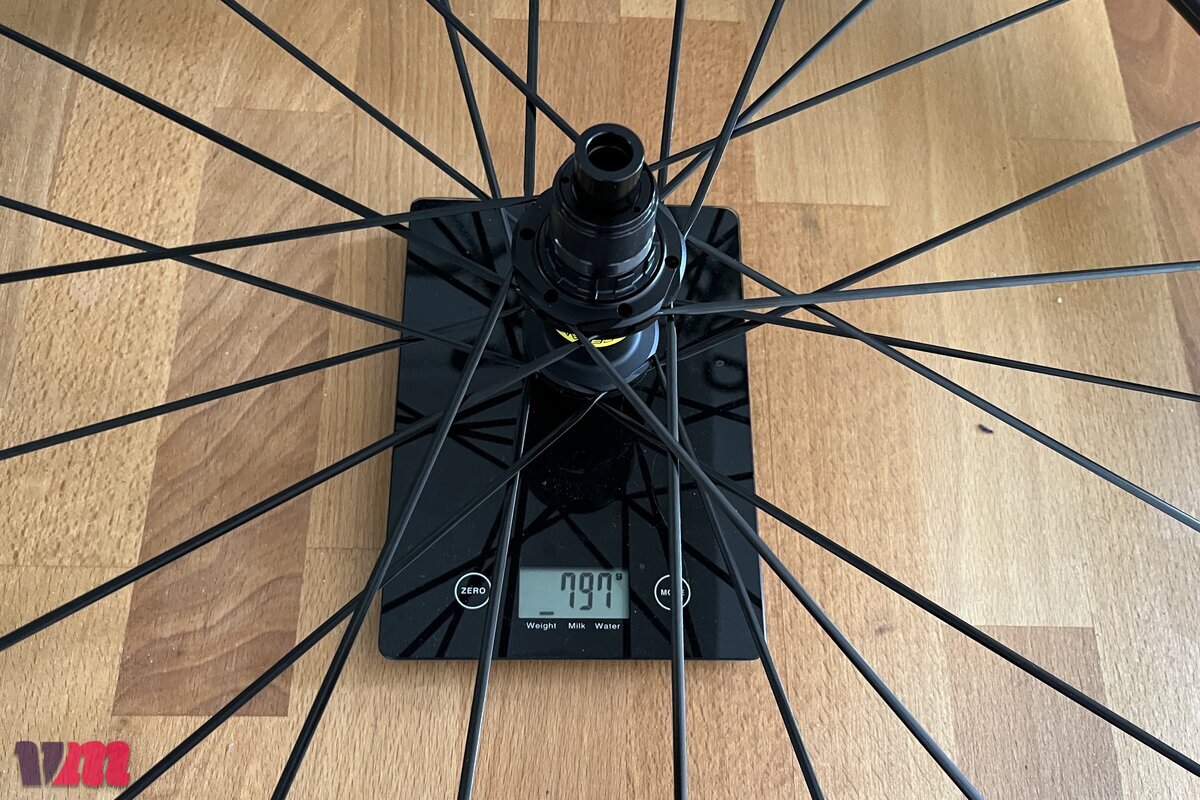
This makes the wheelset ideal for tubeless installation. The 30 mm wide Pirelli P-Zero TLR tires used by Velomotion can only be installed with tire levers and some force, but they are immediately airtight and run true right away. However, at 31,6 and 31,8 mm, the tires are slightly wider than the nominal size—strictly adhering to the 105% rule requires a narrower tire. Preferably one that weighs slightly less than the approximately 340 gram Pirelli, so the Mavic Cosmic's low weight can be fully utilized.
But even under less than optimal conditions, the wheelset makes a very good impression right away. When accelerating, the perceived high stiffness is noticeable; when pedaling out of the saddle, the wheelset is pleasantly manageable due to its low mass.
No touch = no noise
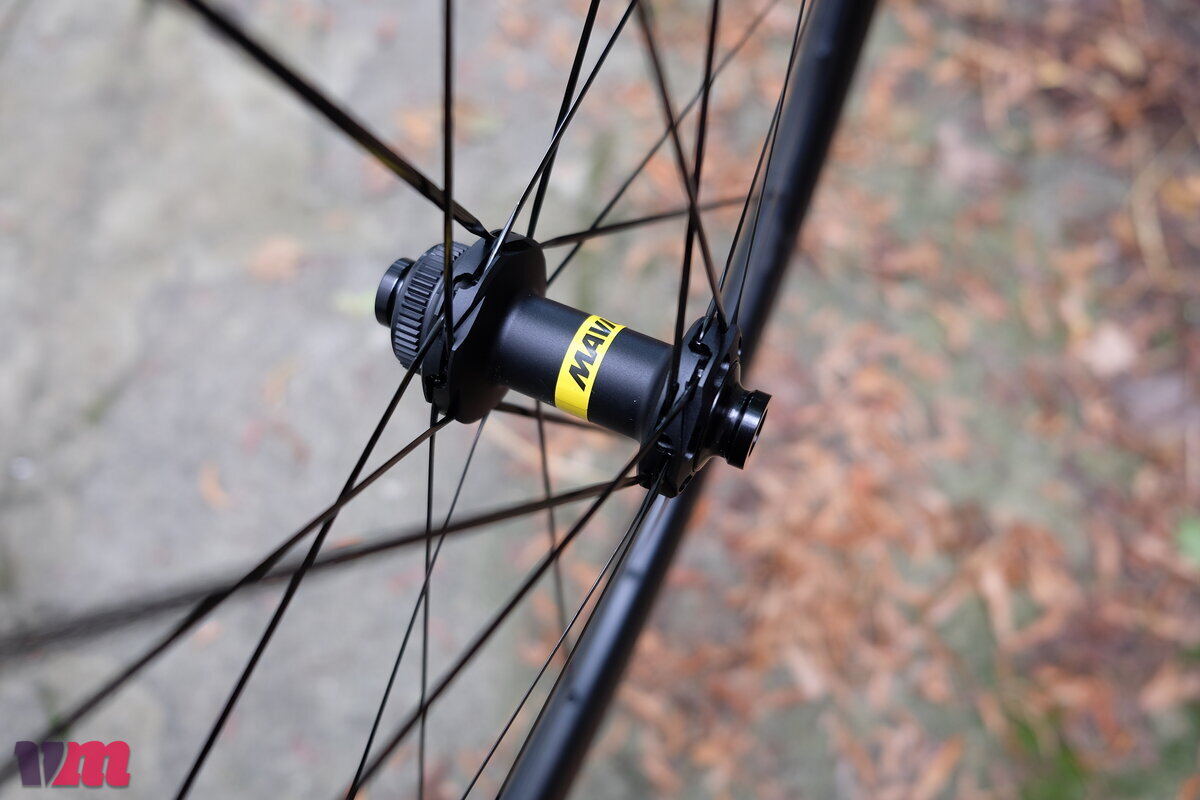
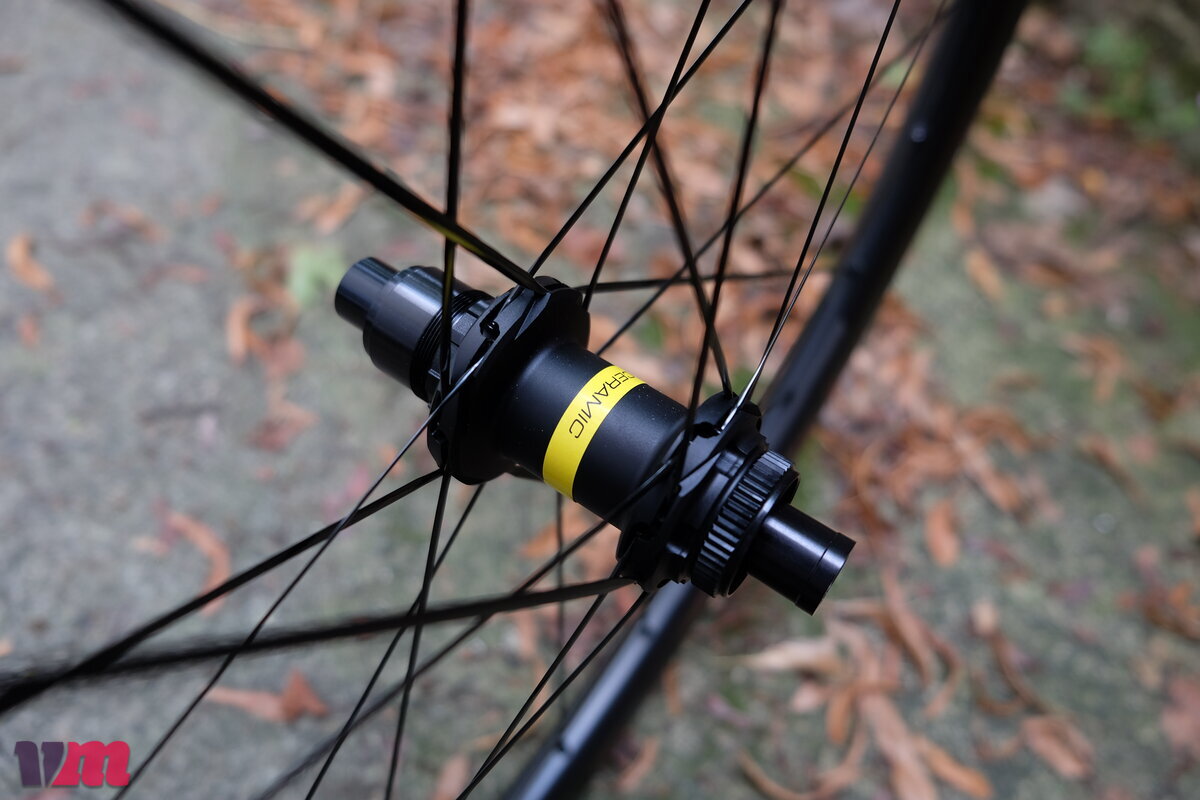
Mavic uses 24 lens-shaped spokes at both the front and rear, which the manufacturer claims will deliver a total power saving of five watts compared to conventional flat spokes. Since the spokes are laid without contact, there's no need to worry about creaking noises or the faint ticking that can be found on some wheels. The only clearly audible sound is the pleasant sound of the "Instant Drive 360" freehub, which, at least when new, offers a bit more resistance than other freehubs: If you lift the bike and rev the rear wheel, noticeable vibrations are transmitted to the frame.
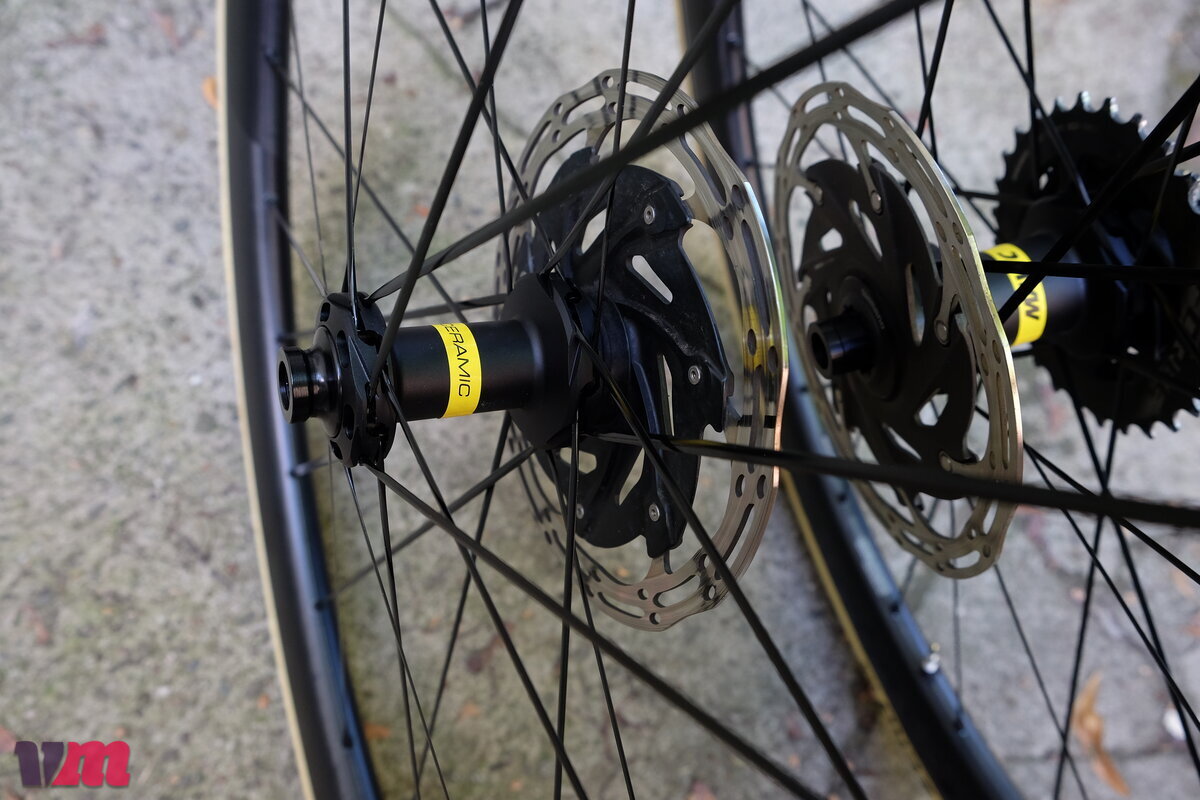
The ceramic bearings that Mavic installs on the new Cosmics promise silky-smooth running. The manufacturer claims 28% less friction, something that, of course, can't be verified or felt in practice. The combination of Mavic Cosmic SLR 45 and 30-inch Pirelli P-Zero TLR tires certainly feels fast and smooth: Even at a pressure of around 4 bar, rolling resistance feels low and comfort high. Of course, wider tires and rims reduce rolling resistance due to the shorter, but wider, contact patch. However, with a maximum permitted pressure of 5,5 bar for 28-inch tires, riders who prefer a bit more stiffness will also find what they're looking for.
Neutral character on windy days
If you make yourself small and roll along on the descent, you'll feel pretty fast – compared to some other aero wheels, the new Cosmics could definitely offer advantages. On windy days, the Cosmics feel neutral and don't tend to react unpredictably when changing direction or facing sudden crosswinds. However, riding hands-free in windy conditions is best avoided.
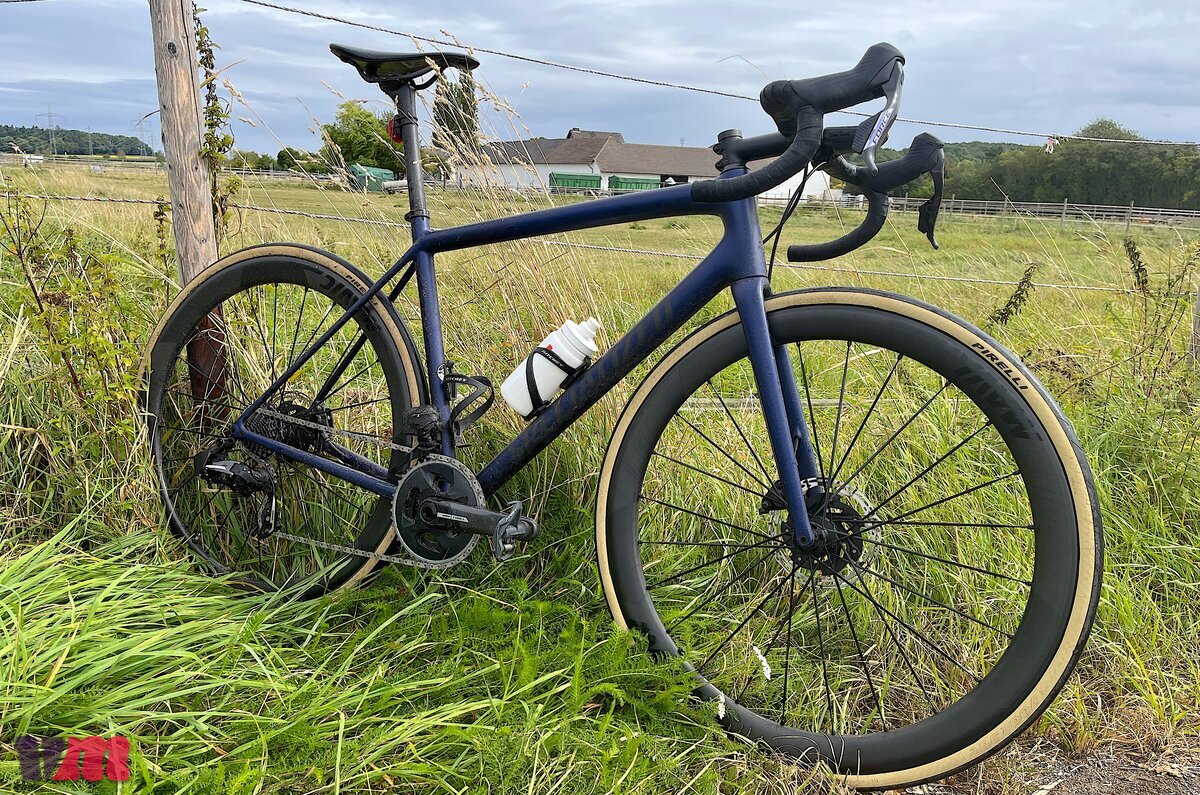
The wide cross-section naturally results in the rim being comparatively narrow at the top of the sidewall, creating a fairly deep gap at the junction between tire and rim. Several years ago, this was considered an aerodynamic disaster, which prompted Mavic to develop "blades" – plastic rings designed to create a smooth transition, but which were not approved by the International Cycling Federation. However, recent findings provide reassurance: The gap isn't harmful.
Really faster with ceramic bearings?
In terms of price, Mavic has moved closer to the competition; for a wheelset in its weight class and with ceramic bearings, the new Cosmic SLR 45 is quite affordable. Given the renowned high quality of the standard deep groove ball bearings the manufacturer uses, one almost wishes Mavic would dispense with the ceramic bearings and lower the price a bit. However, it is primarily this bearing update that distinguishes the new Cosmic from its direct predecessor. One might question whether the expensive ceramic bearings represent a real benefit, while the undrilled rim base and uncomplicated tubeless installation, the low weight, and the perceived good aerodynamics are all noticeable advantages.
Below the Cosmic SLR 45, Mavic offers the Cosmic SL, which, with standard flat spokes, conventionally drilled rims, and steel ball bearings, costs €1.299 and is only about 100 grams heavier. The Cosmic S 42 is even more affordable: 21 mm internal width, 1.660 grams, and 999 Euro. Overall, the traditional French manufacturer is very well positioned to compete with growing competition in the balance bike market.