


Test / E-MTB: The Amflow PR Carbon made a huge splash when it was unveiled in the spring. Equipped with the powerful Avinox M2S drive system, a removable 800 Wh battery, and a well-thought-out all-round geometry, the bike is a real head-turner. But the real bombshell is the price tag, which, even compared to its own competitors, seems almost like a misprint. We put it through its paces to see if the investment pays off and if the overall package delivers on the trail.
New territory for Amflow: Full carbon frame with removable battery
In the highly versatile e-mountain bike segment, Amflow positions the PR Carbon Pro as a potent trail and enduro crossover. The key specifications speak for themselves: a lightweight, full-carbon frame, which, according to the manufacturer, weighs just 2,9 kilograms in size M (including rocker link, bearings, and hardware), forms the foundation. 160 millimeters of travel are available at the front, while the rear suspension provides 150 millimeters. Out of the box, the bike rolls on the trails as a mullet setup – with a 29-inch wheel at the front and a 27,5-inch wheel at the rear. However, thanks to a flip chip, riders can also switch to a true 29er.
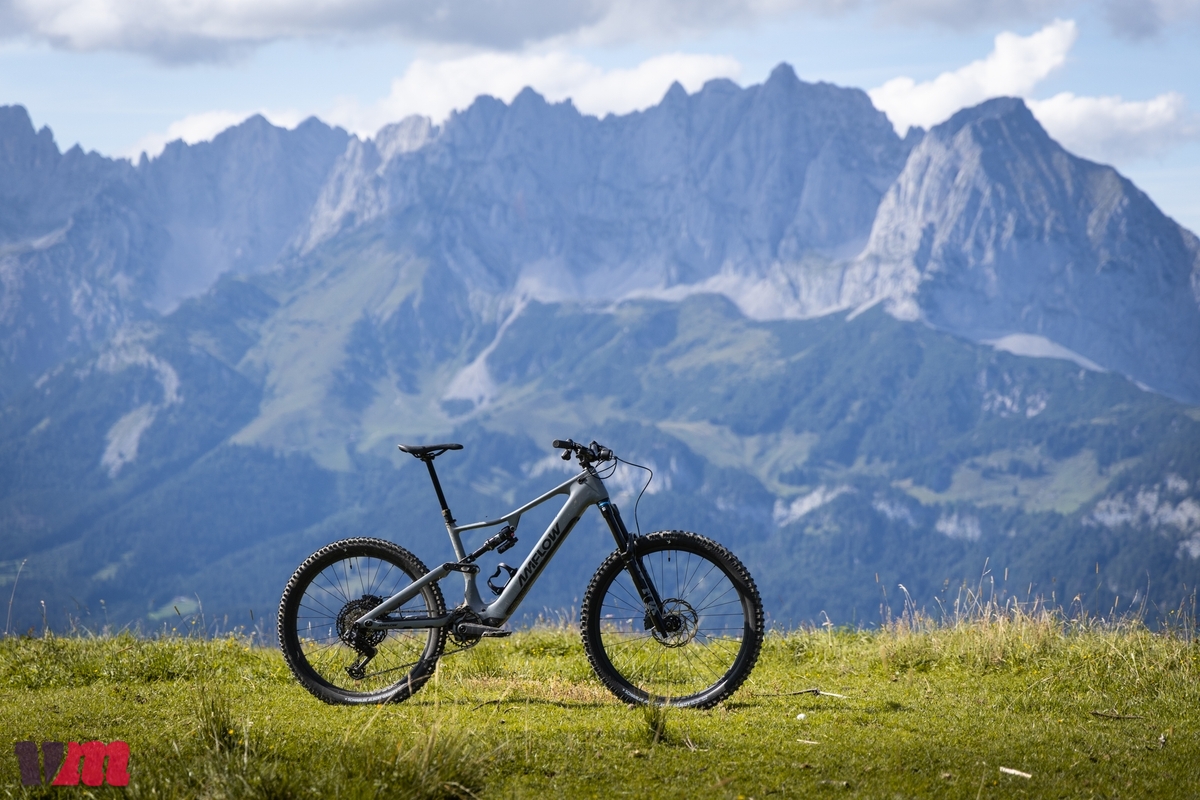
One of the biggest innovations compared to the familiar PX Carbon concerns the downtube. For the first time, Amflow has equipped the PR Carbon with a removable battery. This inevitably results in a slightly more voluminous silhouette than the super-slim PX model, but offers invaluable advantages in everyday use. The new Avinox RS 800 battery boasts a generous 800 watt-hours and weighs around 4 kilograms. It can be removed from the downtube via a very well-designed locking mechanism. This is not only practical for those living in apartments without a power outlet in the basement, but also for quick battery swaps on extremely long rides. The entire assembly is protected by a well-made, rattle-free plastic cover on the downtube.
Customizable geometry for tinkerers
The PR Carbon Pro boasts a modern geometry design, but thanks to numerous adjustment options, it can be almost perfectly tailored to individual preferences. A full 40 different configurations are theoretically possible. The head angle can be varied between 63,5 degrees (for maximum stability) and 65,5 degrees (for more agile handling) using special headset cups. A flip chip at the shock mount allows for adjustment of the bottom bracket height, while even the chainstay length can be changed. The latter is set at a moderate 440 millimeters in the default configuration, which, given the compact motor, should be a good compromise between climbing ability and playful handling.
| M | L | XL | XXL | |
|---|---|---|---|---|
| Reach (mm) | 452 | 472 | 500 | 527 |
| Stacks (mm) | 626 | 637 | 649 | 662 |
| seat tube (mm) | 405 | 425 | 445 | 464 |
| Steering angle (in °) | 64,5 | 64,5 | 64,5 | 64,5 |
| Seat angle (in °) | 77 | 76,9 | 76,7 | 76,6 |
| top tube (mm) | 596,5 | 624 | 653 | 685 |
| Chainstays | 440/452 | 440/452 | 440/452 | 440/452 |
| head tube (mm) | 111 | 124 | 137 | 151 |
| Bottom bracket height (mm) | 346 | 346 | 346 | 346 |
Comparing the specs on paper directly with the PX Carbon, the PR Carbon appears to be a slightly tamer, but by no means touring-oriented, bike. The effective seat tube angle is striking, however. On the PR Carbon Pro, it measures approximately 76,7 degrees. More important, though, is the actual seat tube angle, which, at around 70 degrees, is relatively slack. This means that the further the seatpost is extended, the further the rider's center of gravity shifts rearward over the rear axle – a detail that will become noticeable later on the trail.
Avinox M2S: A powerhouse of the highest class
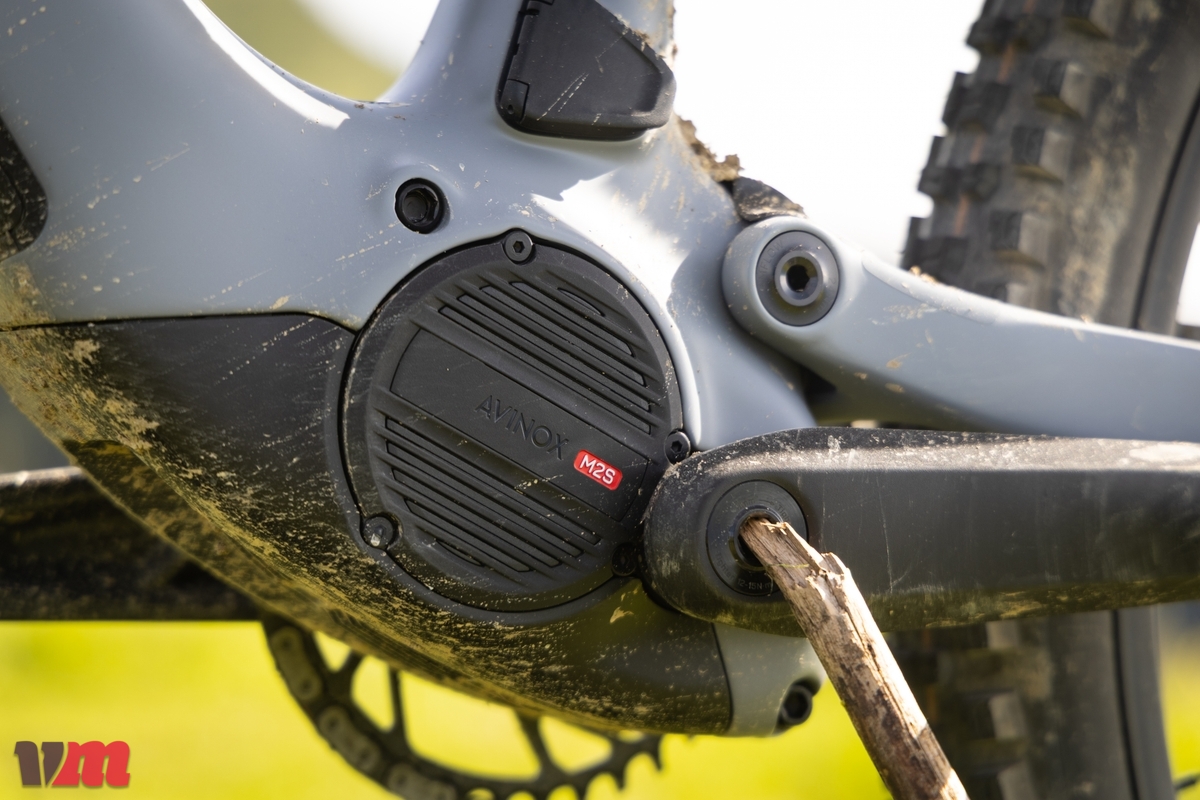
The heart of the Amflow PR Carbon Pro is undoubtedly the new Avinox M2S mid-drive motor. This compact powerhouse weighs just 2,59 kilograms, yet delivers performance figures that will put the competition to shame. In regular operation, the drive provides 130 Newton meters of torque and a peak mechanical output of 1300 watts. In the activated boost mode, these figures climb to an astonishing 150 Newton meters and 1500 watts. For comparison: The entry-level model, the regular PR Carbon, comes with the M2 motor (without the "S"), which, with 110 Nm (125 Nm in boost), is also extremely powerful, but a touch more tame.
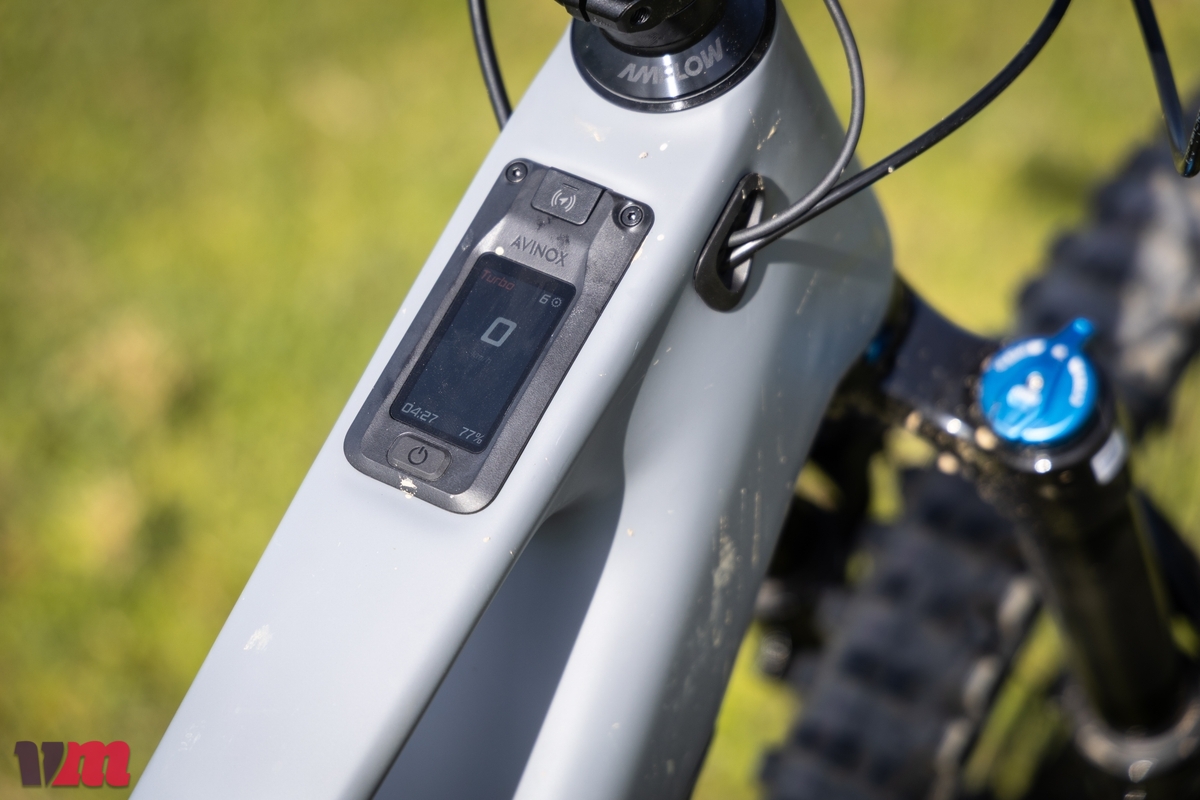
The system is controlled via easily readable, wireless controllers on the handlebars and a 2-inch OLED touchscreen integrated into the top tube. While the PR Carbon Pro lacks the 4G slot of the more expensive PX Carbon, it still offers basic theft protection via Apple's "Find My" integration. Navigation (via Komoot import) can also be mirrored on the display using the Avinox app, allowing for fine-tuning of support levels, including heart rate control. The Pro model also features a 12-amp fast charger that fully charges the 800 Wh battery from 0 to 100 percent in just under two and a half hours. However, owners of multiple Amflow bikes should be aware that the charging connector for the removable batteries is square and not compatible with the round connectors of the permanently installed batteries (as found on the PX Carbon).
Amflow PR Carbon equipment: Pragmatic, well-thought-out and extremely fairly priced
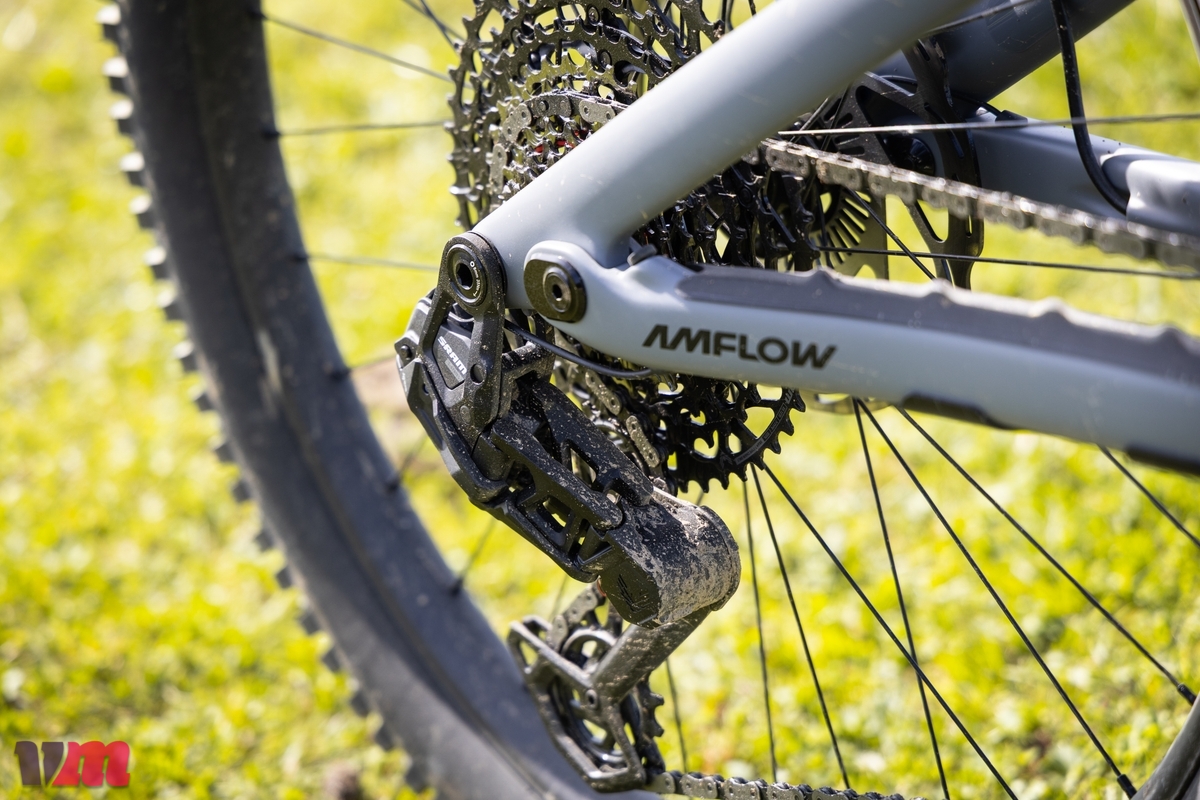
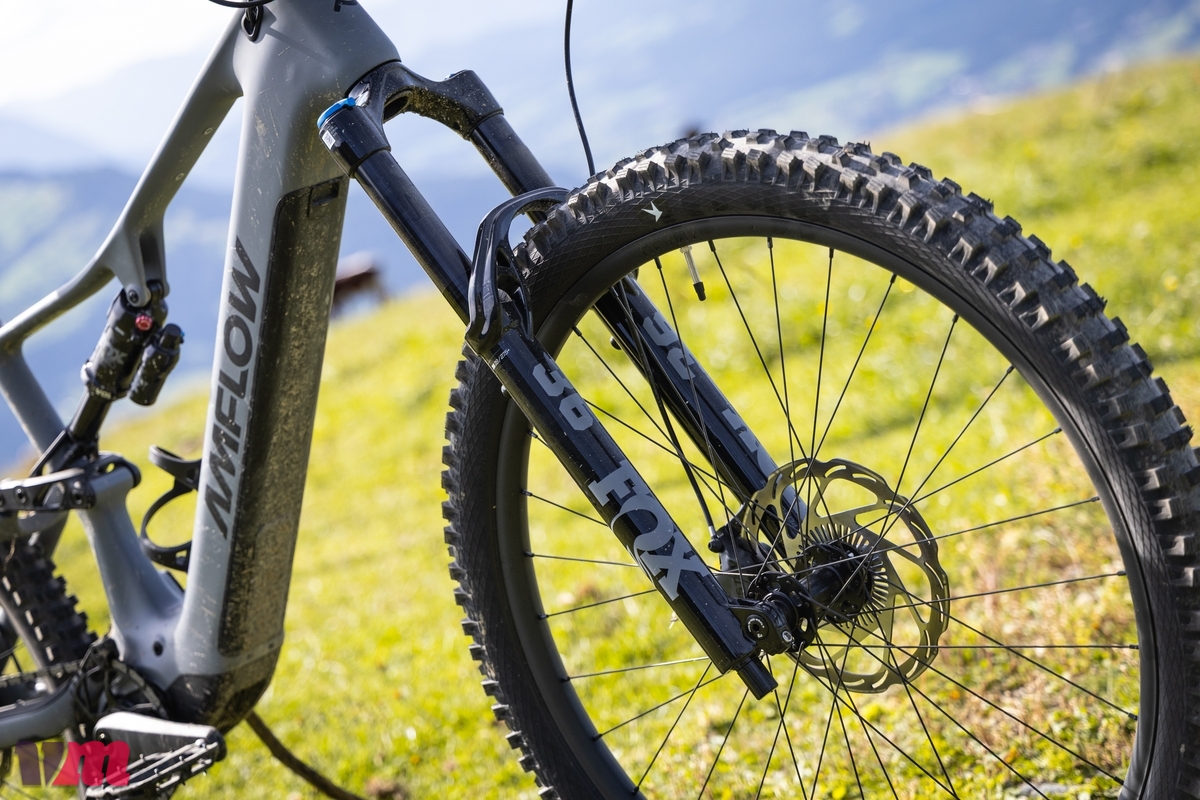
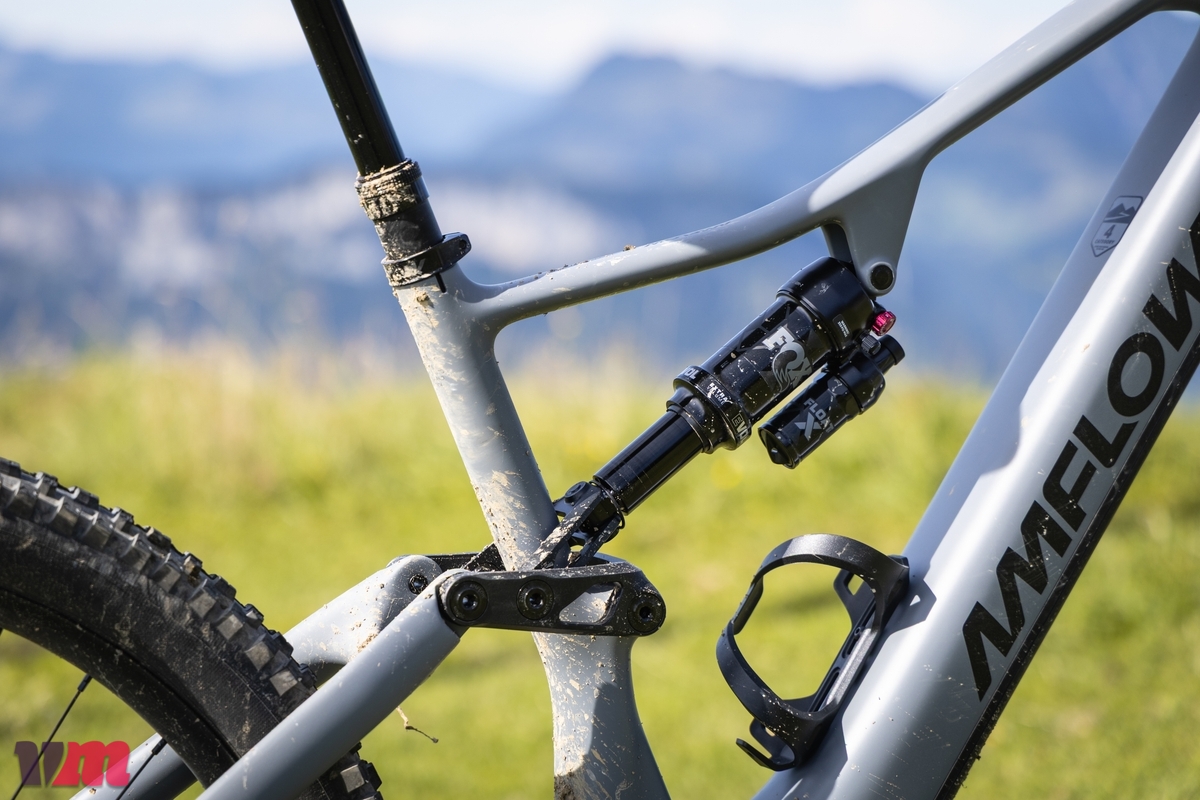
For €5.899, Amflow delivers a component package for the PR Carbon Pro that's hard to find elsewhere on the market. While it doesn't feature top-of-the-line "factory" components, the chosen parts make perfect sense. The suspension comes from Fox: a 36 Performance fork with a GRIP damper up front and a Float X Performance shock in the rear. Shifting is handled by the electronic SRAM S1000 Eagle drivetrain. Conveniently powered directly by the e-bike battery, it offers features like "Smooth Shift"—shifting without pedaling—and a chain guard where the motor briefly reduces cable tension to ensure smooth gear changes even under full load.
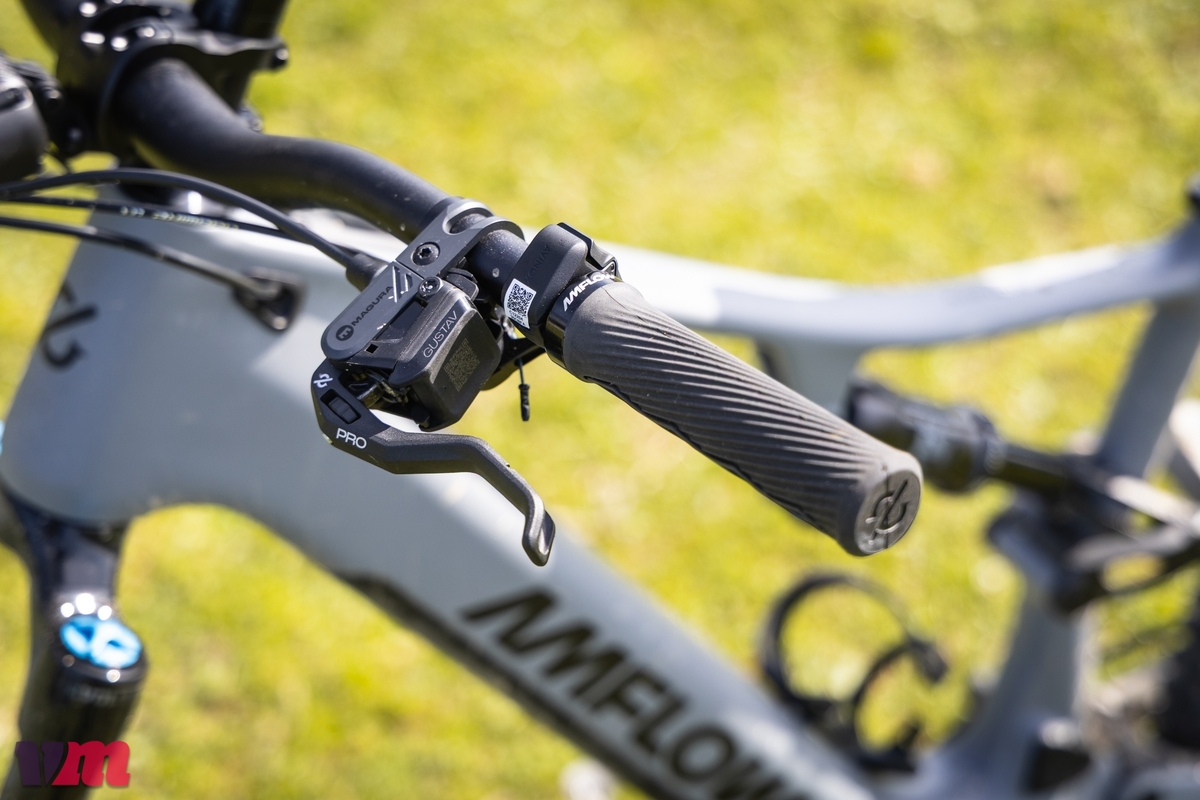
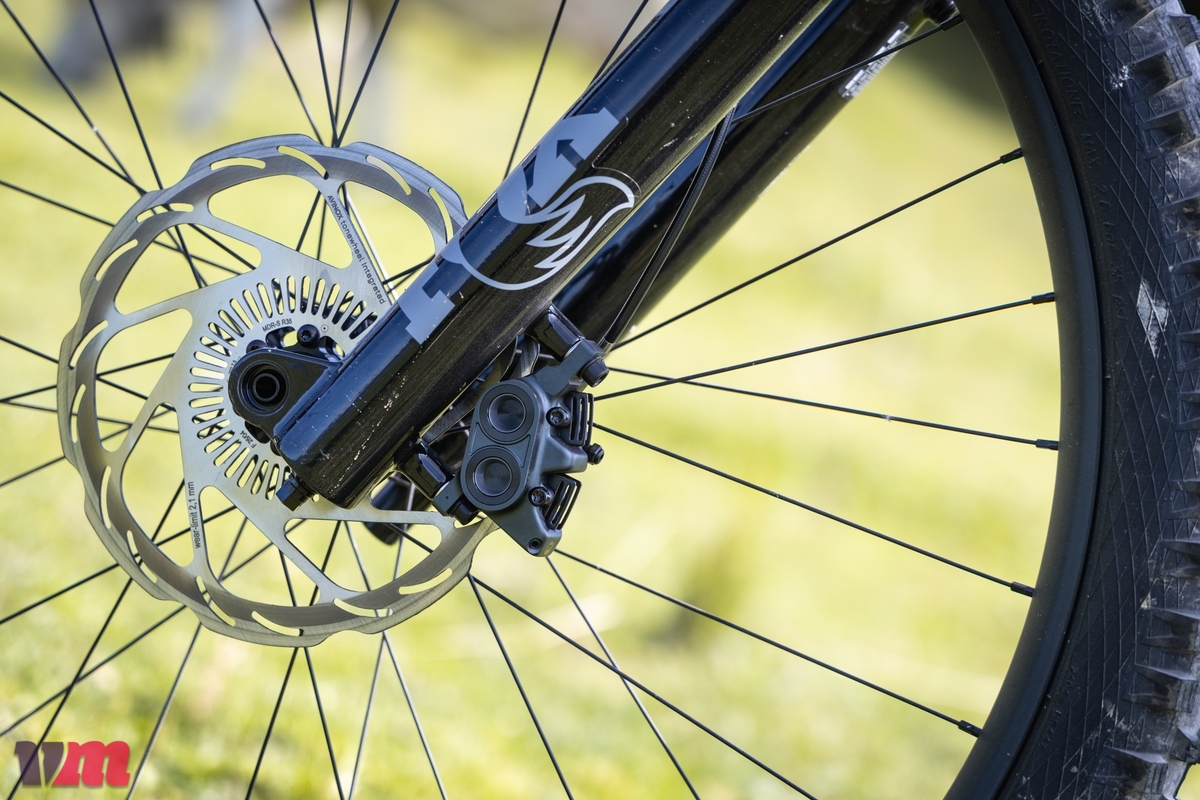
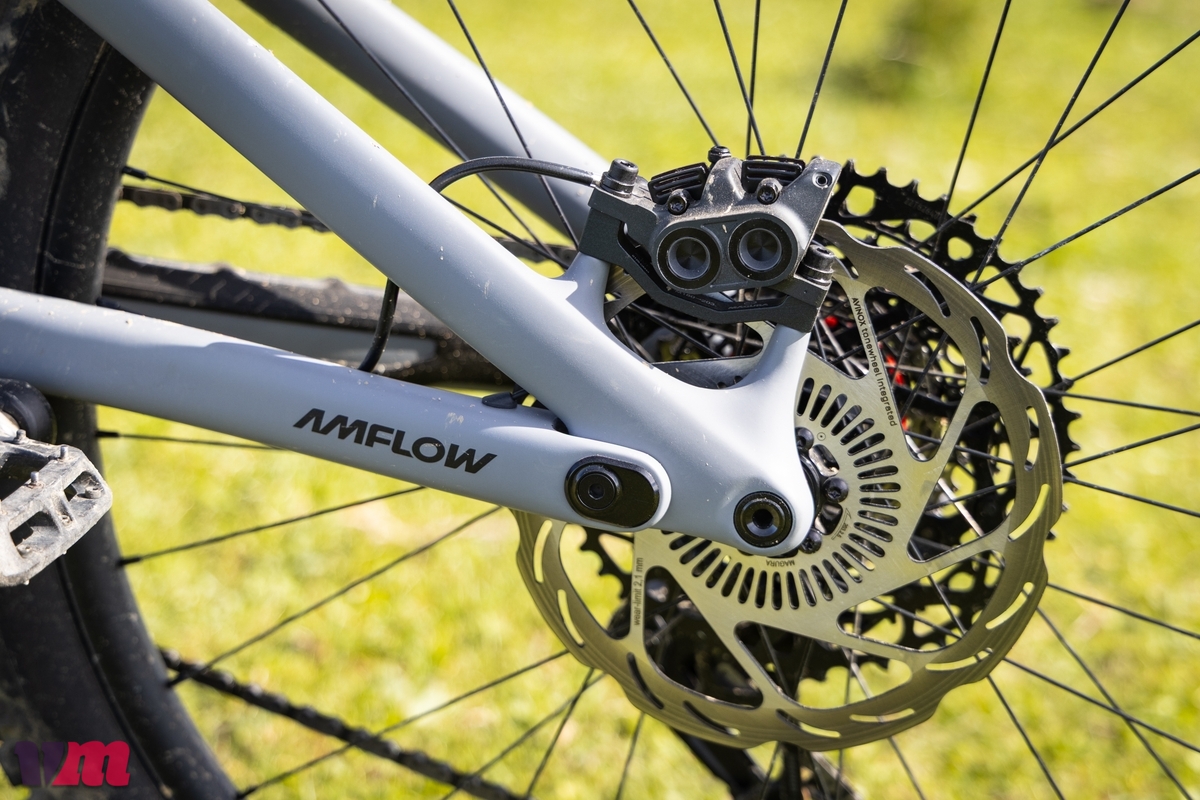
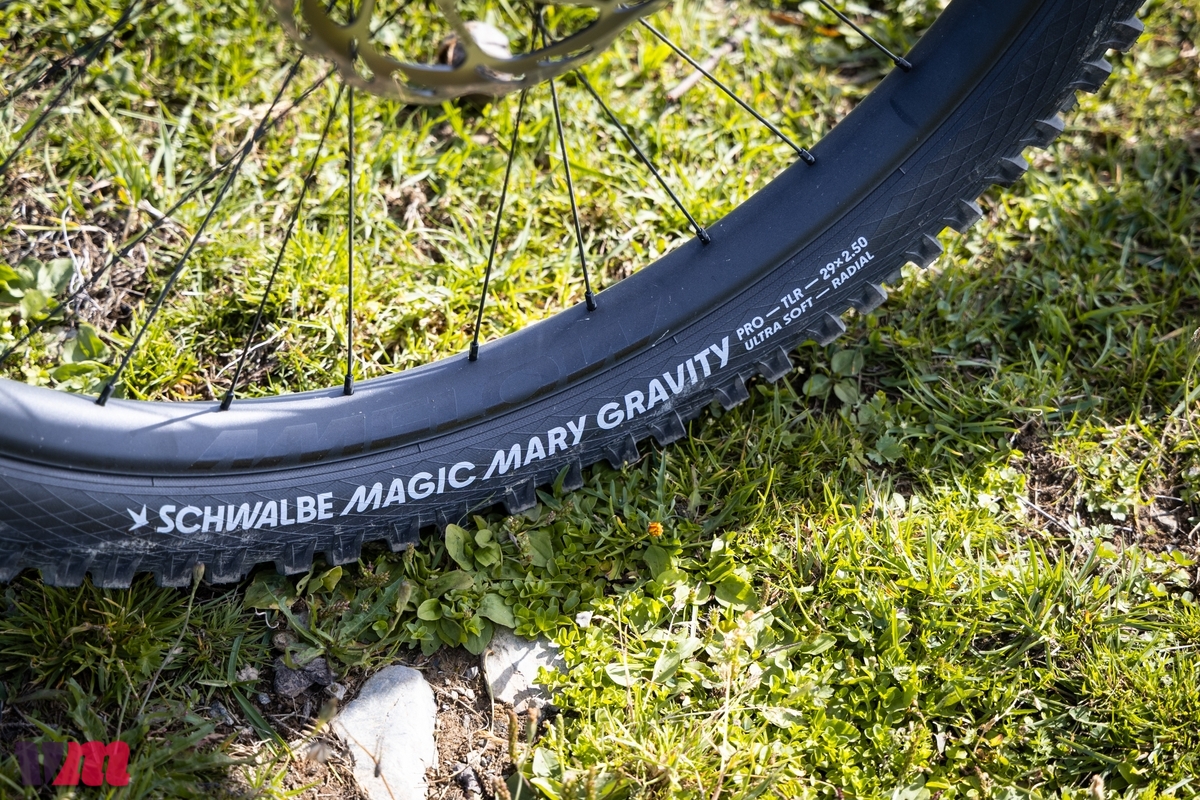
The 24,2-kilogram (tubeless weight in size XL) machine is slowed down by Magura's Gustav Pro 4-piston brakes. These bite onto 2,5-millimeter-thick, 203-millimeter sensor-equipped brake rotors. The in-house cockpit and a dropper seatpost complete the package. The tire choice is particularly interesting: Amflow has fitted Schwalbe's new radial tires from the Gravity Pro series (Magic Mary up front, Albert in the rear). A bold, but well-considered move for a bike in this travel category.
The features become particularly interesting when you consider the price. The identically equipped PX Carbon costs €6.999 Euro over 1.000 Euros more. The primary reason lies in the expensive lightweight frame and the special custom-cell battery of the PX model, which, despite its lower capacity (700 Wh), is likely to be extremely expensive to manufacture.
The Amflow PR Carbon Pro in practice
For the practical test, the Amflow PR Carbon Pro had to prove itself on a variety of local trails and long, technical descents. Right from the first few meters, it's clear: the weight difference of around two kilograms compared to the lighter PX Carbon is noticeable. The PR Carbon Pro isn't a nimble, playful lightweight, but rather presents itself as a potent, solid all-rounder. However, there's no question of sluggishness. The bike is incredibly intuitive to ride and inspires a great deal of confidence from the start. Whether you're a pro or a beginner, you'll feel comfortable immediately.
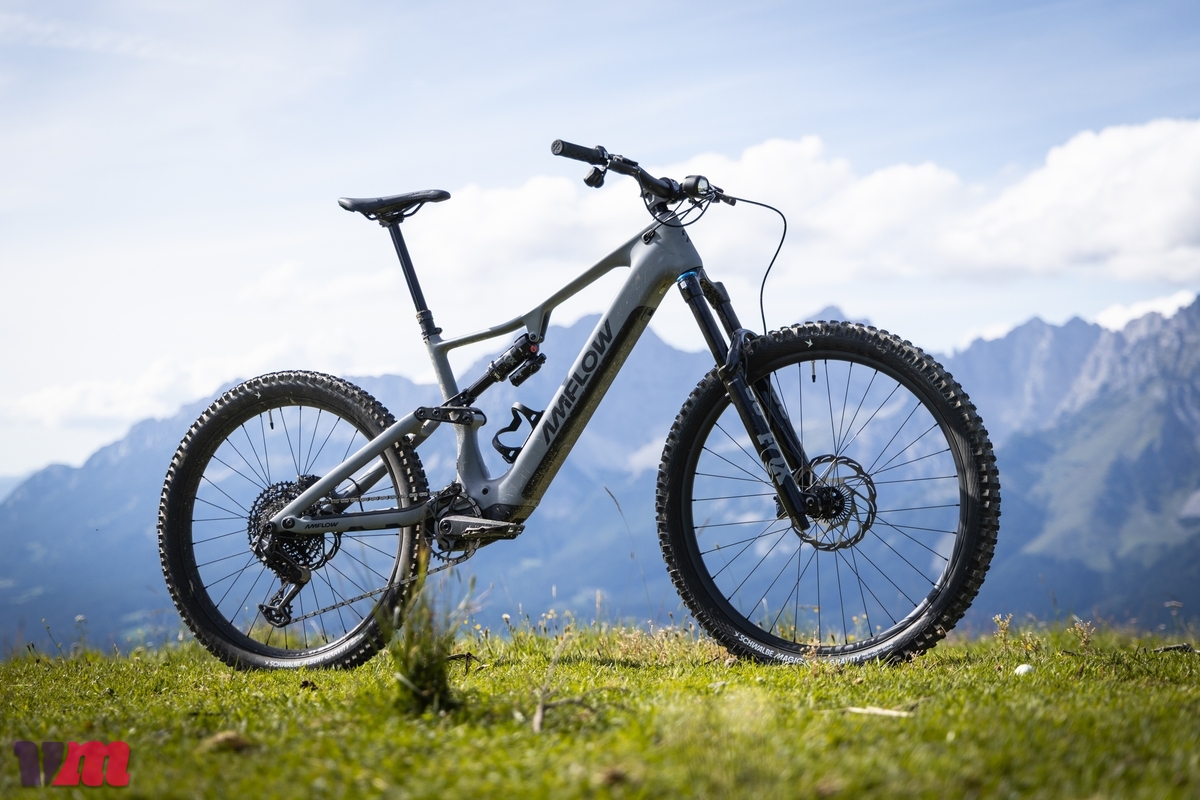
The high front end ensures that even on steep, challenging sections or when launching off edges, there's no feeling of going over the handlebars. The heavy, yet excellent Schwalbe radial tires contribute significantly to the bike's solid feel. Riding them with the correct tire pressure provides incredibly good damping and extremely high puncture protection. The added weight is perfectly acceptable for an e-MTB of this class and dramatically improves the ride quality.
Powerful chassis with slight reserves at the limit
The Fox Performance suspension underscores the bike's all-rounder character. While it lacks the fine-tuning options of the more expensive Factory models, in practice, 90 percent of mountain bikers will be perfectly happy with this setup. The fork responds smoothly, the rear suspension is forgiving, lively, and offers plenty of comfort. Only when things get really rough and you push the travel to the absolute limit of a 160mm bike does the rear suspension start to feel a bit unsettled. Here, the setup lacks a bit of bottom-out resistance in the last third of its travel. Spacers in the air chamber could remedy this, but that would come at the expense of the excellent comfort.
Motor magic and uphill characteristics
Uphill, the Avinox M2S motor truly shines. Its power delivery is superb, easily controllable, and—most impressively—extremely quiet. Even under heavy load, the motor remains barely audible. The SRAM transmission harmonizes perfectly with the drivetrain. Shifting gears while descending without pedaling? Thanks to Smooth Shift, no problem.
There is, however, one slight drawback to report on steep uphill sections. Here, the previously mentioned slack seat angle becomes a factor. Taller riders with a high saddle height sit far over the rear wheel. As a result, the front wheel lifts relatively easily on steep inclines. The PR Carbon Pro requires significantly more active body input and weight shifting than the more forgiving PX Carbon. While adjusting the chainstay length to the "long setting" can mitigate this somewhat, it remains a noticeable characteristic of the geometry.
Minor deductions in the overall impression.
On the descent, our test bike was remarkably quiet – with one notable exception: the Magura Gustav Pro brake pads. The clatter of the pads was the loudest sound on the entire bike; the motor, battery, and cables remained completely silent. The ergonomics of the bulky brake levers are also less than ideal for riders with small hands, as the levers are positioned quite far from the handlebars.
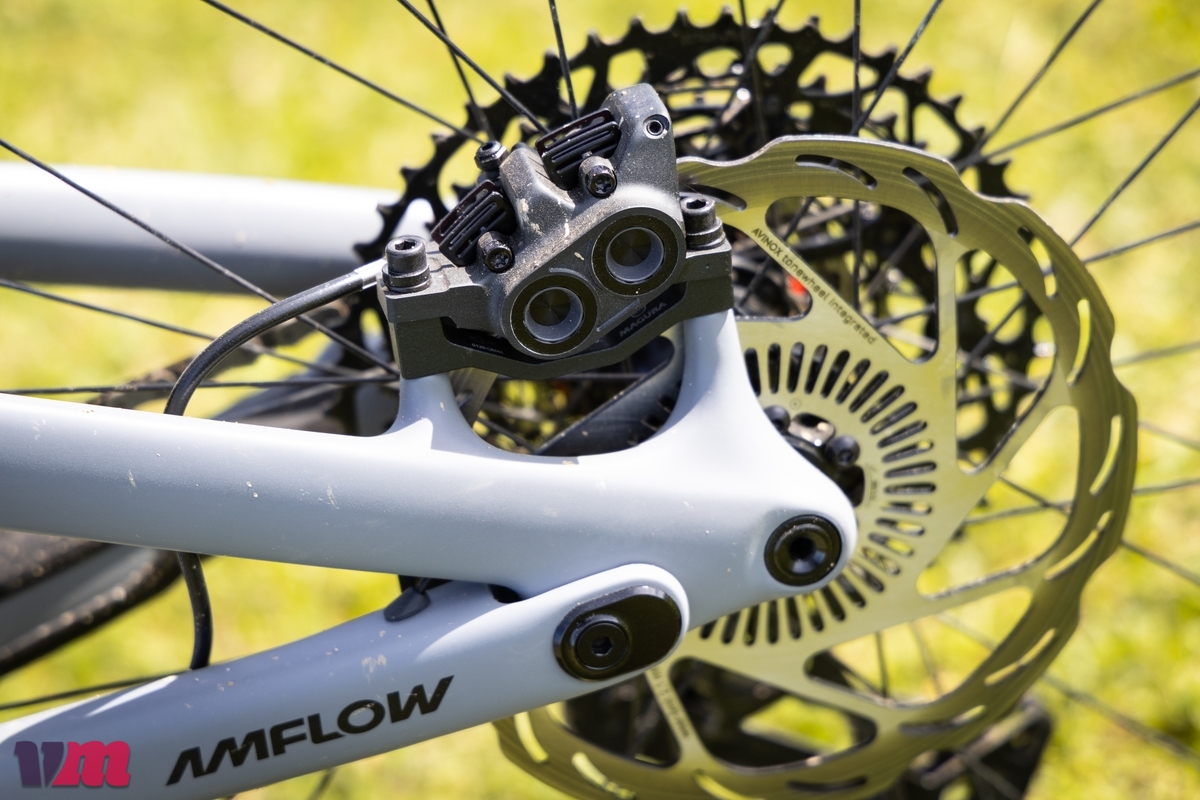
However, we must speak up for the Gustav Pro here: On endless, steep descents of 800 meters in one go, the brake delivered breathtaking stability. While other high-end brakes exhibited significant fading under such conditions, the Magura offered exactly the same biting braking power at zero meters of descent as at the bottom of the trail. Anyone who can overlook the pad chatter and the ergonomics will find this to be an extremely heat-resistant anchor.
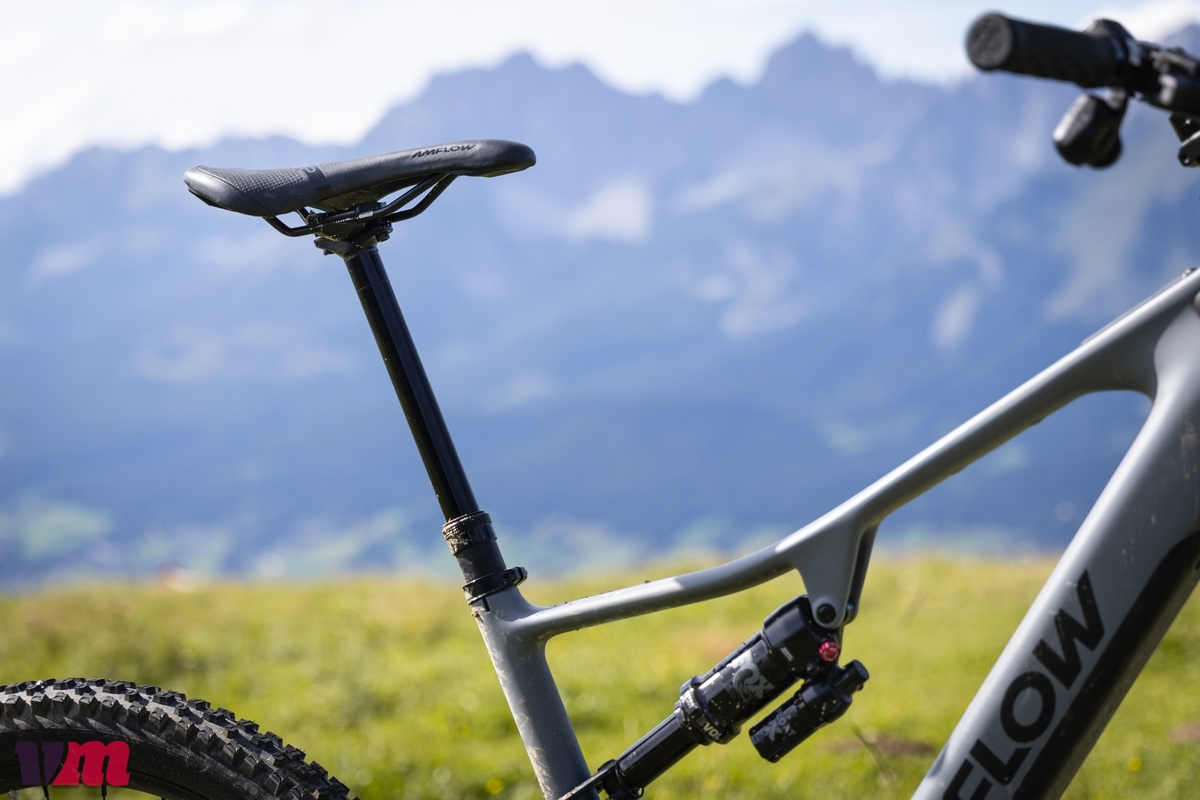
Another point of criticism on the trail concerns the in-house Amflow seatpost. While it looks stylish and offers plenty of travel (adjustable via spacers), it simply extends far too slowly. On trails with constant changes between uphill and downhill sections, this costs valuable seconds and disrupts the flow.

