


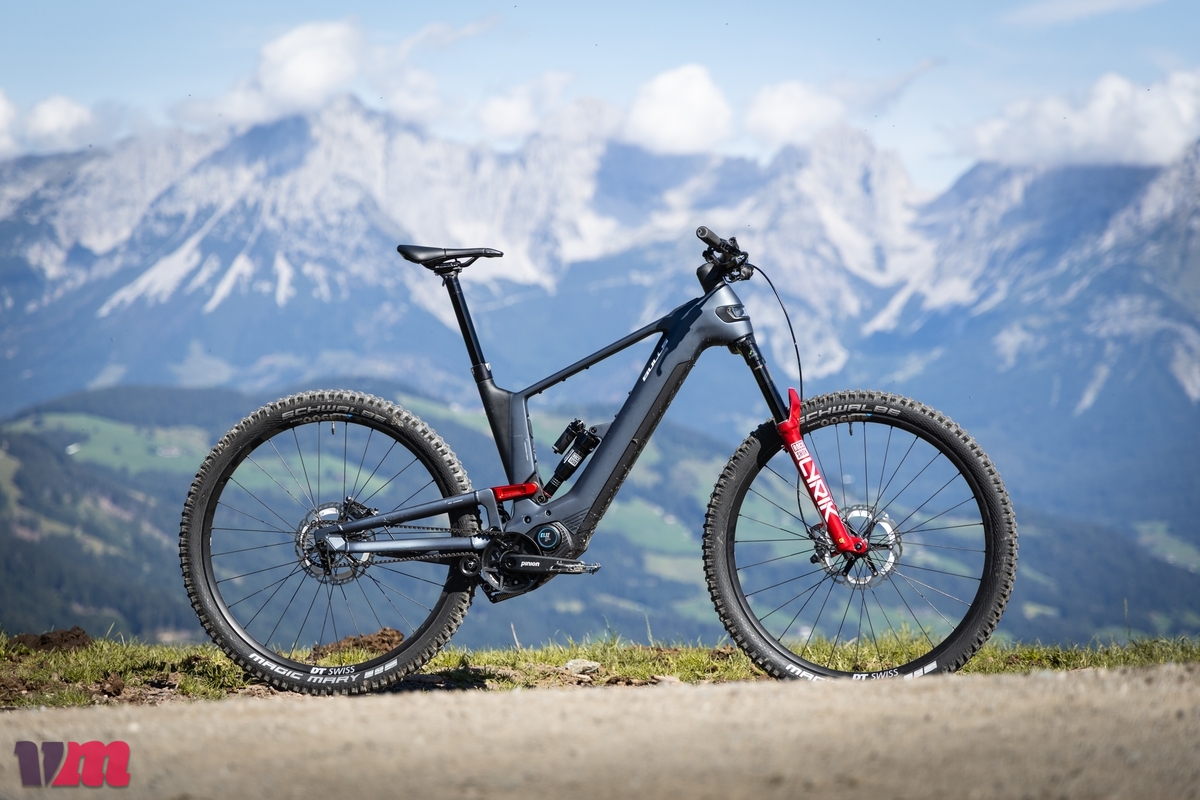
E-MTB / Test: Some bikes struggle to squeeze into a tiny niche, while others confidently cover a wide range of uses. The Bulls Vuca Evo AM 2 definitely belongs to the latter category. Equipped with a Pinion MGU gearbox, a brand-new carbon main frame, and a hefty 800 Wh battery, this trail all-rounder is aimed at tech-savvy mountain bikers. But Bulls doesn't stop at sporty specs; they've equipped the e-MTB with a whole host of clever everyday features. We took a close look at this €8.500 machine and put it through its paces on the trail.
The technical basis: Pinion MGU meets new battery
Bulls has long been a pioneer in integrating Pinion's motor-gearbox unit into e-mountain bikes. With the newly unveiled second generation of the Vuca Evo AM, they remain true to this approach, while elevating the technical foundation to a new level. The heart of the bike is, of course, still the Pinion MGU, which combines a powerful mid-drive motor with 85 Nm of torque and an electronically shifted 12-speed drivetrain in a single housing. With an enormous gear range of 600 percent, the system easily surpasses conventional derailleur systems. Furthermore, it offers the advantages of a gearbox: gear changes are possible at any time, whether under load or stationary, and maintenance is virtually eliminated.
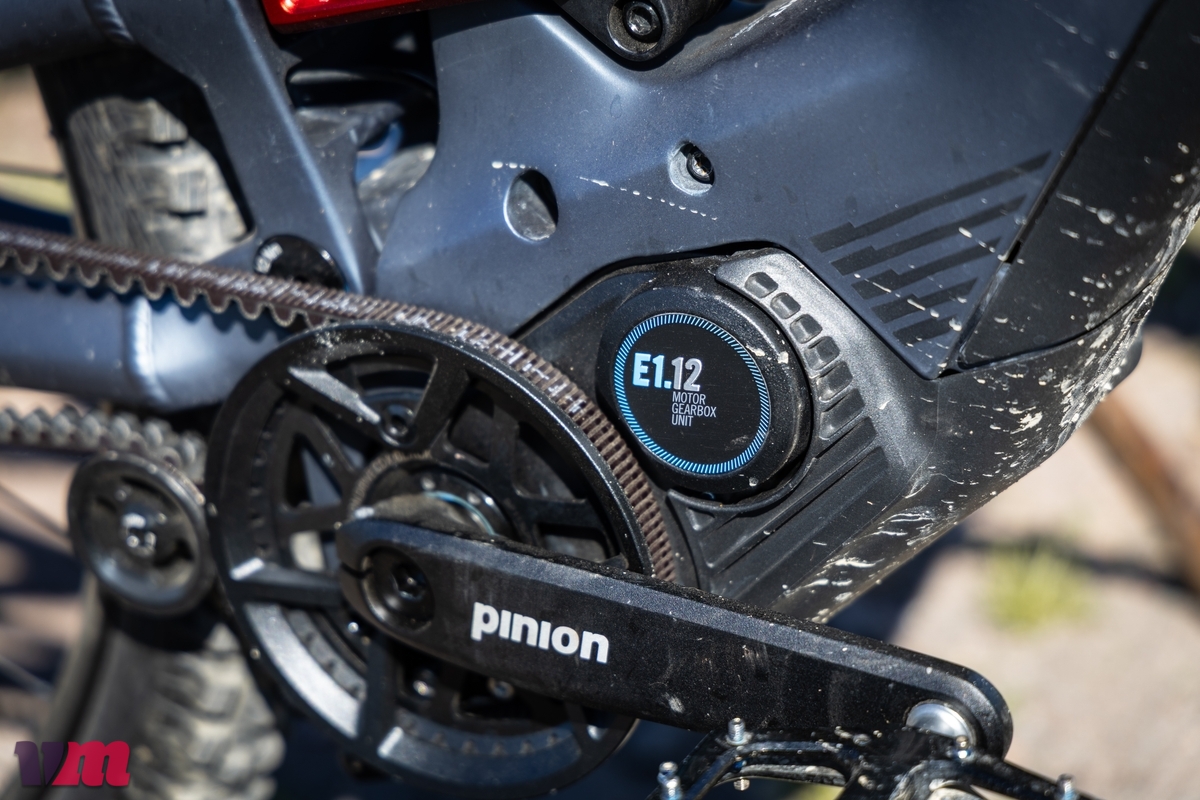
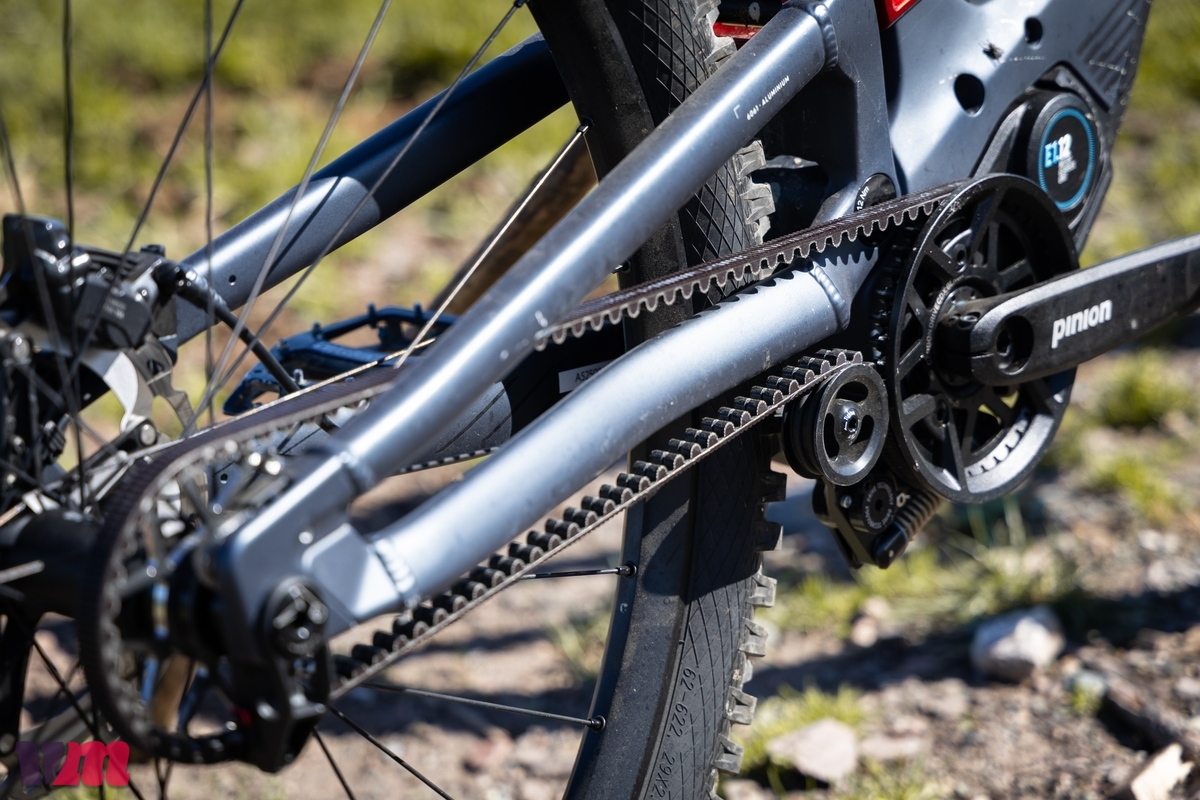
This high-tech drive system is traditionally combined with a Gates Carbon Drive belt on the Vuca Evo AM. In practice, this means no oily chain, no dirty drivetrain, and above all, absolutely minimal maintenance. Even under the most adverse conditions, such a belt lasts significantly longer than a conventional chain.
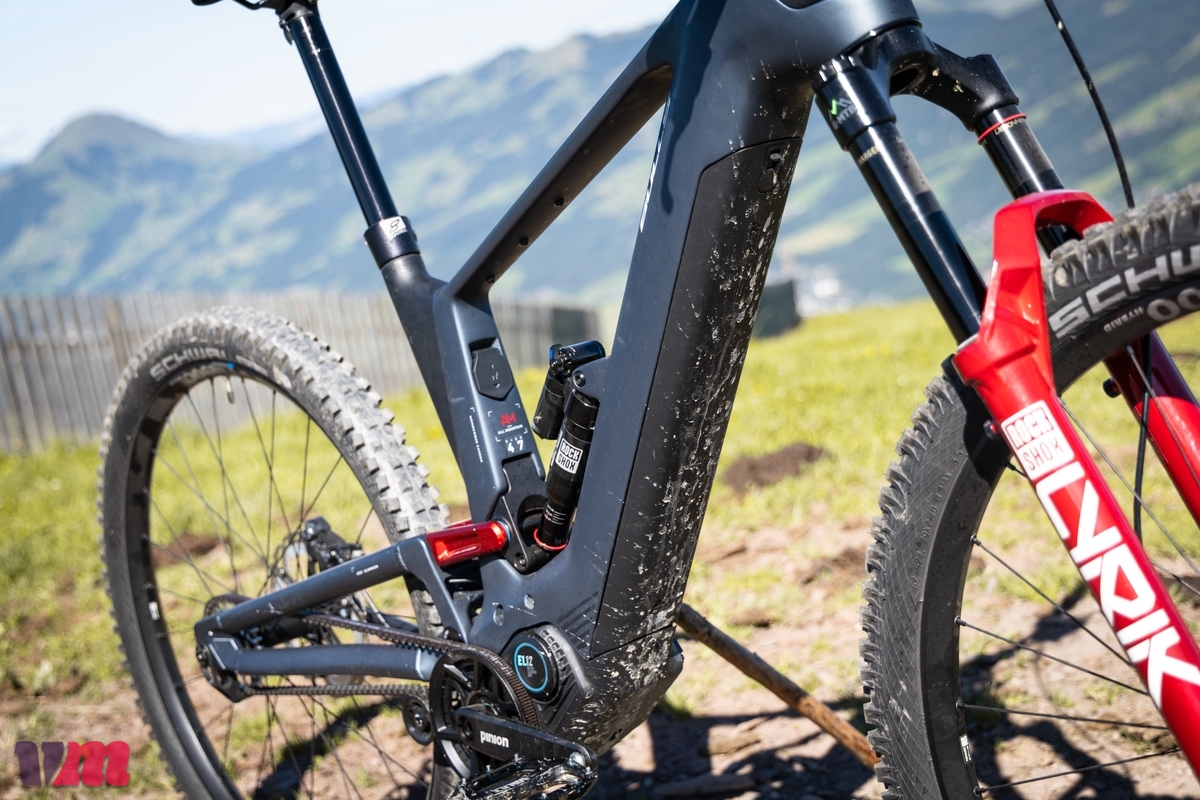
The power supply has been redesigned. Instead of the confusing array of batteries used in previous model years, Bulls now uses the new FIT Tube Pack 800 as a standard. With 800 watt-hours, it offers ample capacity for extended tours. The weight is impressive: at just 3,7 kilograms, this power pack is among the most energy-dense on the market, even surpassing its counterparts from Bosch and Avinox in this respect. The battery is elegantly integrated into the downtube of the carbon main frame and can be removed easily and without any fiddling, thanks to an ingeniously designed locking mechanism.
A robust frame with technical sophistication
Looking at the Bulls Vuca Evo AM 2 from the side, the very voluminous seat tube area immediately catches the eye. The appearance might seem somewhat bulky at first glance, even taking some getting used to, but here the design clearly takes precedence over function. This generous space requirement has solid technical reasons.
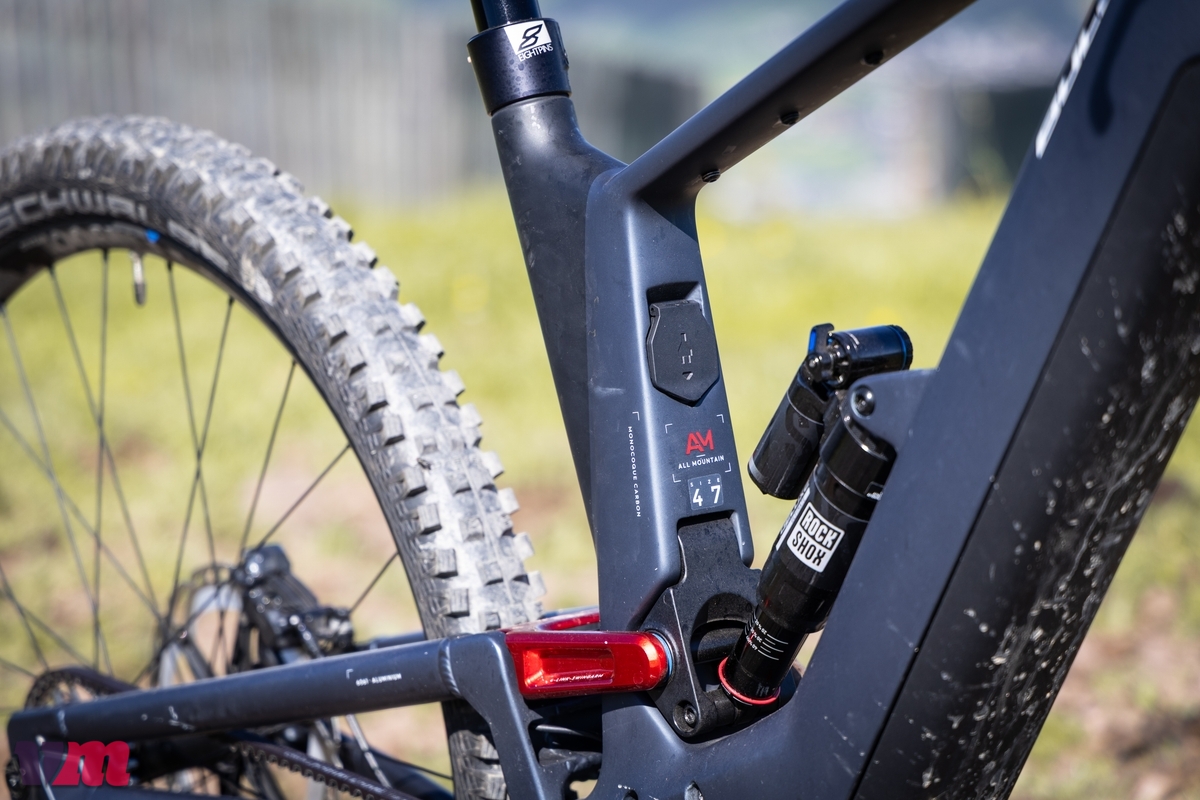
Firstly, the elegantly integrated charging port, including all necessary cabling, is located here. This offers the immense advantage of allowing an optional range extender (the FIT Buddy Pack 240) to be connected extremely neatly and without any annoying cable clutter. Secondly, the sophisticated kinematics of the rear suspension are housed here, enabling the engineers to achieve a significantly steeper seat angle than the previous model. And last but not least, despite all the concentrated technology, this frame design allows for excellent insertion depth for the seatpost.
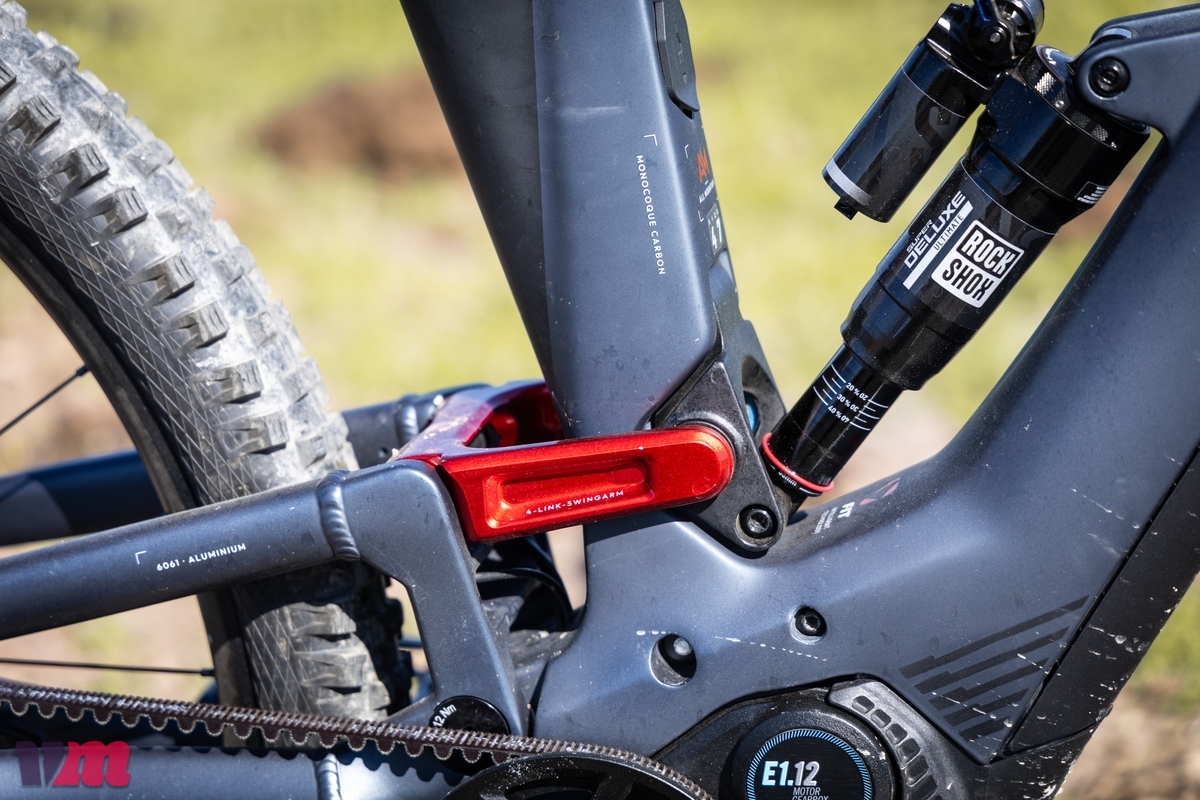
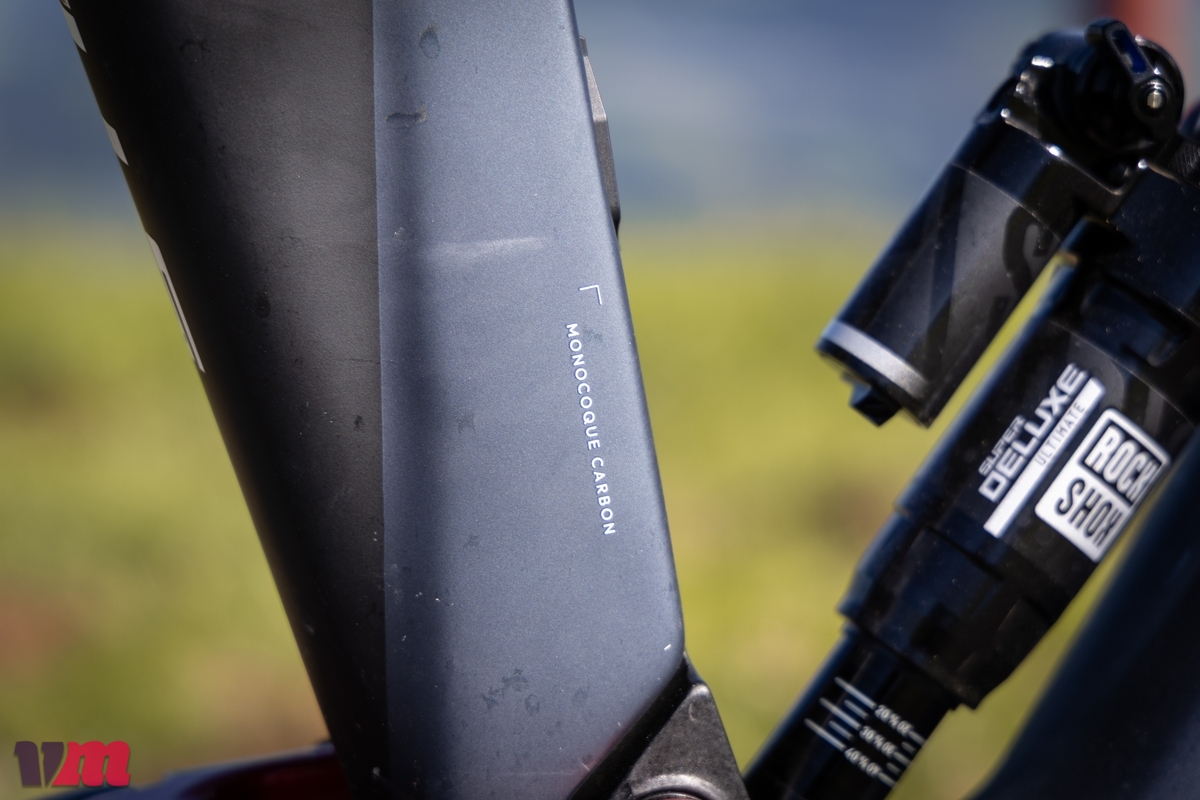
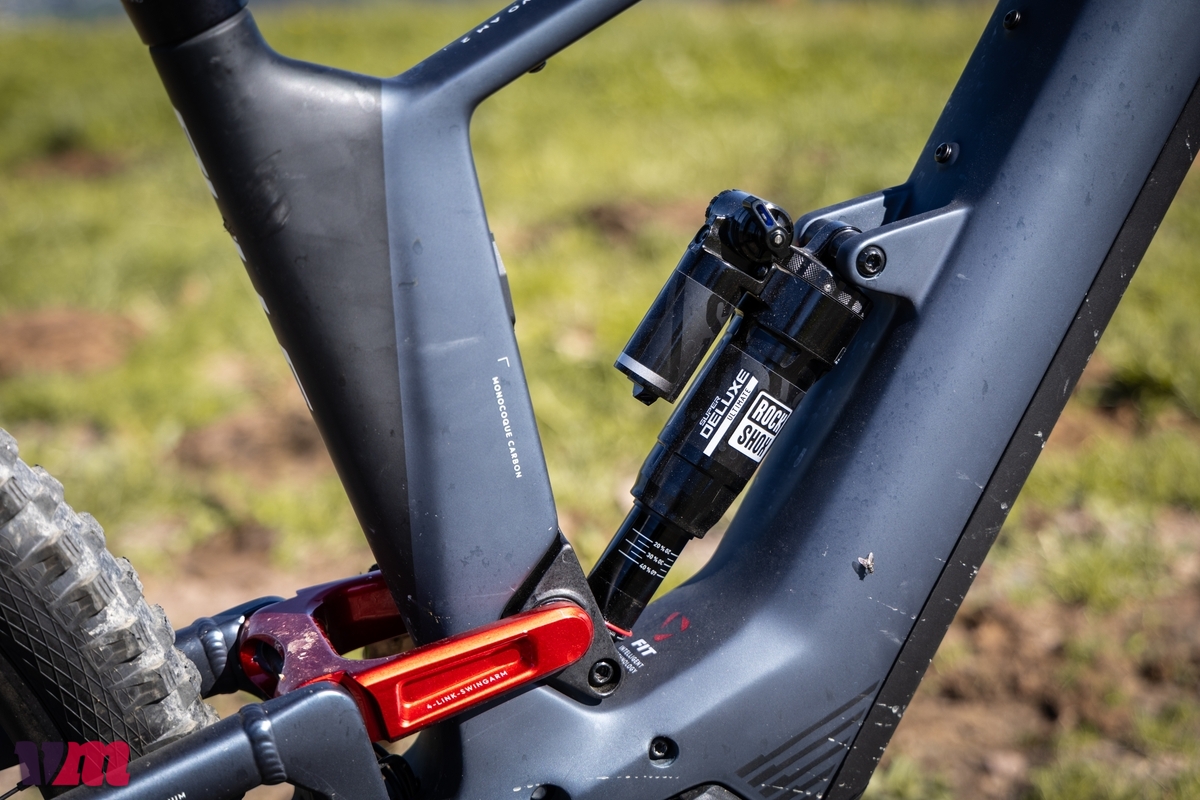
For the rear suspension, Bulls continues to rely on its proprietary "4-Link Swingarm." This supported single-pivot design features a one-piece aluminum rear triangle. The absence of additional pivots in the rear section results in exceptional stiffness. This is not only essential for precise guidance of the carbon belt, but also forms the robust foundation for another important detail: official trailer approval.
Everyday usability par excellence
E-mountain bikes are no longer just used as pure sports equipment for tearing across root-covered trails. They're car replacements, commuter bikes, and touring companions all in one. Bulls has taken this development into account in an exemplary way with the Vuca Evo AM 2. This starts with a permissible total weight of a whopping 150 kilograms – a figure that, unfortunately, is no longer a given in the industry these days.
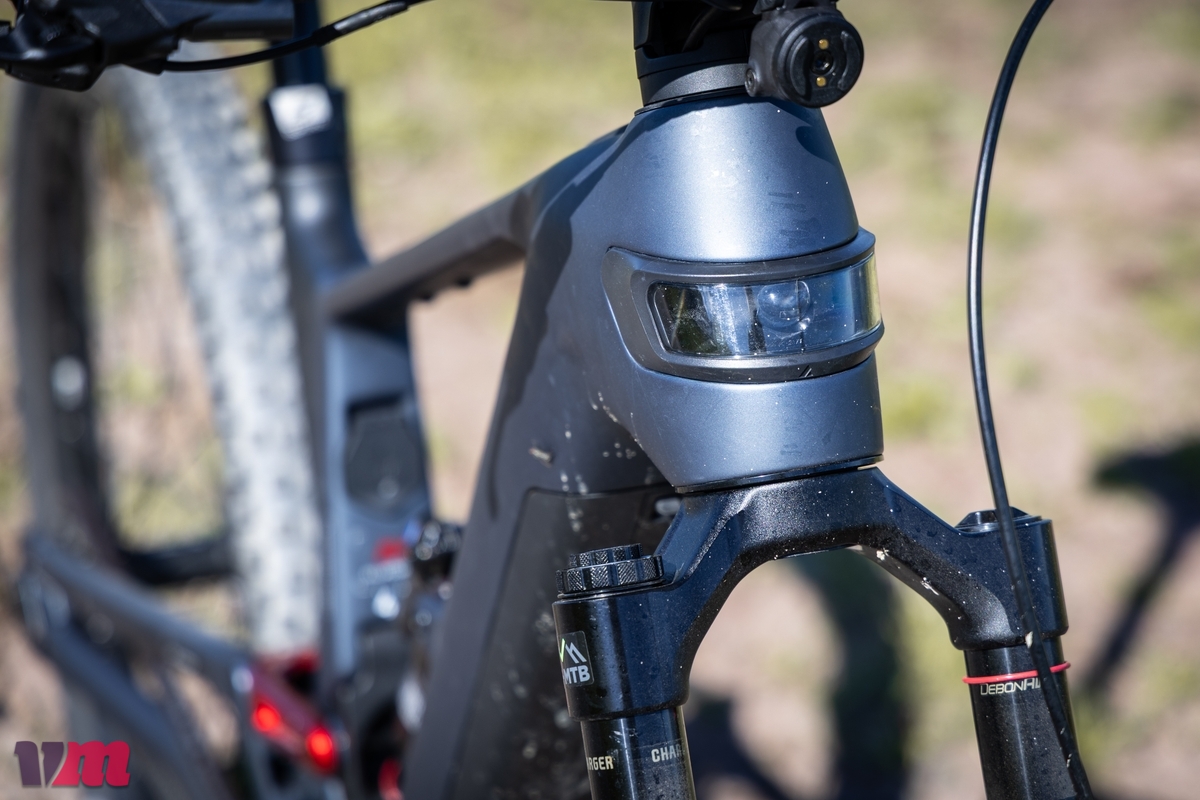
In addition, the lighting integration is outstanding. The MonkeyLink Twinlights are concealed in the rear dropout. These extremely bright taillights are almost invisibly integrated into the design and provide a significant increase in safety. At the front, Bulls uses a cornering light integrated into the steerer tube that moves with the handlebars. While the moderate brightness (30 lux) and slight tendency to fog up of this particular solution are debatable, it's essentially a blessing to have StVZO-compliant lighting as standard equipment when your after-work ride turns out to be a bit longer than expected.
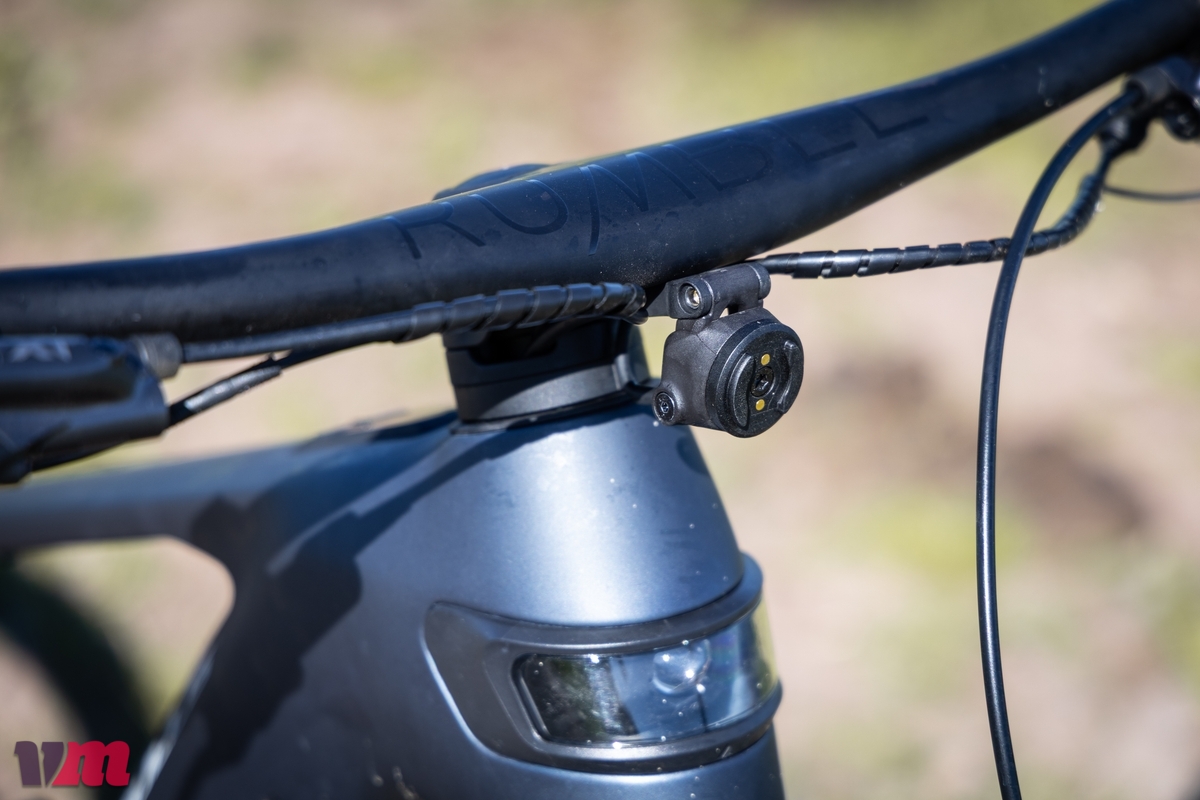
A real highlight for tech enthusiasts and touring cyclists is the powered SP Connect interface (MonkeyLink 2.0) directly on the stem. With a single click, a more powerful front light can be attached, which is then immediately powered by the e-bike battery. Alternatively, a smartphone holder can be mounted here, allowing for inductive charging of the phone while riding. Details like these set the bike apart from the competition and make it incredibly valuable for everyday use. A discreet kickstand mount has also been included.
Features: Top-notch components and minor shortcomings
At €8.500, the Vuca Evo AM 2 certainly makes a significant dent in your wallet, but considering the Pinion MGU gearbox, which is quite expensive to purchase, the price is perfectly reasonable compared to other bikes on the market. Bulls offers three models (ranging from €7.000 to €10.000), with our test bike representing the absolute "sweet spot" in terms of value for money.
| Frame | Bull's Vuca Evo AM |
| Fork | RockShox Lyric Ultimate |
| Drive | Pinion MGU |
| Battery | Fit Tube Pack 800 |
| Suspension shocks | RockShox Super Deluxe Ultimate |
| Wheels | DT Swiss H1900 |
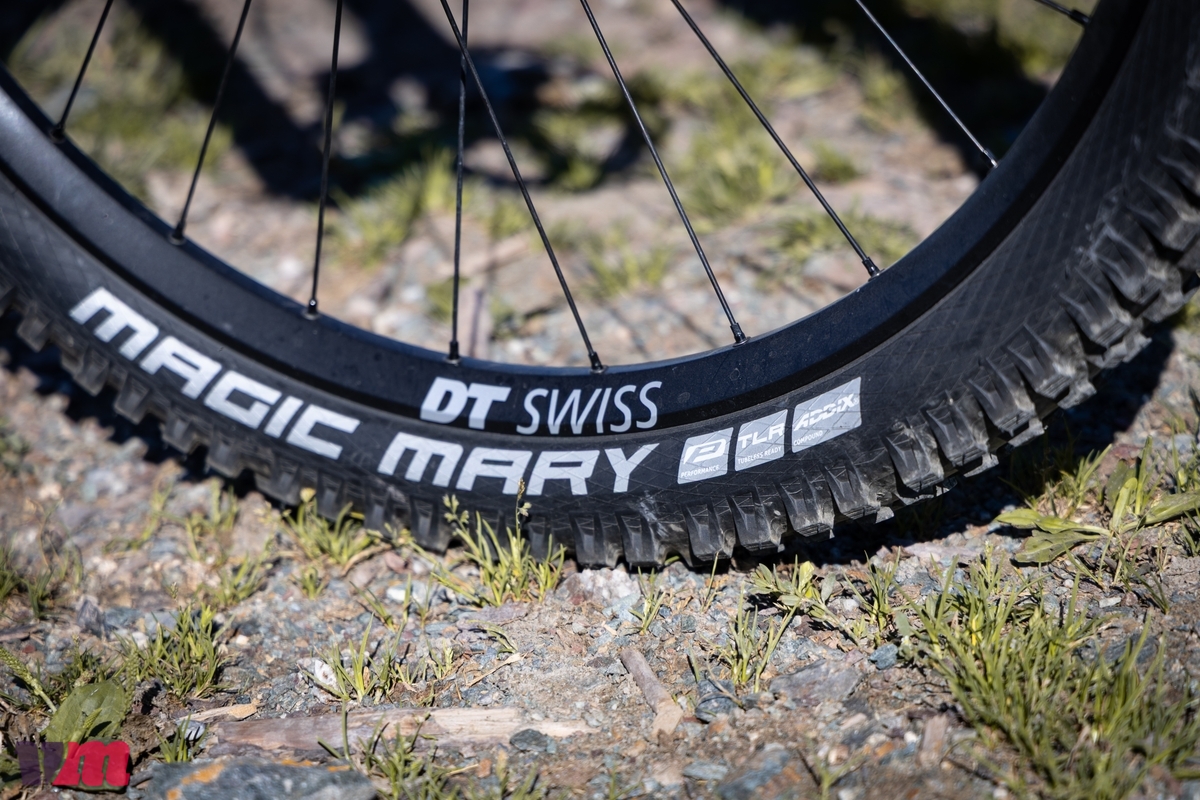
| Tire VR | Schwalbe Magic Mary Performance |
| Tire HR | Schwalbe Magic Mary Performance |
| Derailleur | Pinion MGU |
| Shifter | Pinion TE1 |
| Crank | Pinion |
| Front derailleur | Without |
| Brake | Shimano XT M8220 |
| Brake discs | Shimano XT 203/203mm |
| Seatpost | 8Pins |
| Saddle | Prologo Proxim 400 wide |
| Stem | Rumble Altimate PRO Carbon |
| Handlebar | Rumble Altimate PRO Carbon |
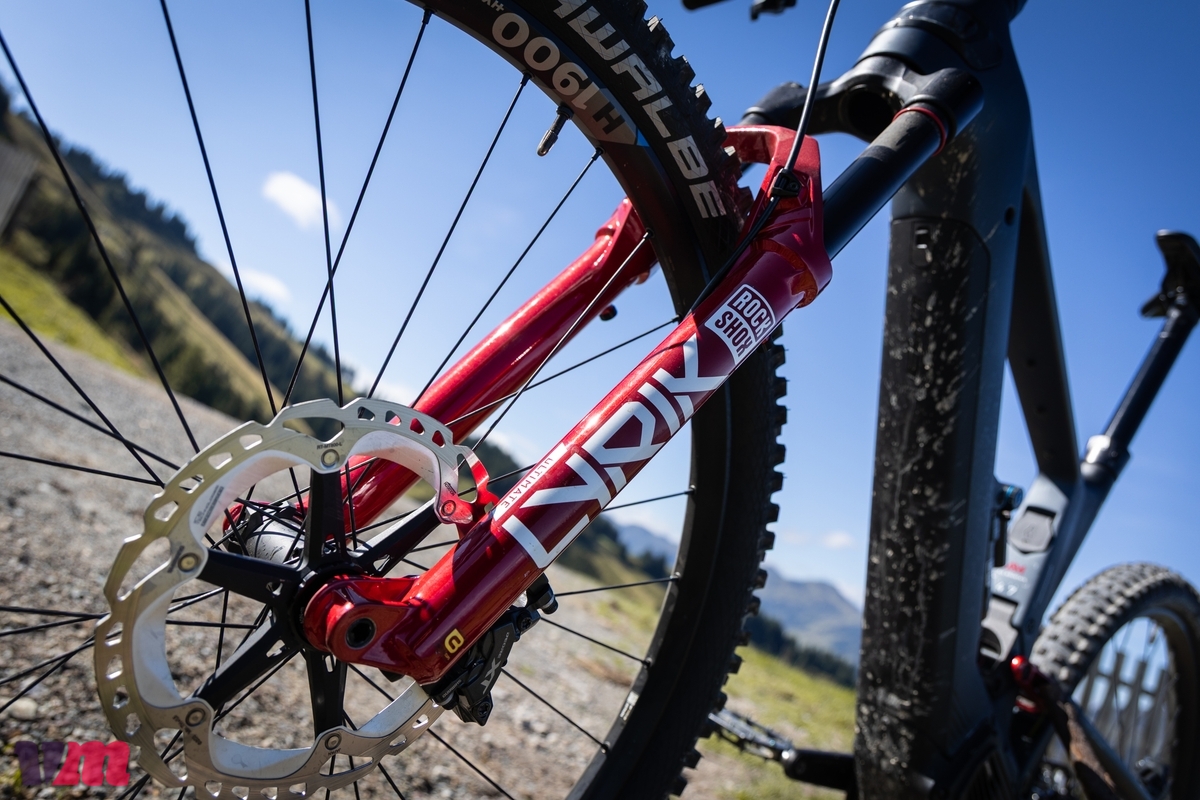
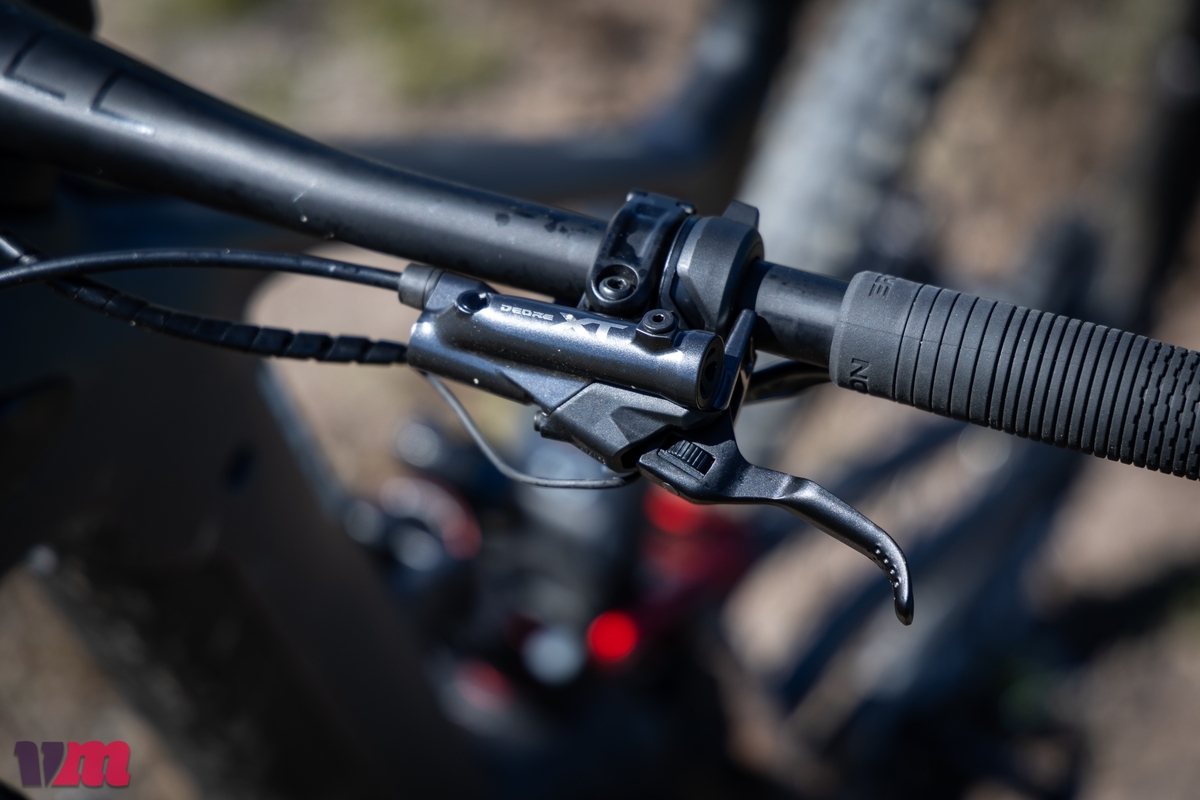
Bulls doesn't skimp on the suspension: A RockShox Lyrik Ultimate up front with 160 mm of travel and a RockShox Super Deluxe Ultimate shock at the rear represent the top end of the performance scale. The Shimano XT 4-piston brake system with large 203 mm rotors front and rear also delivers appropriate stopping power. Another highlight is the 8Pins seatpost, which is almost invisibly integrated into the frame and offers plenty of travel.
A little insider tip regarding the included charger: Bulls includes a 3-amp charger in the box. Technically, however, this is exactly the same hardware as the 4,8-amp fast charger. The higher charging power is simply limited by software. Anyone who buys this bike should ask their dealer to activate the charger as a "Fast Charger".
The Bulls Vuca Evo AM on the trail
So how does the Bulls Vuca Evo AM 2 perform in the real world? Its key specifications – 160/150 mm of travel, 29-inch wheels, and a modern yet not radical geometry (64,5-degree head angle, 480 mm reach in size L) – promise a true all-rounder. And the bike delivers on that promise on the trail.
The suspension is absolutely fantastic. The rear end is extremely sensitive, effortlessly smoothing out harsh impacts while simultaneously offering enough support and "pop" to actively launch the 25,7-kilogram machine over edges. It has ample reserves and always behaves predictably. Combined with the steep seat angle, the Bulls also climbs steep ramps with excellent composure.
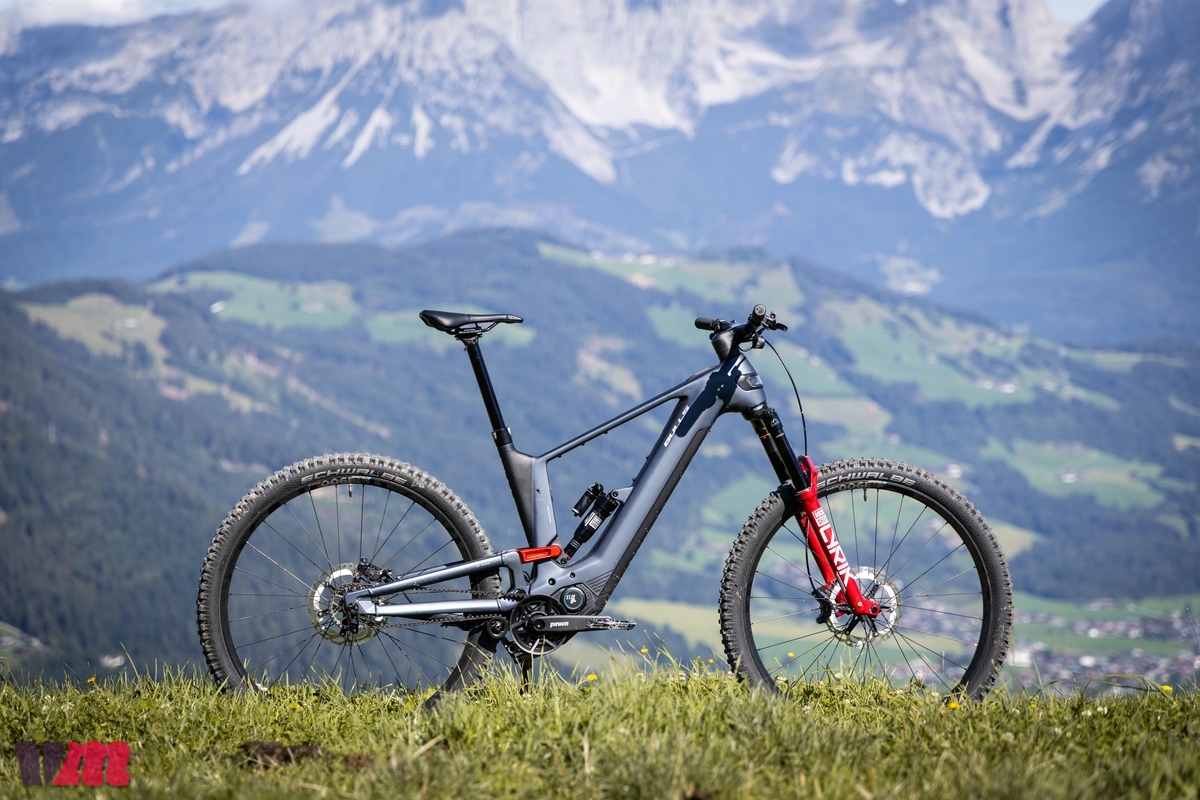
Nevertheless, it's important to understand what the Vuca was designed for. It's not a full-throttle enduro bike for the EWS race track. This is also emphasized by the frame's approval, which is "only" for Category 3 (jumps up to approximately 60 centimeters). Those who want to shred the wildest downhill tracks in the bike park every weekend will find themselves pushing the limits of what other, more downhill-oriented bikes are better suited for. However, for natural singletrack, technical climbs, and extended tours in rugged terrain, the comfort factor is phenomenal.
Light and shadow in detail
Where there is much light, there is unfortunately also some shadow. Bulls deserves particular criticism for its choice of wheels and tires. While the DT Swiss H1900 wheels are indestructible workhorses, one would certainly expect a higher-quality option on an €8.500 bike. The tire choice, however, is truly irritating: Schwalbe's Magic Mary is only used here in the inexpensive and hard "Performance" compound. On a bike with such an excellent suspension system, this tire noticeably diminishes its potential in wet conditions and on roots. Anyone who likes to push the limits should invest in more capable tires right from the start.
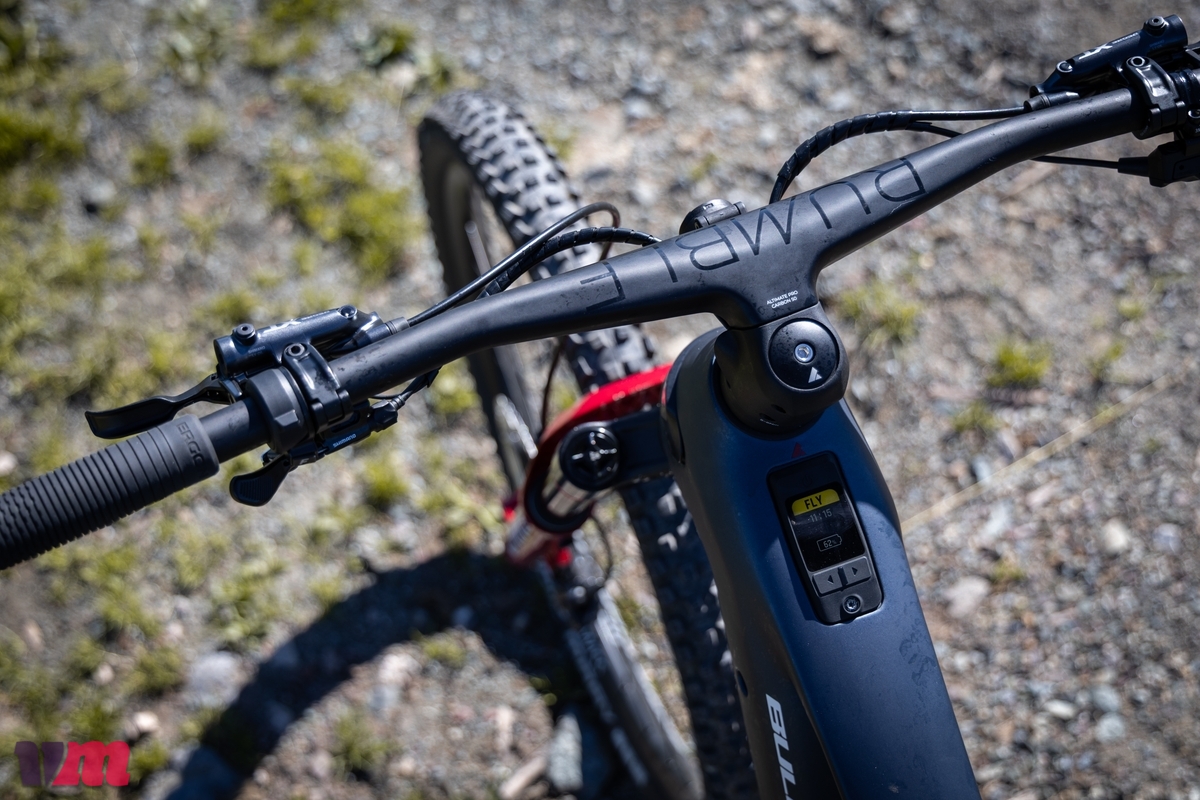
Another drawback is the cockpit. Bulls uses a sleek, one-piece carbon handlebar-stem combination. This saves weight and looks futuristic, but ergonomically it's a double-edged sword. The handlebar offers extremely little backsweep and hardly any rise. As a result, it feels like the rider is pulled significantly over the front and can quickly lead to painful wrists on long descents. Since the handlebar angle cannot be adjusted on one-piece systems, the only solution for ergonomic problems is a complete replacement.
The character of the Pinion MGU
Finally, the drive system also requires a short adjustment period. The Pinion MGU simply rides differently than a classic mid-drive motor with a derailleur. Shifting under load is possible, however, two of the gear changes are inherently a bit rougher, which can be noticeable as a short, audible clunk and a slight slippage of the crank. This is particularly bothersome on technical uphill sections if you accidentally shift gears at the wrong moment.
The soundscape is also unique. In easy climbing gears, the motor makes its presence known with a distinct, noticeable hum. The harder the gear and the higher the speed, the quieter the unit becomes, until it's almost inaudible on level ground. The MGU doesn't need to hide its power. While it doesn't quite reach the power of an Avinox or the very latest Bosch CX, it delivers enough thrust in almost any situation to confidently tackle even challenging uphill sections.

