


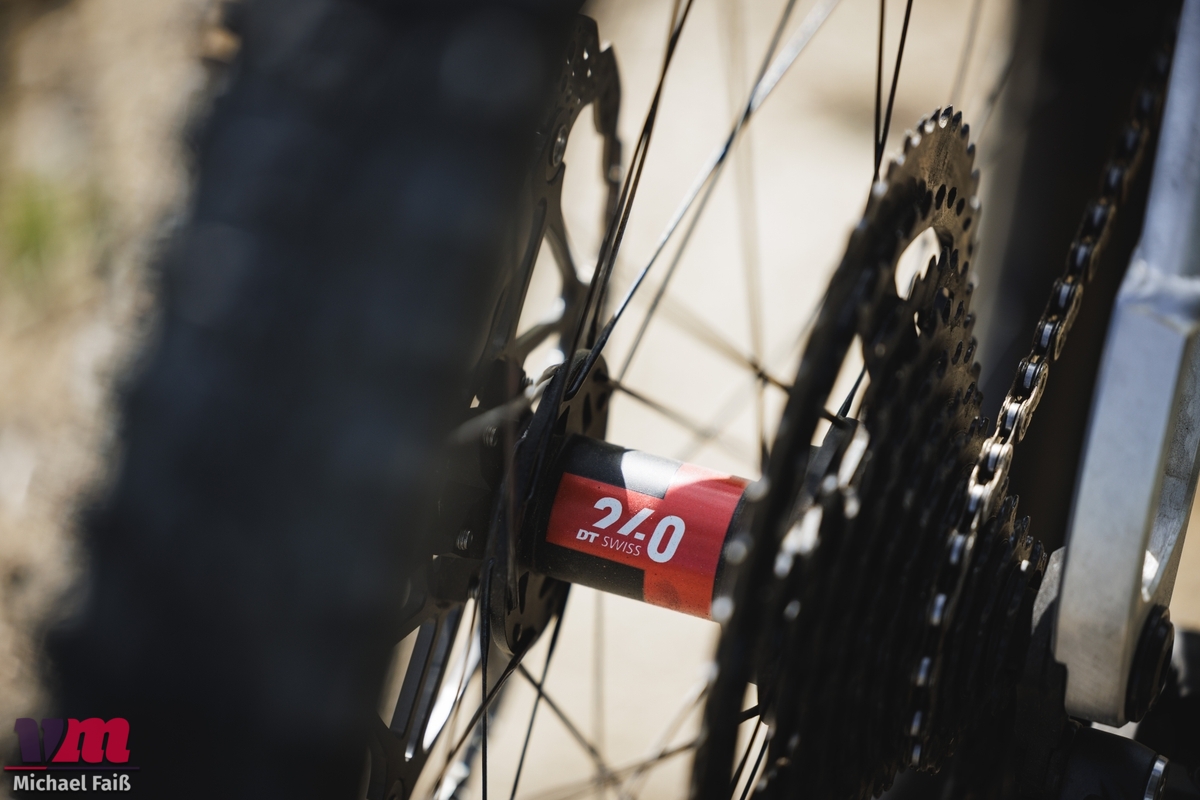
Last year, DT Swiss introduced "Degrees of Freedom"—a system for reducing pedal kickback on full-suspension mountain bikes, initially compatible only with DT Swiss DEG hubs. Now, the DF system is also available as an upgrade kit for ratchet hubs, offering a wider adjustment range of 0° to 40°. We took a look at how it all works—in theory and in practice.
All information at a glance
- New DEG DF Upgrade Kit with 30° and 40° idle angle
- Ratchet DF Upgrade Kits bring the anti-pedal kickback feature to 350 & 370 Ratchet (LN) hubs for the first time!
- New, asymmetrical aluminum rims for XC, Trail & Enduro
What is DF intended for?
Behind the Degrees of Freedom system lies a simple mechanism that engages before the actual freewheel. According to DT Swiss, its purpose is to reduce pedal kickback on full-suspension bikes. This refers to unwanted chain tension when the rear suspension compresses. It sets the crank arm in motion and is felt by the rider as an unpleasant jolt at the pedals. There is no consensus in the industry or the media as to whether pedal kickback is actually a problem. Many point out that riders experience other forms of feedback instead, or that pedal kickback only plays a role in a few niche cases (see, for example, Pinkbike , mtb-news.de , Starling Cycles , SRAM/O-Chain).
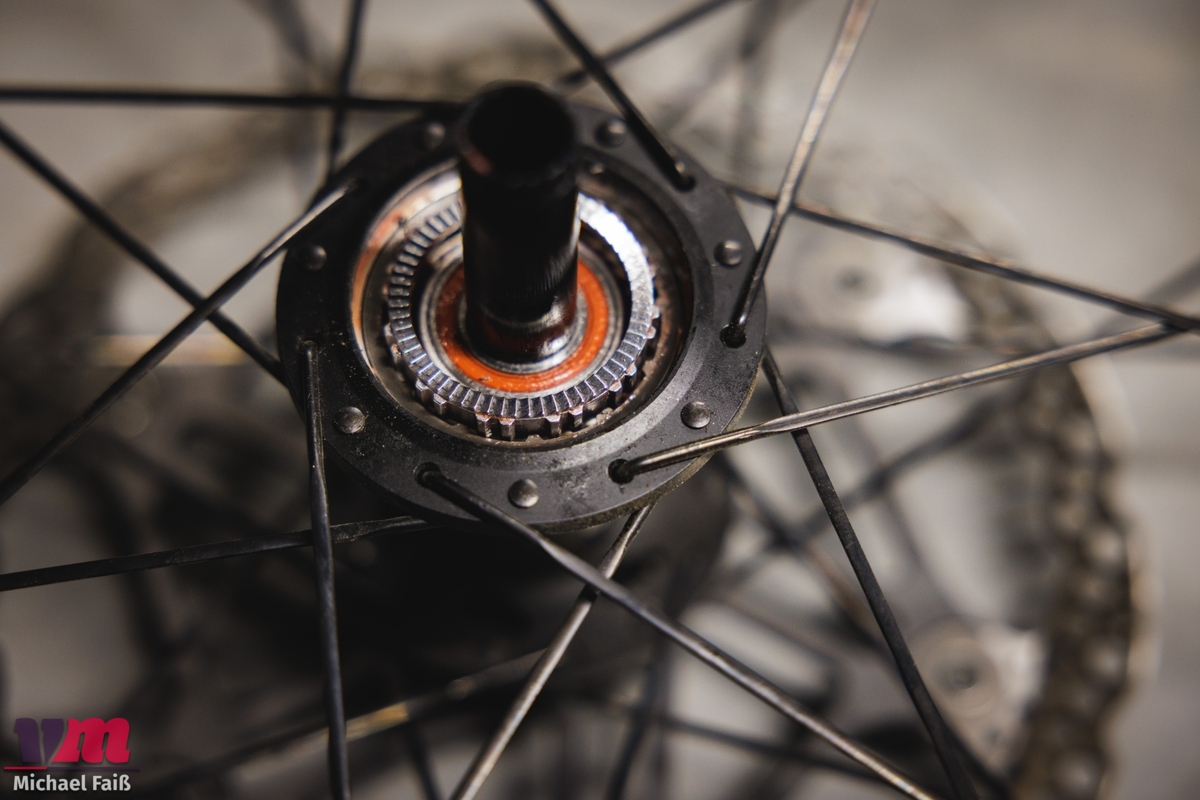
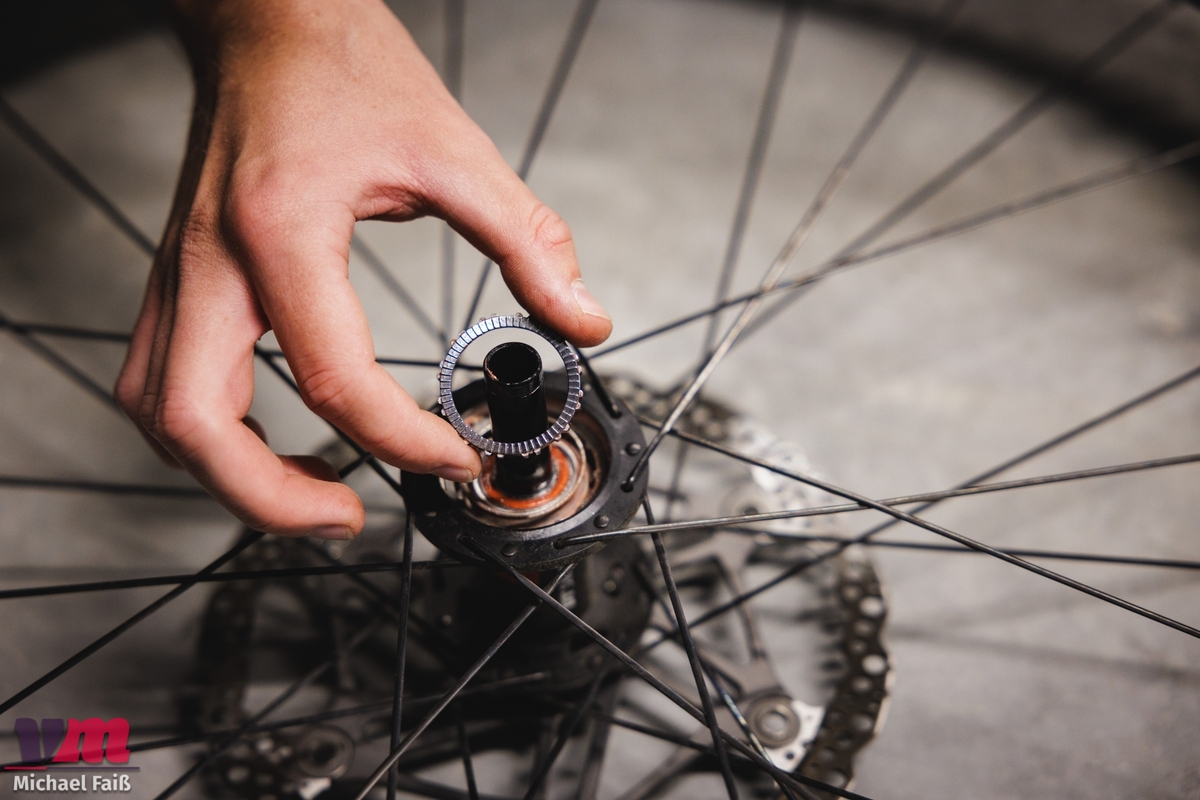
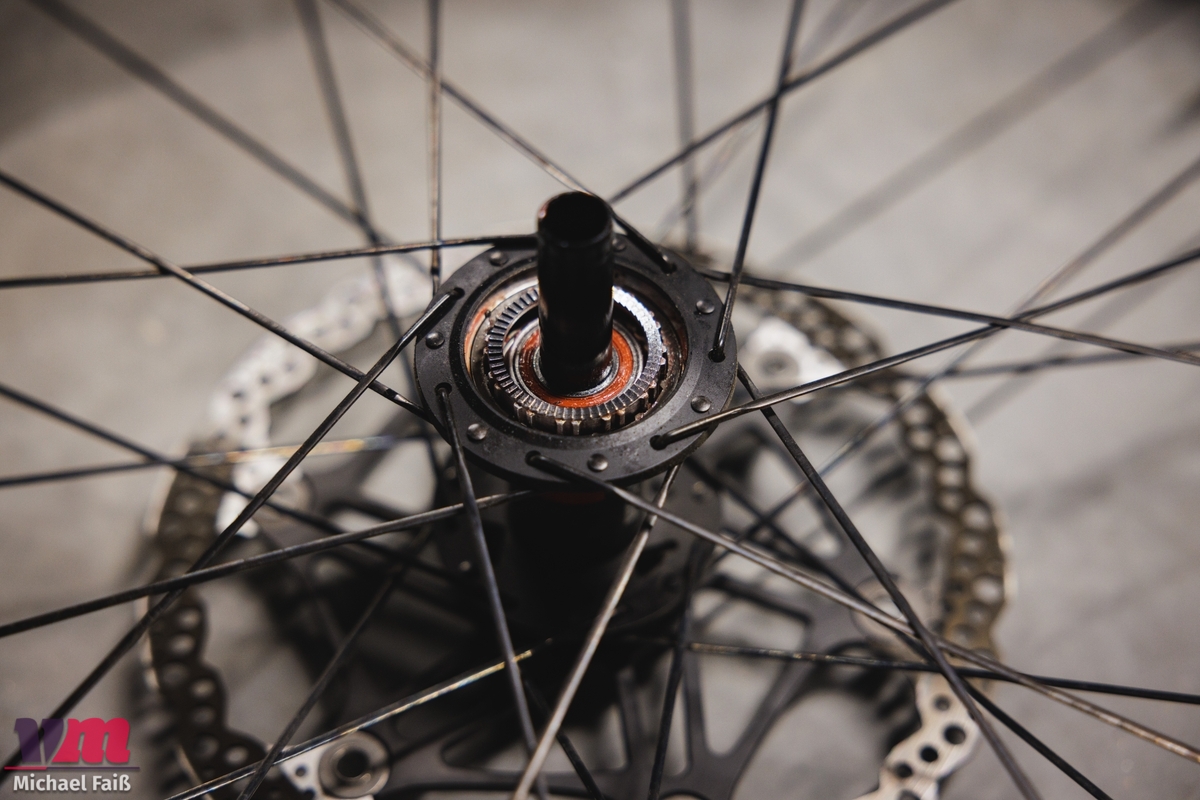
Regardless of the specific physics behind the phenomenon, DT Swiss's DF system, similar to SRAM's O-Chain crank or e*thirteen's Sidekick hub , is designed to decouple the rear triangle's movement from influences on the chain or pedals. DT Swiss achieves this by using a free play (10°, 14°, 20°, 30°, or 40° depending on the kit), through which the cassette can always rotate freely before any tension is applied to the chain. This free play is realized via special toothed discs.
Upgrade kits, more compatibility – that's what's new
Previously, the DF system was only available for DT Swiss hubs with the new Ratchet DEG standard, launched in 2024. Now, it's also available as an upgrade kit for classic Ratchet and Ratchet LN hubs! Specifically, full-suspension bikes with a DT 350 Ratchet or DT 370 Ratchet LN hub can now also be equipped with the DF system, as DT Swiss is now offering the corresponding ratchet rings and thread rings. And that's not all: The newly introduced DEG DF Race Kit provides two new, greater degrees of freedom for DEG hubs. The kit includes two thread rings – one with a new 40° setting for downhill riders; the other, also new, 10°/30° option is aimed particularly at enduro riders.
Ratchet DF Upgrade Kit
- Compatibility 350 Ratchet, 370 Ratchet LN
- Degrees of freedom 0° & 14°
- toothed washer 54 t
- www.dtswiss.com
- Price (RRP) 119,90 euros with tool, 109,90 euros without tool
DEG DF Race Kit
- Compatibility 240 DEG DF, 350 DEG DF
- Degrees of freedom 0° & 40° / 10° & 30°
- Scope Tool + thread rings (toothed discs are required separately)
- www.dtswiss.com
- Price (RRP) EUR 59,90
How does the anti-pedal kickback system feel on the trail?
Now that upgrade kits with broader compatibility are available, more and more riders are asking themselves: Is an upgrade to DT Swiss worth it for me? We in the editorial team have already gained experience with DT Swiss's anti-pedal kickback system on several bikes.
The DT Swiss DF kit can make a noticeable difference depending on the bicycle and rear suspension system. It must be clearly stated that it is not equally beneficial for every bike.
For example, if you're riding a modern Bosch motor that tries to keep the chain constantly tensioned depending on the selected assistance level, then this system won't be of much use. Similarly, if you have a bike that produces very little chain stretch during suspension compression, you won't benefit much from this system. In fact, the main disadvantage might even come into play: for some riders who want a very responsive bike to their pedal stroke, the increased free play at the pedal will be a disappointment.
For all bikes whose rear suspension exhibits noticeable chain stretch or pedal kickback, a DF hub is generally a good idea. You can easily test this yourself on your own bike: simply set the rear suspension to a very soft setting for a moment and compress it forcefully. If the crank and pedals are turned backward, i.e., receive an impulse from the chain, then the system is effective.
I've tried the DT hub on various bikes and I have to say that there was noticeably more grip, especially on bikes with significant rear suspension flex affecting the pedals. It was really noticeable. With flat pedals, my feet even felt more secure. Several friends who tried it confirmed this as well.
The difference between the 0° and 10° settings on our test hub is subtle, but noticeable. I experienced the direct comparison on an Orange Stage 6 with a single-pivot rear suspension: With the DF system active, the rear end feels "freer" and less harsh when pushing the bike on rough sections. This requires less effort, as the rear suspension can now do exactly what it was designed for. I can't yet assess whether there's any pedal kickback and whether it can be reduced. The DF upgrade can offer a perceived advantage for gravity-oriented riders and is appealing due to its relatively simple implementation, provided you already own a compatible DT Swiss hub. However, those who haven't yet experienced the DF system probably won't really notice if, or what, they're missing.
What is the purpose of the 0° setting?
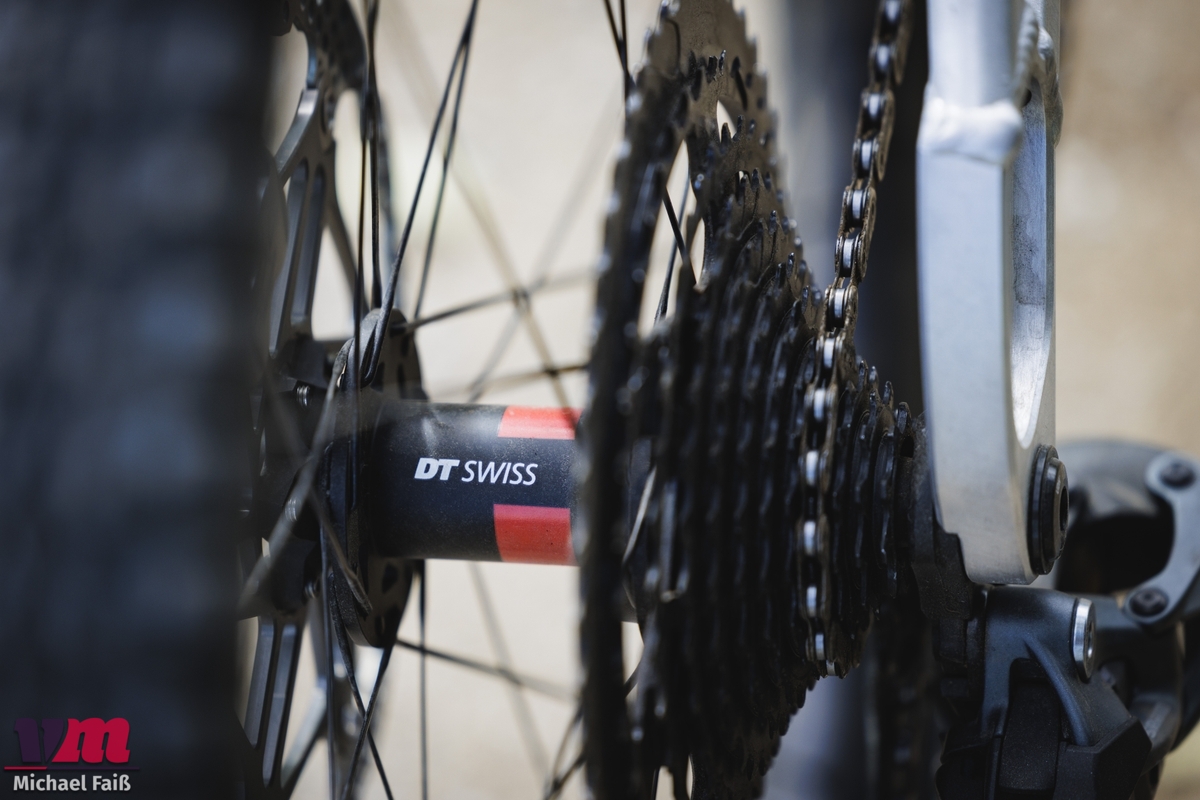
Those convinced of the system's advantages will likely always ride in activated mode. Nevertheless, it's practical that DT Swiss allows riders the 0° option. Especially with mountain bikes that come equipped with a DF hub from the factory, the buyer hasn't necessarily consciously opted for the anti-pedal kickback device and thus retains the freedom to choose even after purchase. Essentially, the DF concept "ruins" the sensitive responsiveness of a hub with a small engagement angle by always introducing a 10° or more of free play. Depending on the terrain, personal preference, rear suspension kinematics, and riding scenario, the preferred degree of freedom can be adjusted.
New aluminum rims for XC, Trail and Enduro
The updates to the Degree of Freedom system aren't the only news from DT Swiss. The Swiss wheel manufacturer is further expanding its range of offset rims, introducing three new aluminum rims – the XR 421, XM 431, and EX 441 – which will be used on the complete wheelsets of the 1700 series. Besides the asymmetric cross-section for more even spoke tension, all models share the same 30 mm internal width and a price of €99,90. The trail (XM 431) and enduro (EX 441) rims will be available in both 29-inch and 27,5-inch sizes, while the XC model will only be available in 29-inch.
DT Swiss XR 421 rim
- field of application. Cross Country
- dimensions 622 x 30 mm
- Weight (manufacturer's) 548 gr
- Max system weight 120 kg
- ASTM: 3
- www.dtswiss.com
- Price (RRP) EUR 99,90
DT Swiss XM 431 rim
- field of application. Trail running
- dimensions 622 x 30mm, 584 x 30mm
- Weight (manufacturer's) 580 g (29 inch)
- Max system weight 120 kg
- ASTM: 4
- www.dtswiss.com
- Price (RRP) EUR 99,90
DT Swiss EX 441 rim
- field of application. Enduro
- dimensions 622 x 30mm, 584 x 30mm
- Weight (manufacturer's) 634 g (29 inch)
- Max system weight 130 kg
- ASTM: 5
- www.dtswiss.com
- Price (RRP) EUR 99,90
Information: Press release DT Swiss