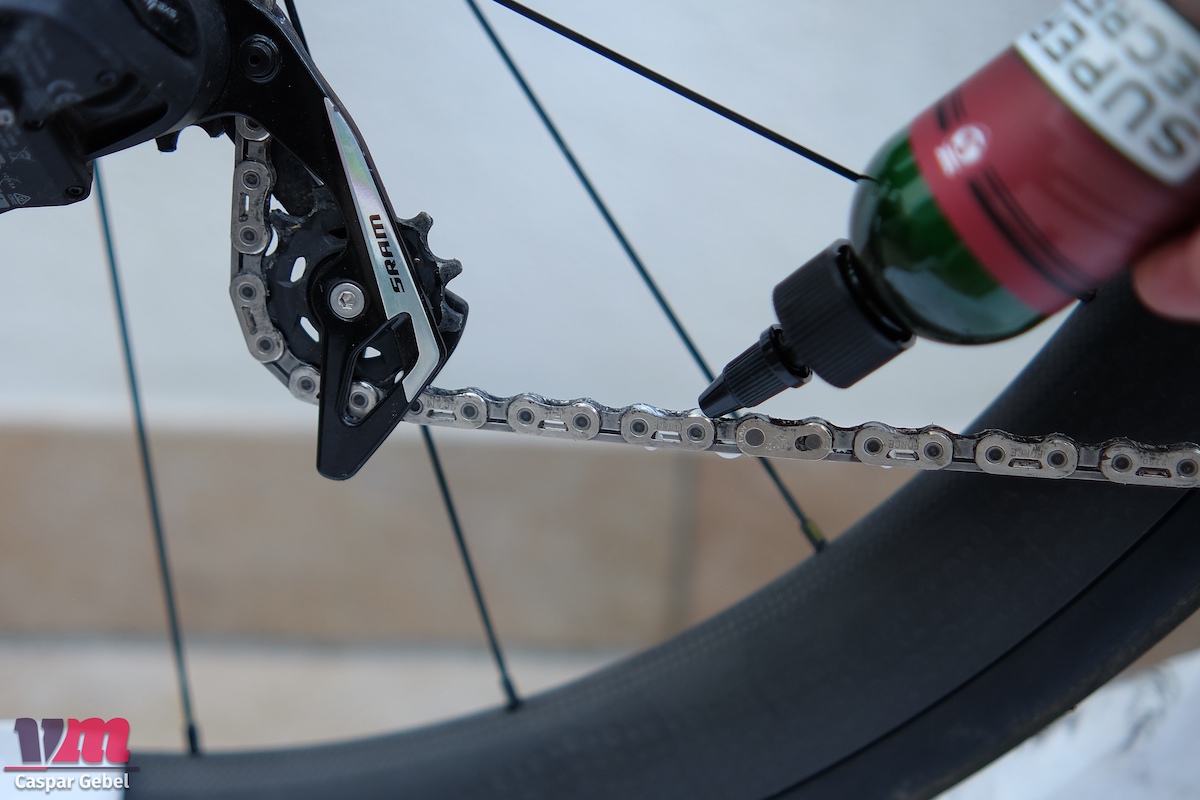
Silca chain wax system review: While the US company didn't invent waxing, they make the process quite simple with their various products. What you invest in these products is saved elsewhere through significantly reduced wear on the chain, cassette, etc. It's definitely worth taking a closer look.
The chain is the problem child of the bicycle. It constantly demands attention, is always dirty despite all maintenance, and when it wears out, it drags numerous other components down with it: Anyone who wants to have their rusty chain replaced at a bike shop usually also has to pay for a new cassette and, if they're unlucky, even new chainrings. A three-figure sum can quickly add up.
Sisyphean task of chain maintenance
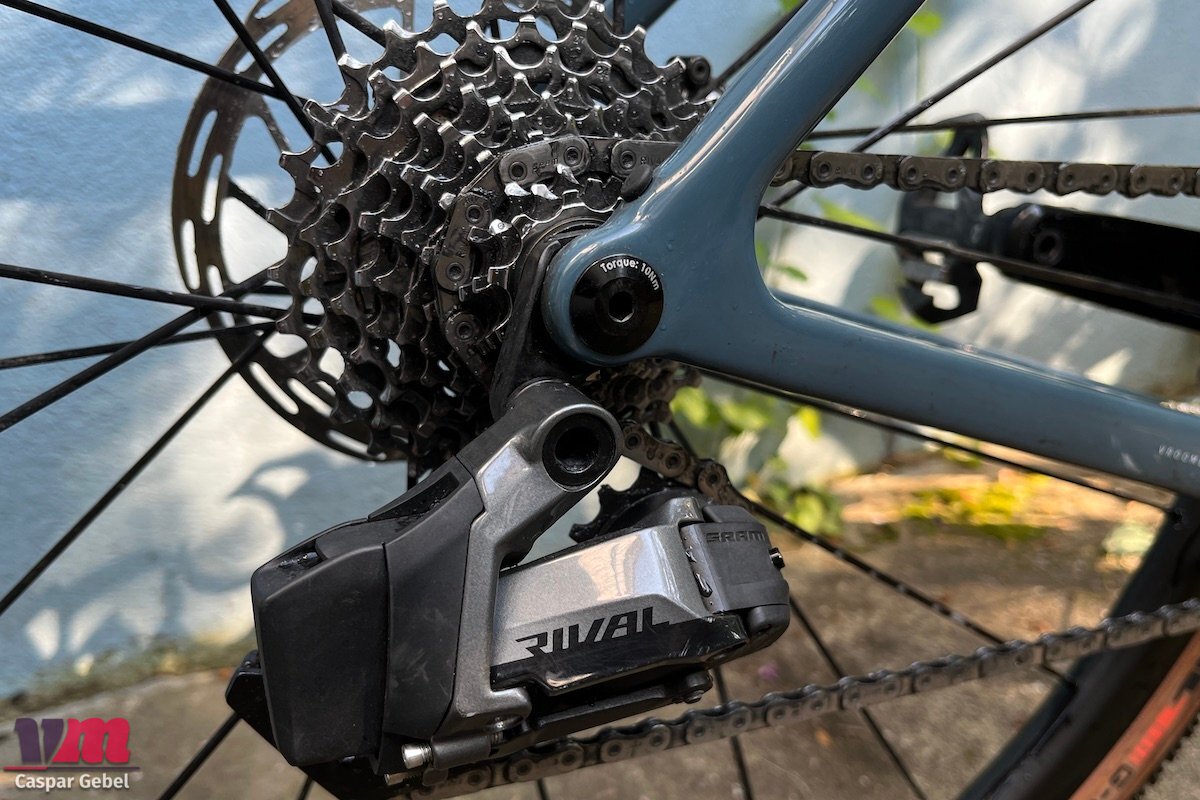
The insidious thing is: it's practically impossible to properly maintain a chain. What causes wear isn't so much the mechanical stress. It's primarily the paste of oil, grease, and road grime that clogs the chain itself, as well as the sprockets and chainrings. A brand-new chain only needs to be ridden for a few hours before it's covered in a blackish layer of grime that's extremely difficult to remove. This chain grime acts like an abrasive paste, contaminating fingers, calves, and trouser legs, and soiling other bike parts.
Several attempts have been made to overcome this problem. Decades ago, it was the driveshaft (which is still used today); now, the toothed belt has become standard on quality bicycles with gear shifting. The fully enclosed chain case, in which a well-lubricated chain can last for years without maintenance, originates from the Dutch bicycle.
However, bicycles with derailleur gears resist such methods – yet they are in particularly dire need of a solution. In competitive cycling, they are ridden hard and over many kilometers, and the increasing number of sprockets on the cassette leads to narrower chains, which are naturally more susceptible to damage and result in higher costs when worn.
Waxing: the clean solution
But there is a solution that is becoming increasingly popular, at least in cycling: hot waxing. Oiled chains attract dirt, leading to the problems described above; waxed chains stay clean – it's that simple. A waxed chain (and all the components it uses) can easily last twice as long, and when working on your bike, you'll no longer be punished with black grease on your hands, etc.
How exactly does hot waxing work? It's not particularly complicated if you have the right equipment; however, this will set you back around 200 euros. Since you don't have to repeat the process too often, you can, of course, pool your money with others for products like a professional wax melting oven. The time you invest in waxing your chains is more than recouped elsewhere: the effort required for cleaning and maintenance is significantly less than with oiled chains.
Silca: the four basic products for chain waxing
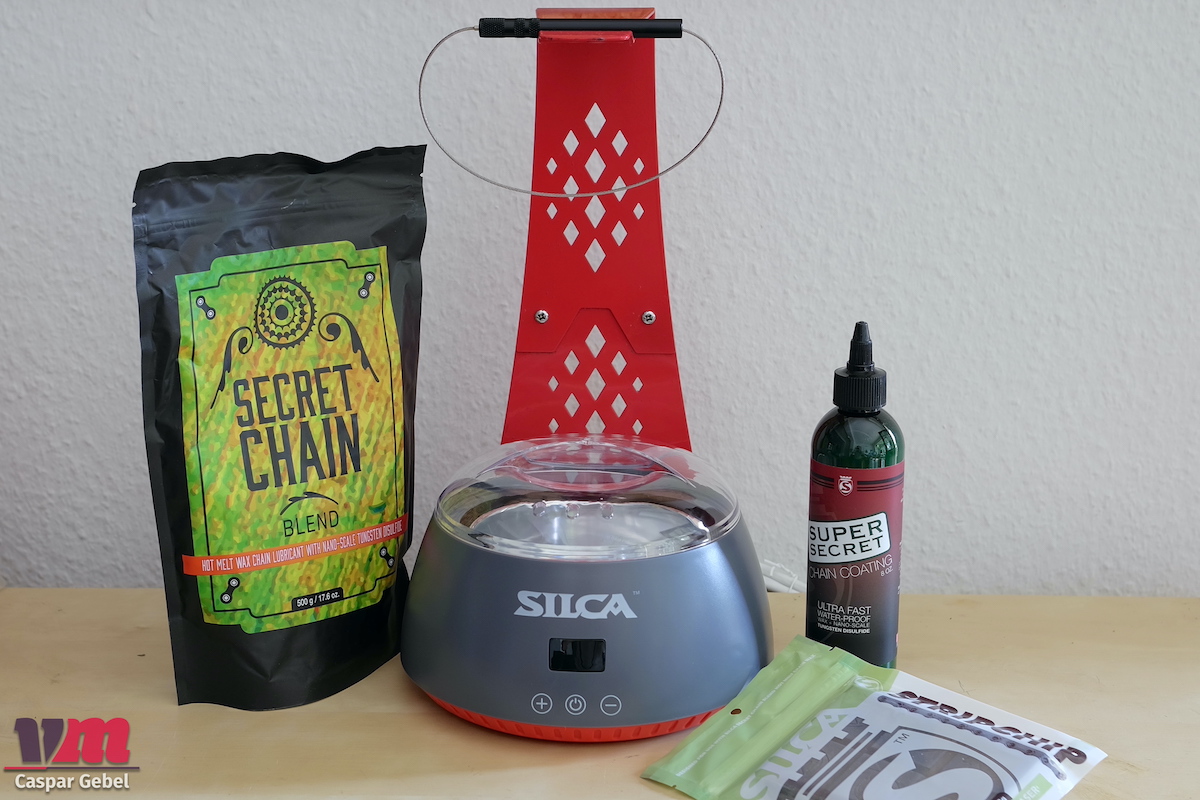
Silca is among the leading suppliers of waxing products. This pump and tool specialist, with over 100 years of experience, has developed numerous products under US management without making things unnecessarily complicated – quite the opposite, in fact. For professional waxing and maintenance of a chain, you really only need four items from the brand:
- the “Silca Chain Waxing System”, i.e. the kettle (RRP €119,95)
- Silca chain wax (500 g €49,95)
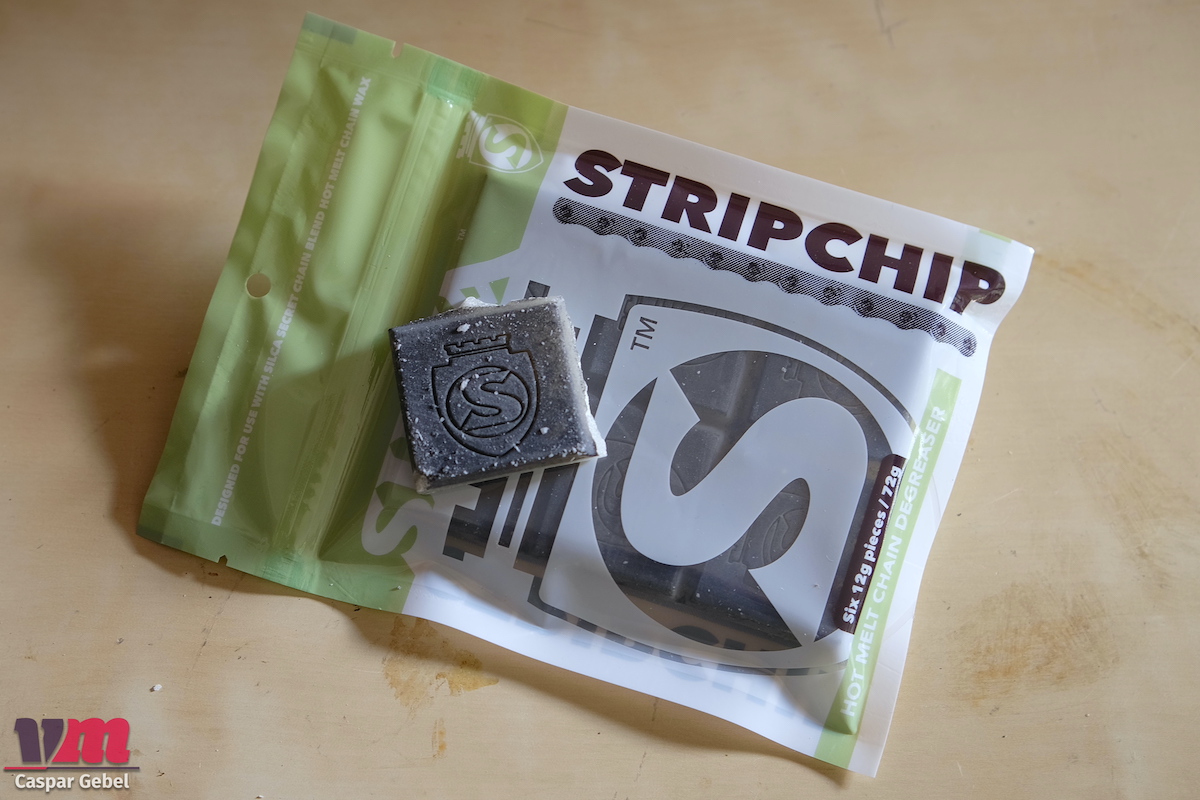
- Silca Strip Chips for degreasing (6 pieces €27,95)
- Silca Super Secret Chain Lube Liquid Wax (120 ml €29,95)
It all starts with a new chain that hasn't been ridden on yet – otherwise, the wax would be contaminated by dirt particles, compromising the entire process. Bicycle chains come with initial lubrication, a thin layer of grease that covers all surfaces and ensures smooth operation between the plates, rollers, and pins. Removing this lubricant requires some effort – for example, by soaking it in various solvents, which then must be disposed of in an environmentally friendly manner, or with the Silca Chain Stripper, which can be used multiple times for degreasing before it needs to be recycled.
Oleogelation instead of degreasing
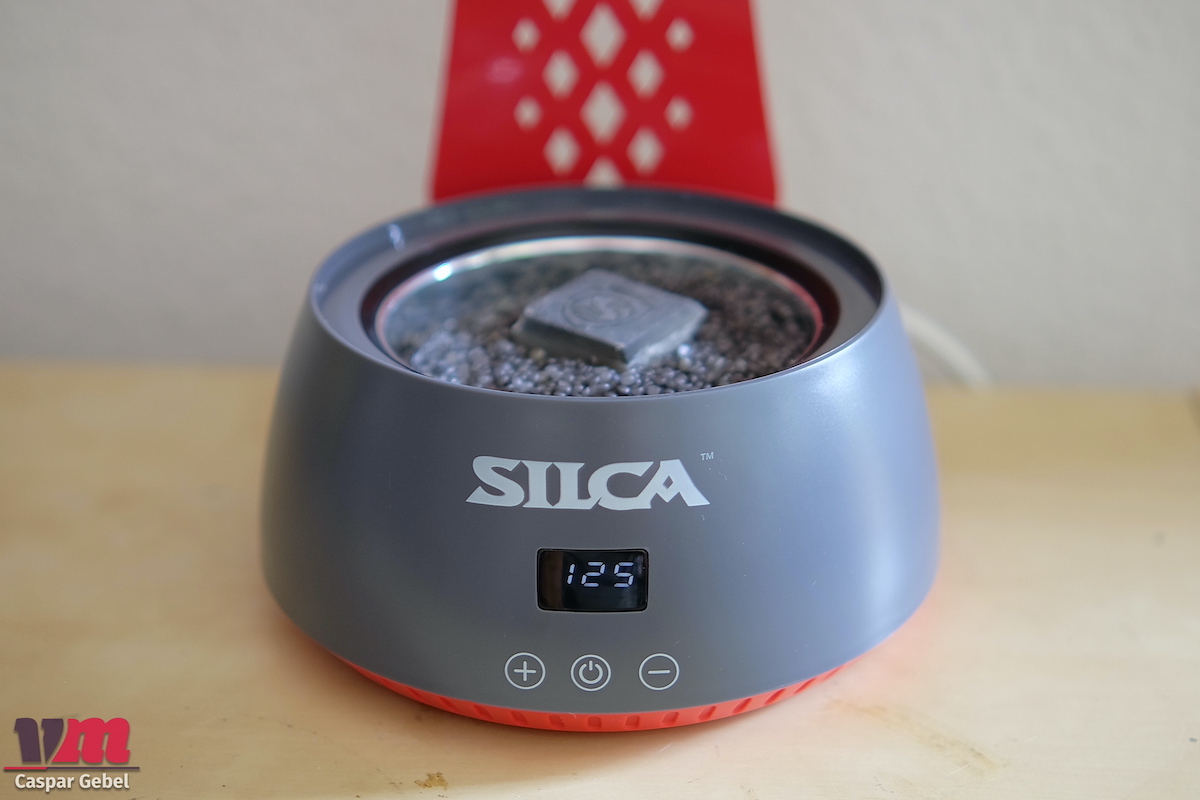
The process is simpler using "oleogelation," which involves converting liquid oil into a solid substance that bonds with the chain wax. Silca offers "Strip Chips" for this purpose, which are heated together with 300 grams of wax, similar to Silca's granules in a 500-gram bag. The wax is heated to 125°C, after which the chain, along with its initial lubrication, is placed in the pot of melted wax. It then needs to simmer for ten minutes, being stirred occasionally. Afterward, the temperature of the pot is reduced to 75°C, and the mixture is stirred again briefly.
When the wax in the kettle has cooled to 75°C (as indicated by the temperature gauge), it's time to remove the chain. At this temperature, the optimal amount of wax adheres to the chain. If it's too hot, too much wax will drip off; if the temperature is too low, too much wax will stick to the chain links, prolonging the break-in period.
“Chain Coupler” with minor quirks
To simplify handling the hot chain, Silca includes a holder with its Chain Waxing System. The "Chain Coupler" consists of an aluminum tube and a wire loop onto which the chain must be threaded before being immersed in the wax. This is easiest if the chain is laid flat. However, the holder's design isn't ideal, as it tends to slip into the liquid wax and is then difficult to grip.
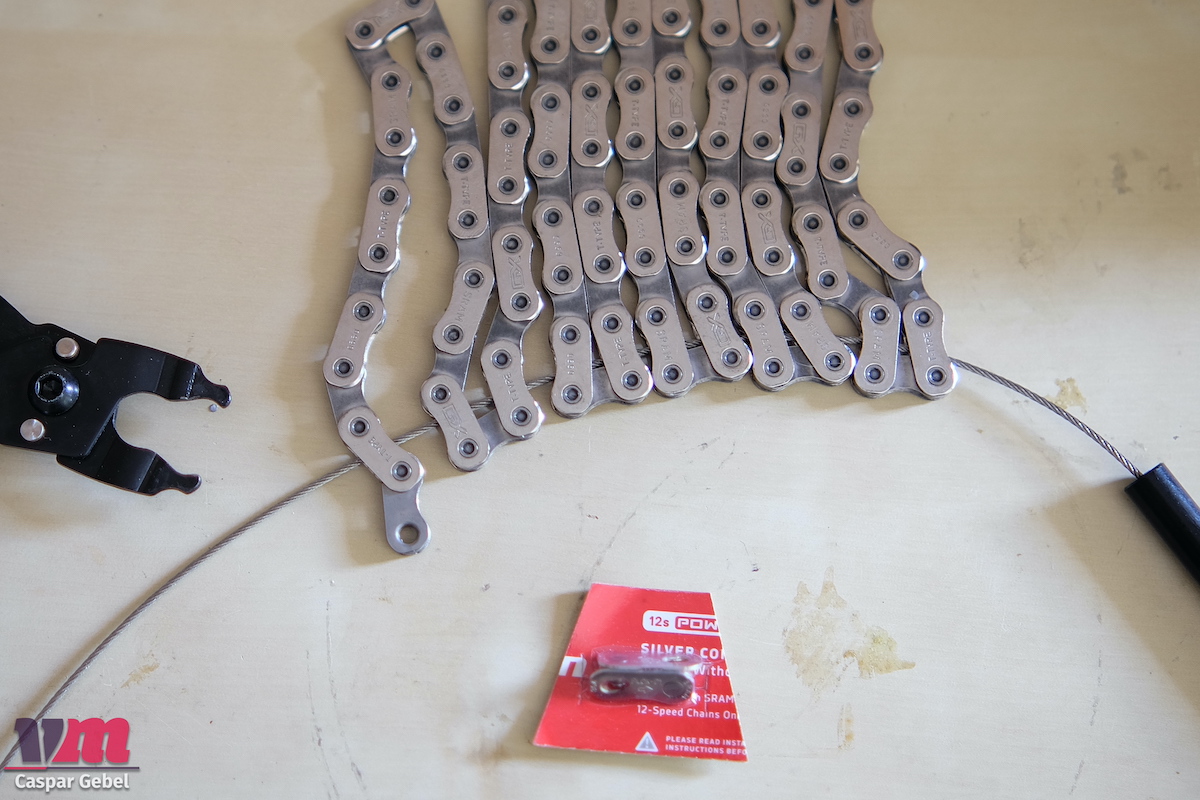
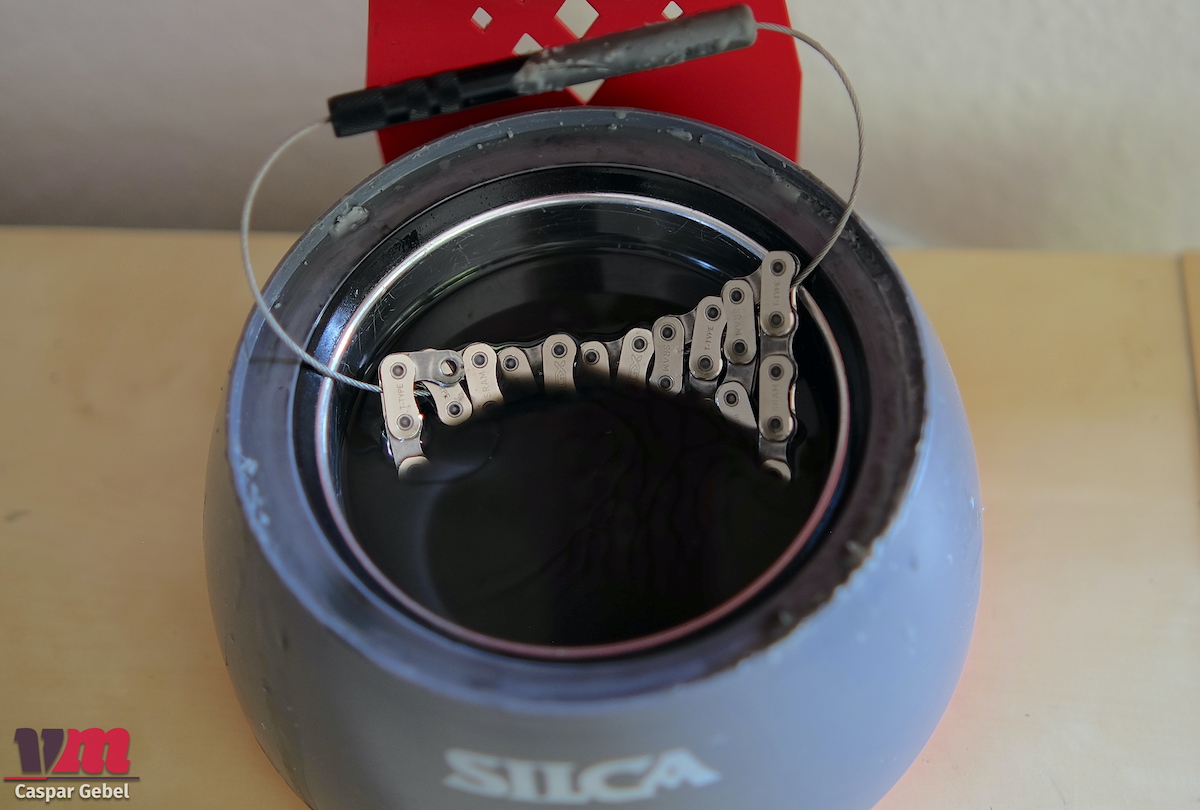
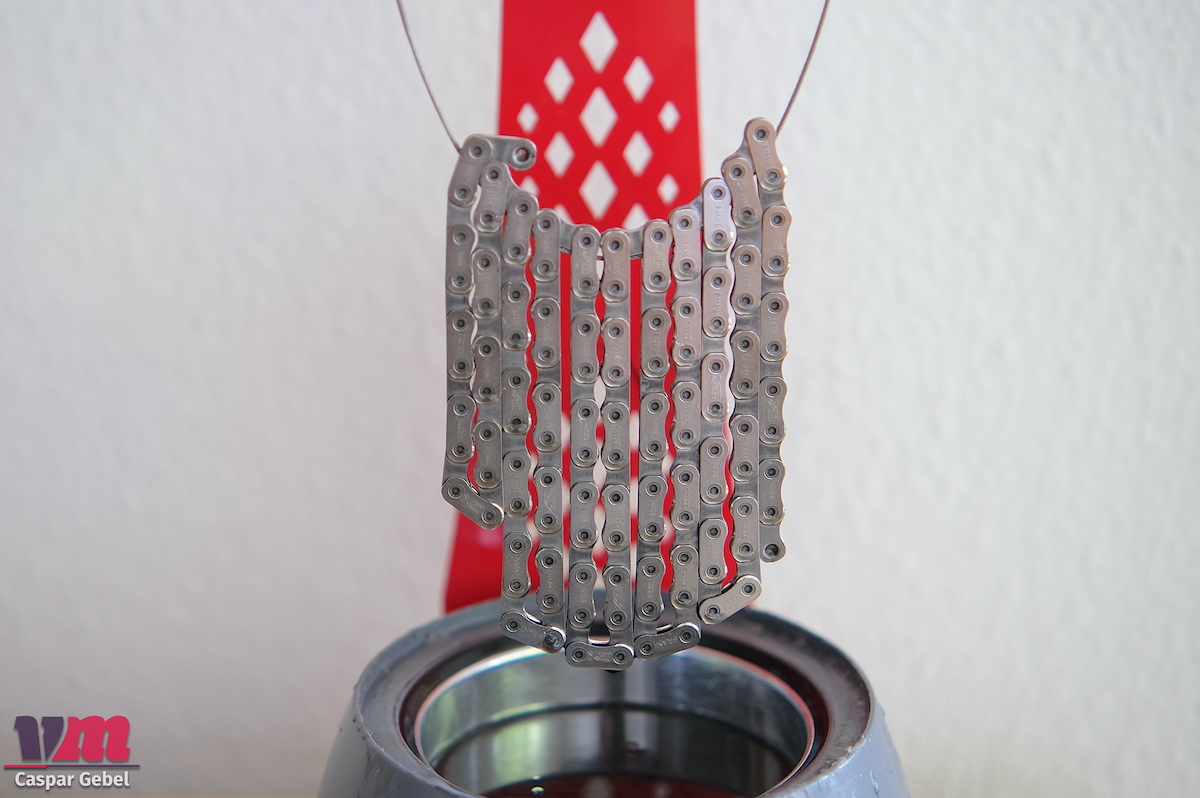
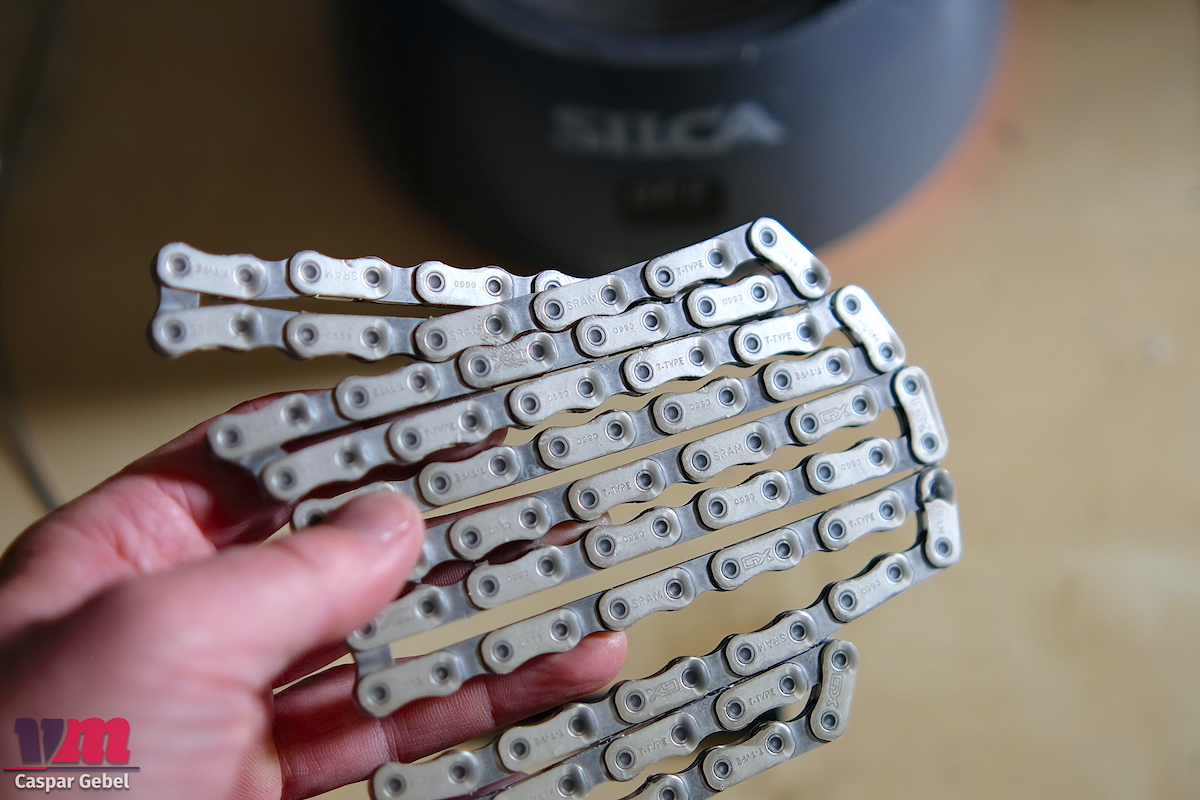
Once the chain has been soaked in wax long enough, the holder is hung over the arm of the waxing station so the chain can drip dry and cool. When the freshly waxed chain is removed from the chain coupler, it is stiff and hard, which makes installation on the bicycle a little more difficult. It's important to ensure that the chain connector (do not wax it) engages properly. To achieve this, you should scrape off some of the wax from the ends of the chain. The waxed chain will initially run roughly and shift poorly, but this will improve after the first few hundred meters.
Refresh with drip wax
And just like that, your chain maintenance is up to date! You only need to take action again after 200 to 300 km or after riding in the rain. Now, wipe the chain with a microfiber cloth; then apply one or two drops of liquid wax to each roller. After this treatment, allow the "Silca Super Secret Chain Lube" a day to penetrate the spaces between the plates, rollers, and pins. Another hot wax bath is generally only necessary after... 1.000 km are needed, although wet weather can significantly shorten the interval. Then the chain is waxed without the strip chip – you really only need that for a brand new one.
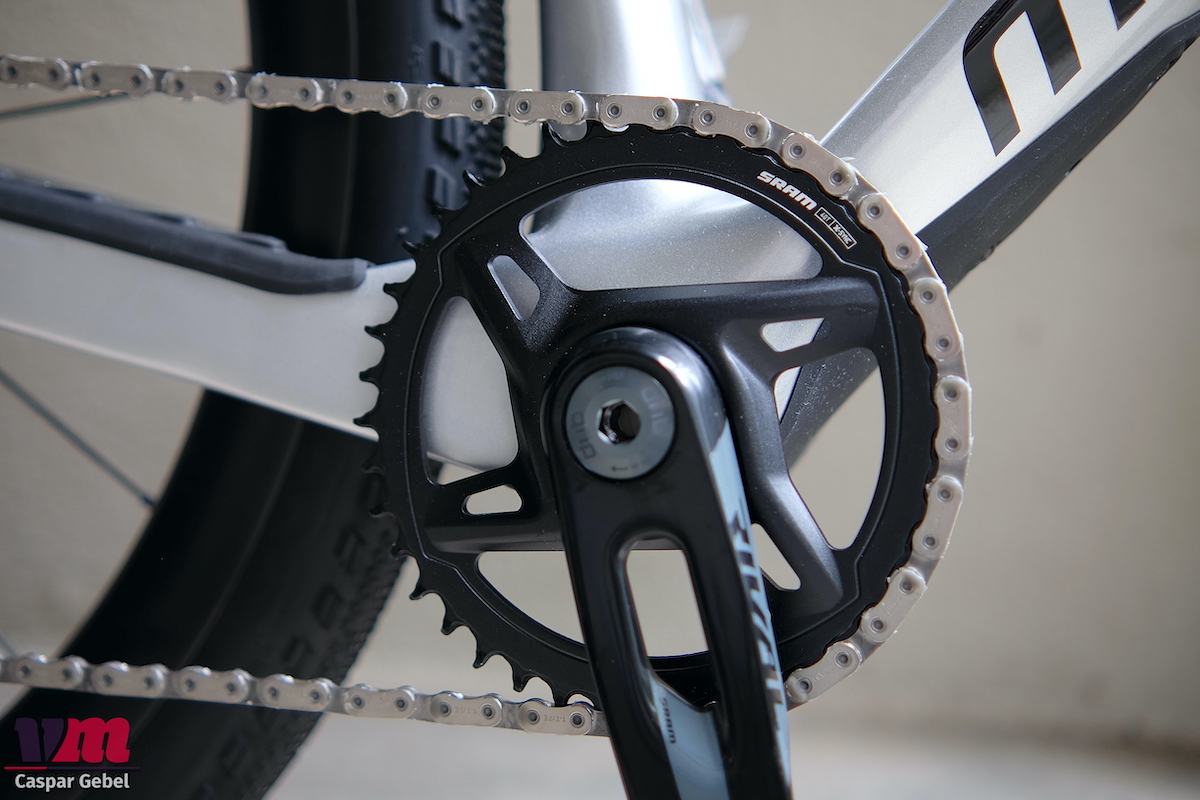
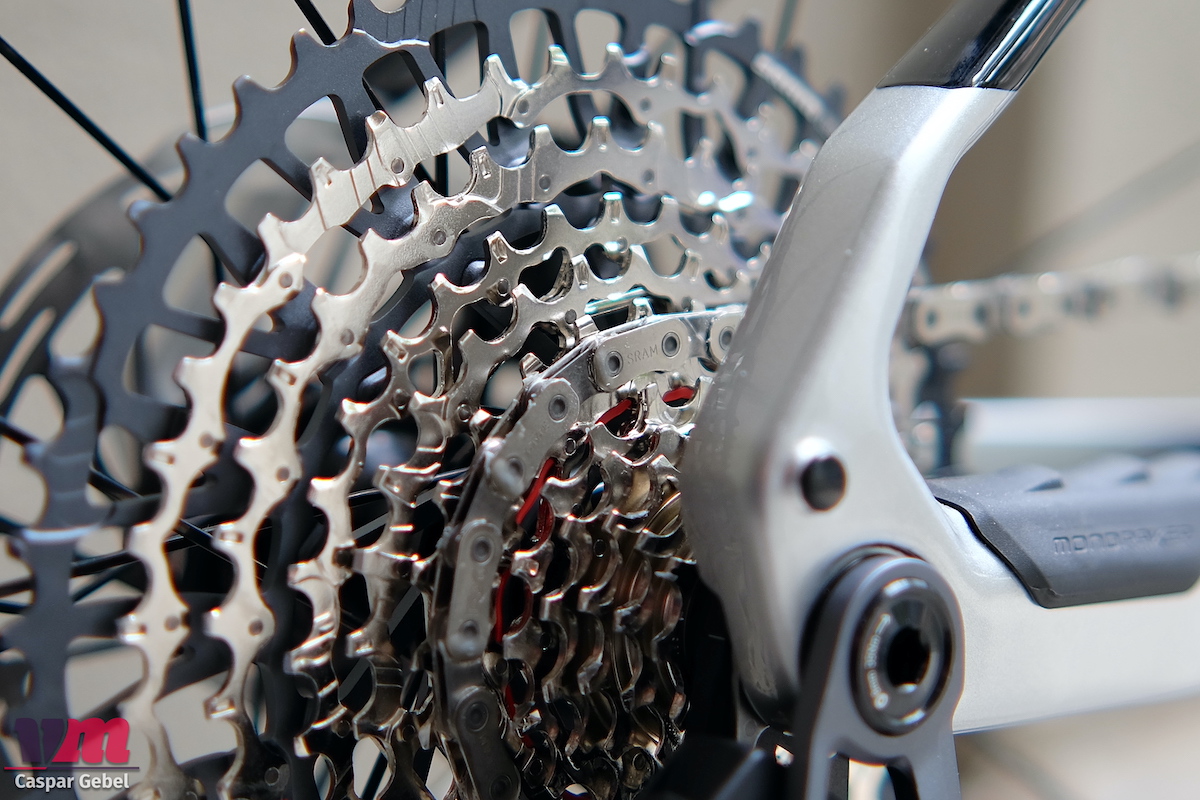
Cleaning before re-waxing is incredibly simple: Just rinse the chain with boiling water, after which it should be sparkling clean. Then, heat the wax until it's runny, to about 95°C. The wax in the wax melter can be reused indefinitely, especially since it hardly diminishes: A chain rinsed with hot water only absorbs about three grams of wax when re-waxed. However, once six new chains have been treated with initial lubrication using the Strip Chip system, the oleogelation process is exhausted, and the wax can then only be used to refresh previously waxed chains. To wax a brand-new, lubricated chain for the first time, you'll need to use fresh wax.
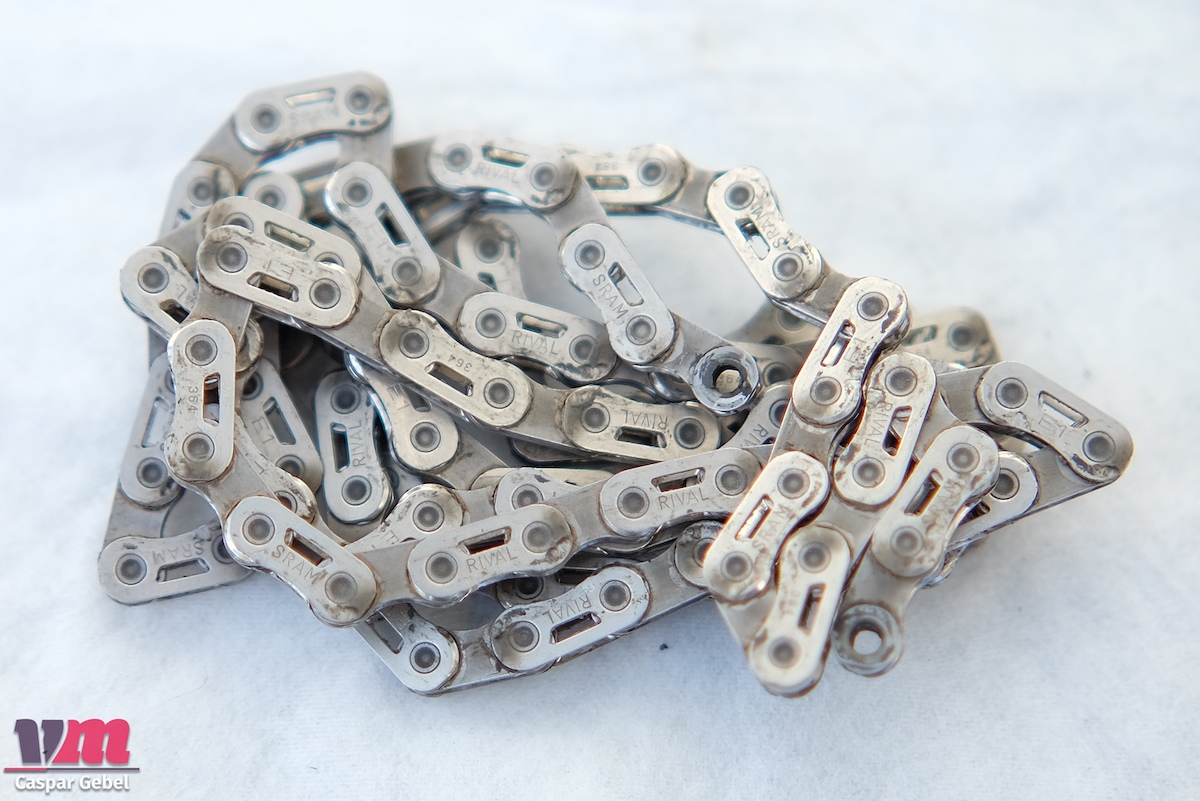
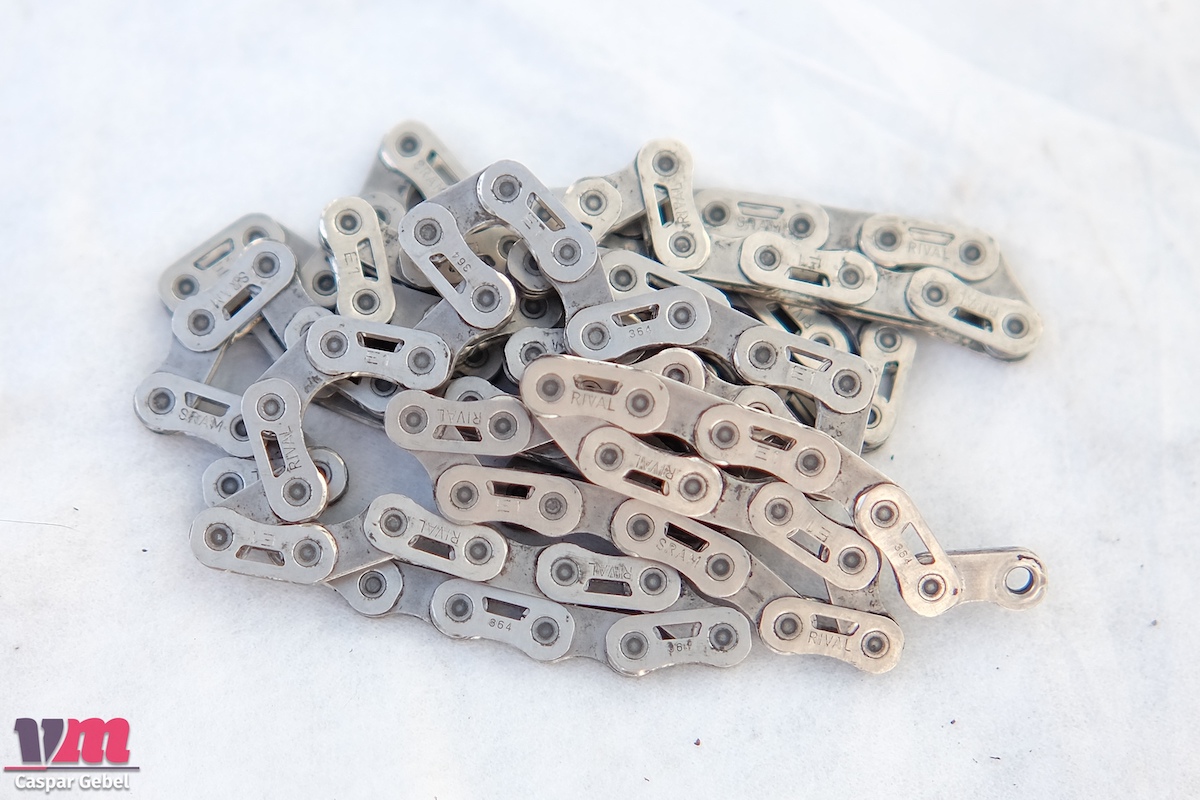
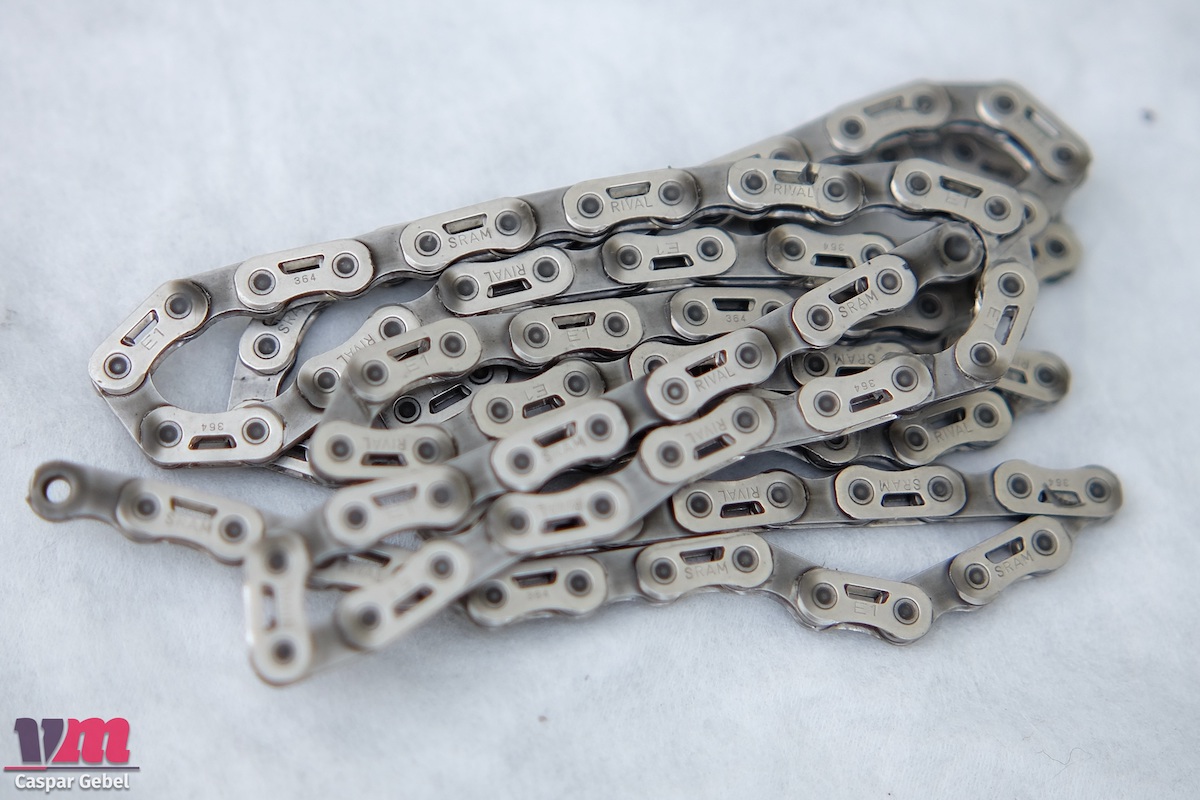
All of this sounds more complicated than it is – nothing like converting to tubeless tires, for example. Sure, you can make a science out of waxing and optimize chain cleaning with ultrasonic baths and other methods. But even the simple procedure with the Silca equipment delivers first-class results, and the process quickly becomes routine. So, if you're planning to buy a new bike or feel your chain needs replacing, you should consider switching to waxing right away. However, if you're fitting an existing bike with a waxed chain, it's crucial to meticulously clean and degrease all drivetrain components, such as sprockets, chainrings, and derailleur pulleys. Only then will everything stay nice and clean in the long run. And, as mentioned, that's the most important aspect of the whole process.