


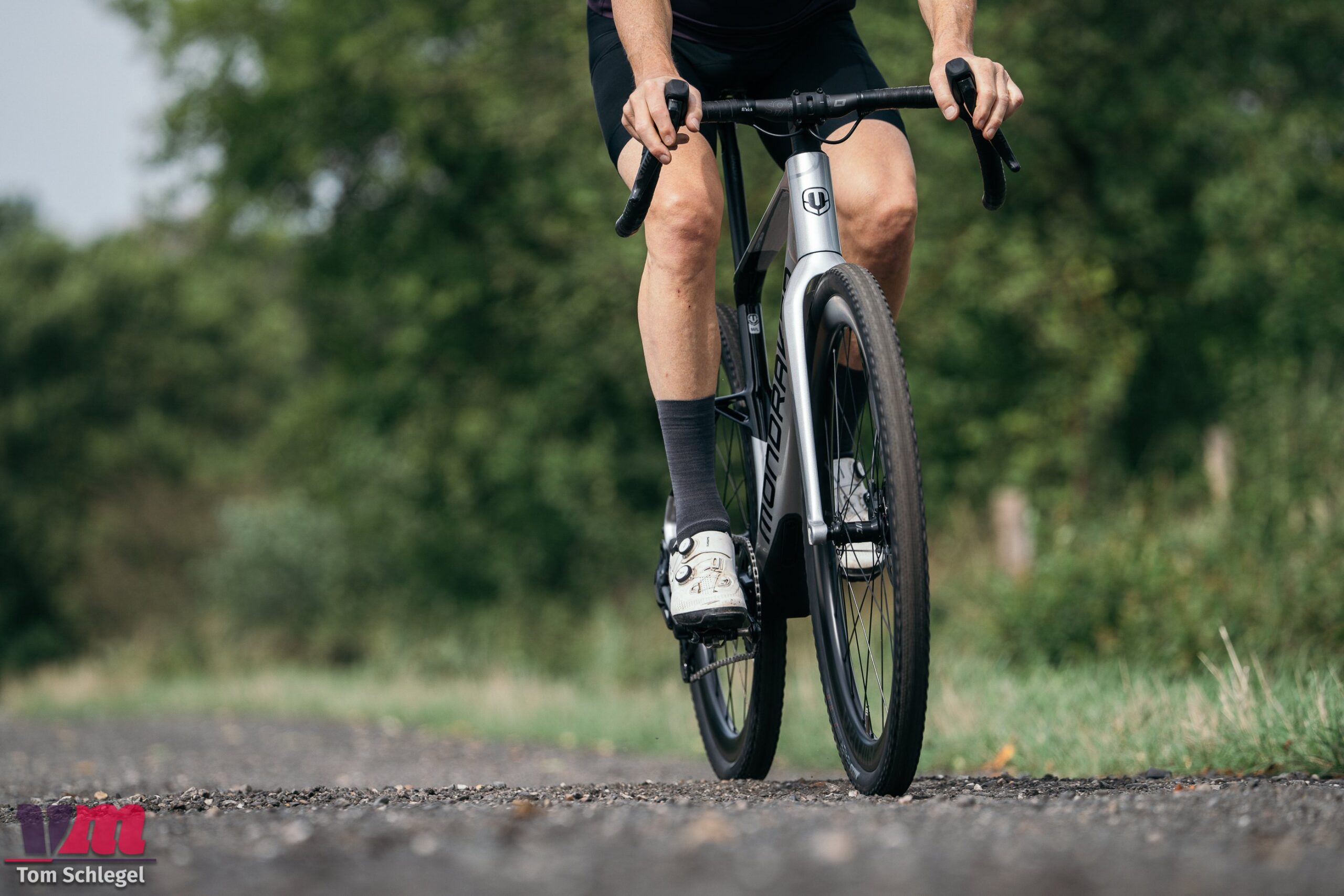
Mondraker Arid Carbon R review: With its trail geometry and sporty riding position, the Spanish manufacturer aims to appeal to a diverse range of riders. The model, only a year old, promises high speeds on straight gravel roads and agility on tricky trails – but it doesn't offer much for those who prefer to ride with luggage.
According to statistics from component manufacturer FSA, the Spanish gravel scene has an interesting peculiarity: the percentage of gravel riders who also ride road bikes is very low there, at just over 8% (Germany approx. 22%, France approx. 15%, Italy approx. 17%). On the other hand, 7% also ride mountain bikes occasionally – slightly more than in Germany (6%) and significantly more than in France (4,6%). What does this tell us? Perhaps that in Spain, gravel bikes can be developed just as effectively from a mountain bike perspective as from a road bike. And this has attracted the attention of a brand like Mondraker, which until a year ago had nothing to do with drop-bar bikes – and the manufacturer has been around for 25 years.
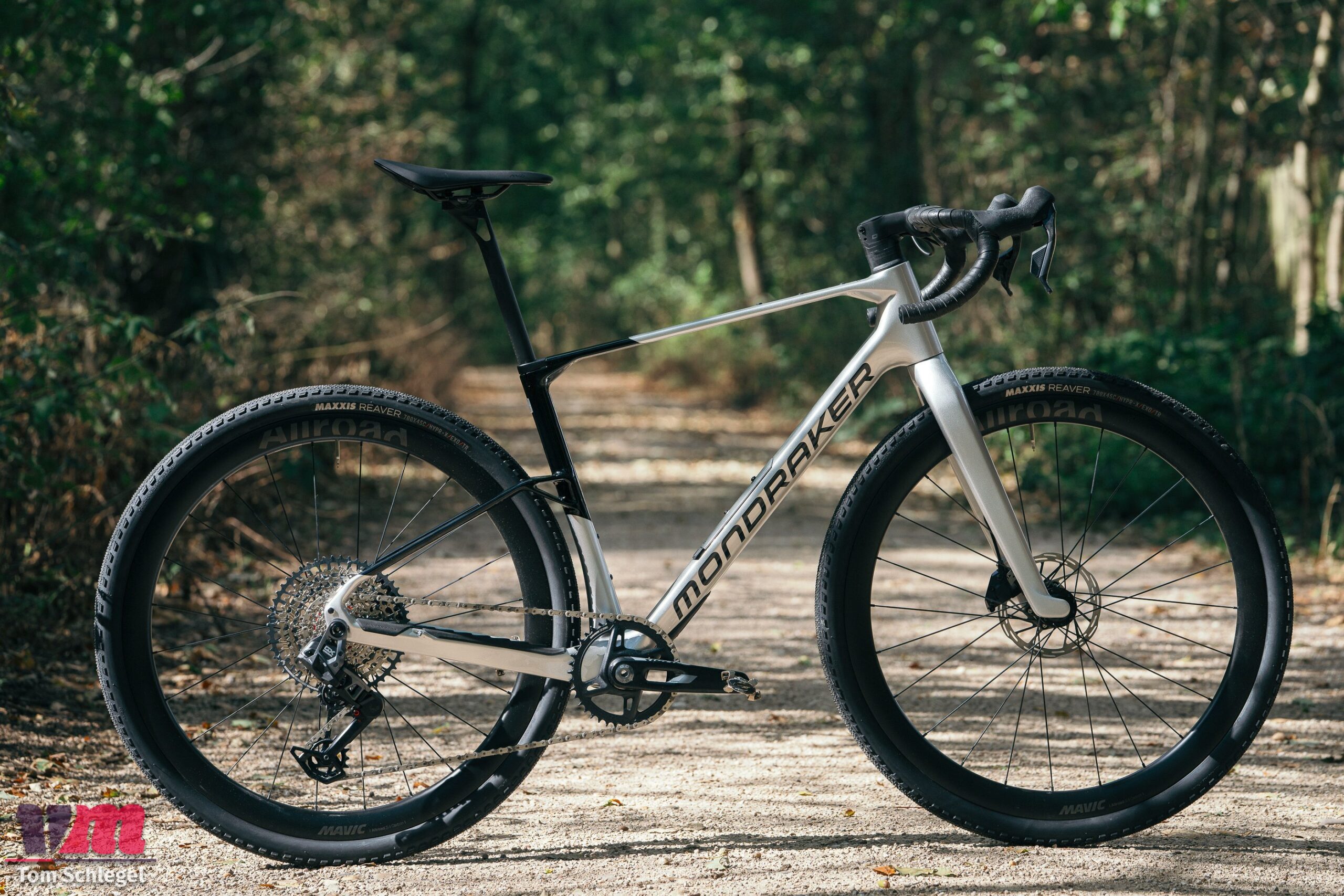
Now, the Mondraker Arid Carbon R – one of six models based on the frame introduced in 2025 and slightly revised since then. At just under €4.500, it costs only half the price of the top-of-the-line SRAM Red model, which uses the same frame, and one and a half times as much as the entry-level version with mechanical Shimano GRX. An interesting mid-range option, then, especially since Mondraker equips the bike with high-quality components.
Mondraker Arid Carbon R: the highlights
- Carbon gravel bike with MTB-inspired geometry and 50 mm tire clearance
- Storage compartment in the downtube, threads for three bottle cages and top tube bag
- 6 models between 8.999 2 und.999 Euro; Frame set 1.999 Euro
- Test bike with SRAM Rival / GX Eagle AXS and Mavic Allroad S Carbon: €4.499
- Weight 9,31 kg (without packaging) plus cases; front wheel 1.610 g / rear wheel 2.180 g
Mondraker Arid Carbon R: Between “Race” and “Adventure” or “Trail”
But what exactly defines the Arid? The manufacturer sees gravel riding as situated between two poles – "racing" and "adventure." And their debut model aims to excel at both. "Trail" might be a more accurate term, as the adventurous side of the spectrum doesn't refer to bikepacking. The Arid is remarkably minimalist when it comes to mounting options: three bottle cages can be mounted, along with a "bento box" on the top tube, and a fender can be attached to the rear triangle. However, nothing can be mounted on the fork, neither fenders nor racks – here, the new Arid Carbon reveals its sporty, minimalist design.
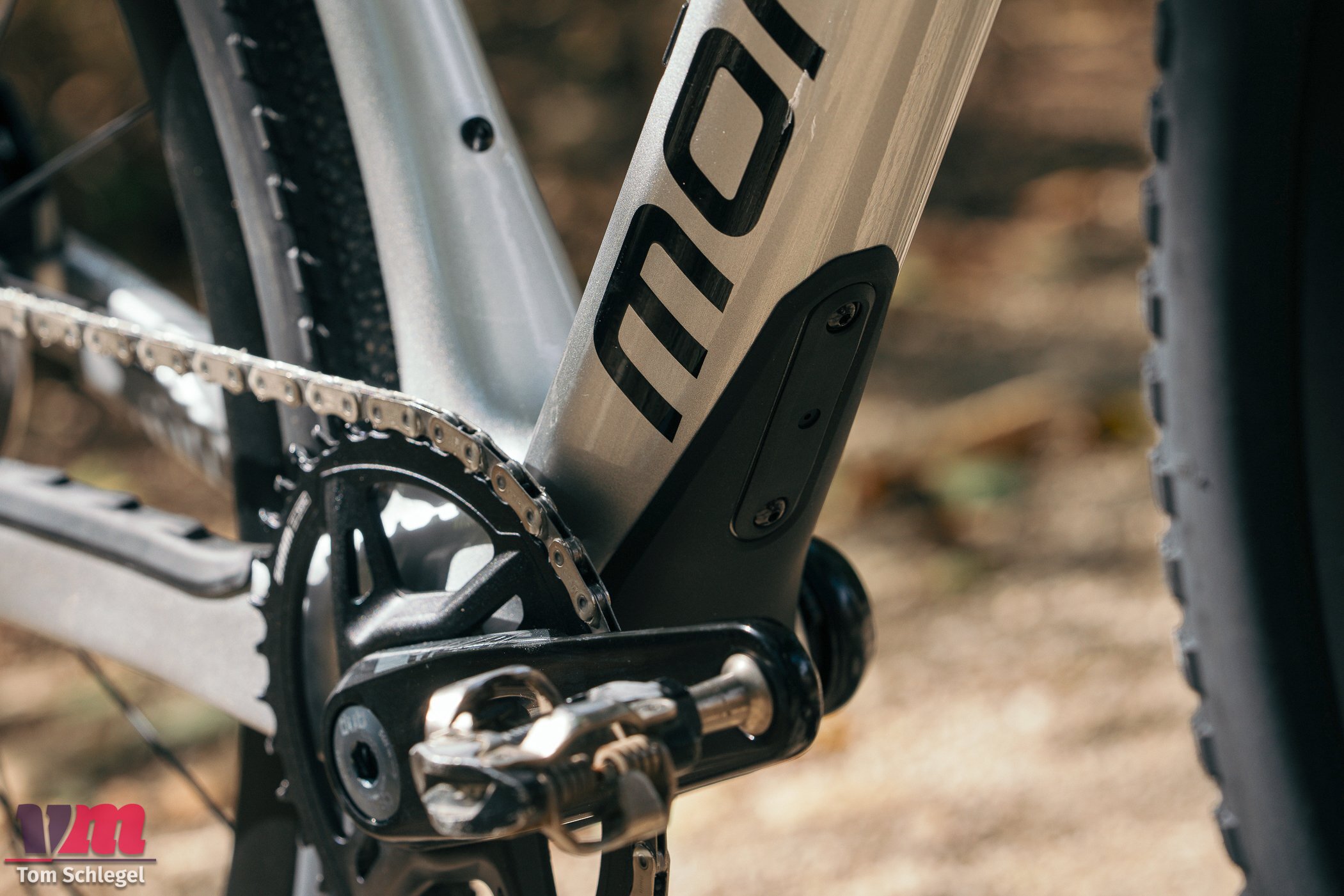
The frame does feature a storage compartment, the lid of which is connected to the downtube via a swivel joint at the level of the upper bottle cage mount. The cage itself is positioned quite high on the tube, making it easily accessible. The three pouches included for the hidden compartment fit reasonably well inside the frame tube when empty. However, once filled, they become a tight fit, especially since the opening measures only about 9,5 x 4,5 cm. A standard mini-pump won't fit, neither in its elongated pouch nor loose. Several small items fit more easily, although one might wonder if they wouldn't be better off in a handlebar bag anyway.
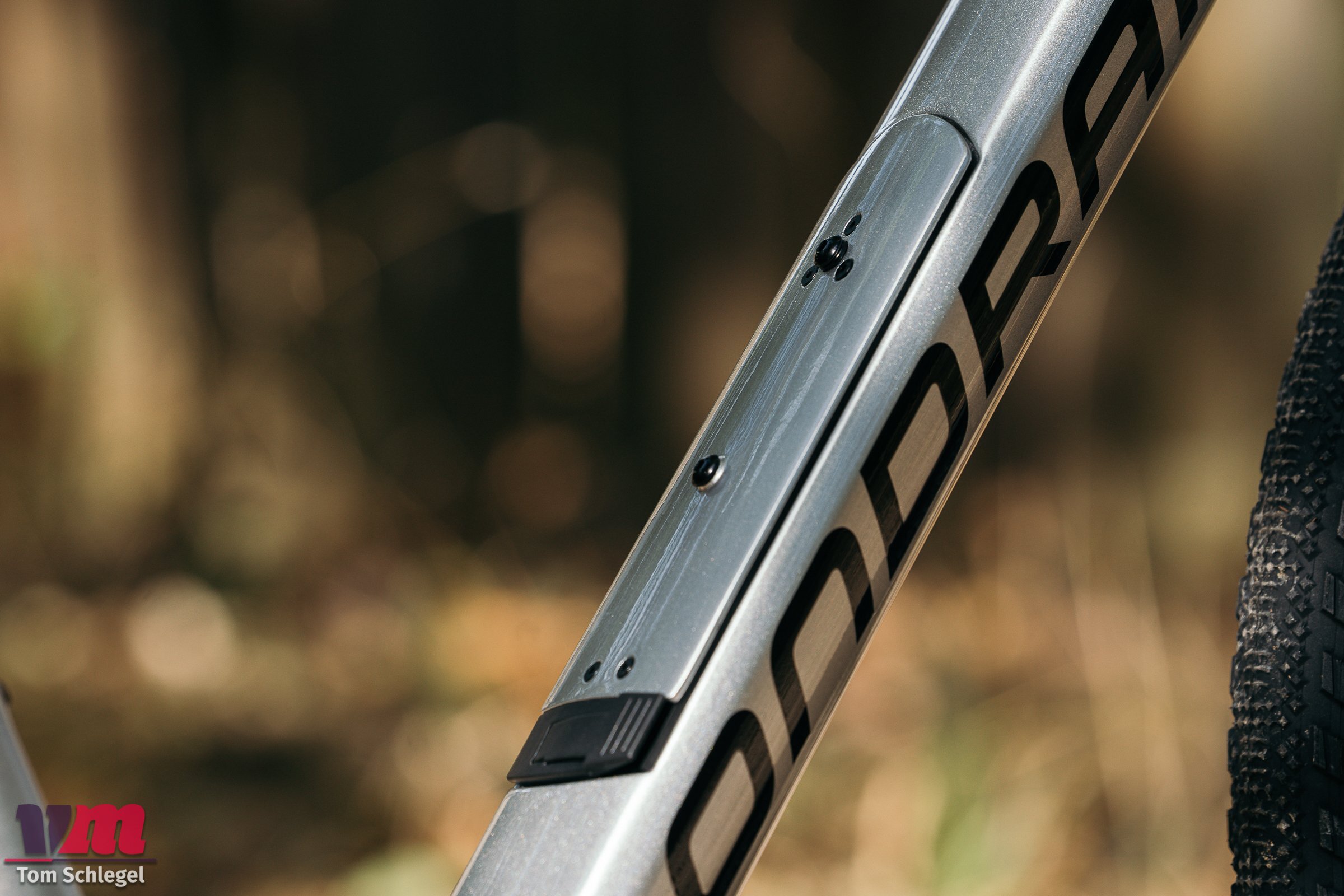
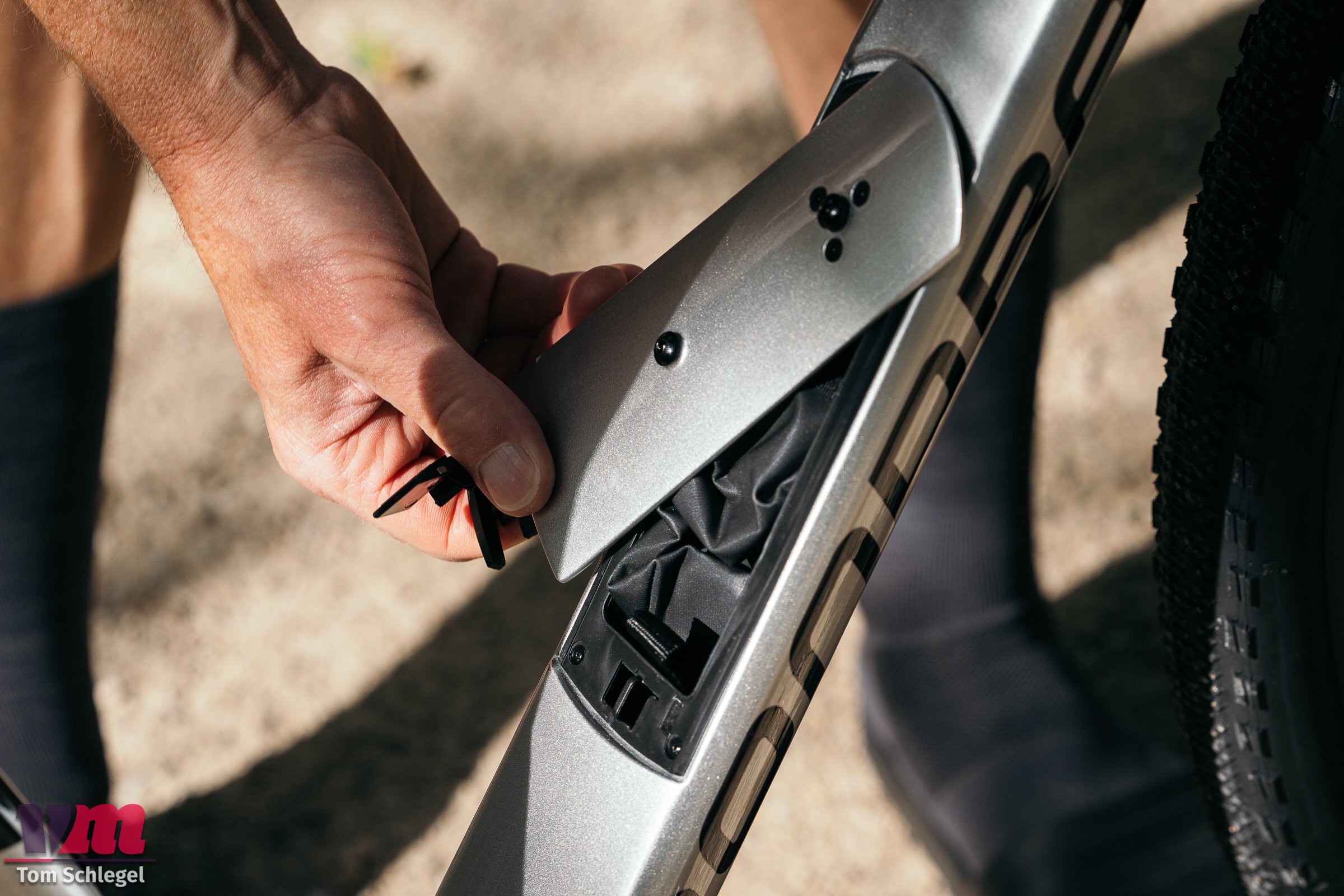
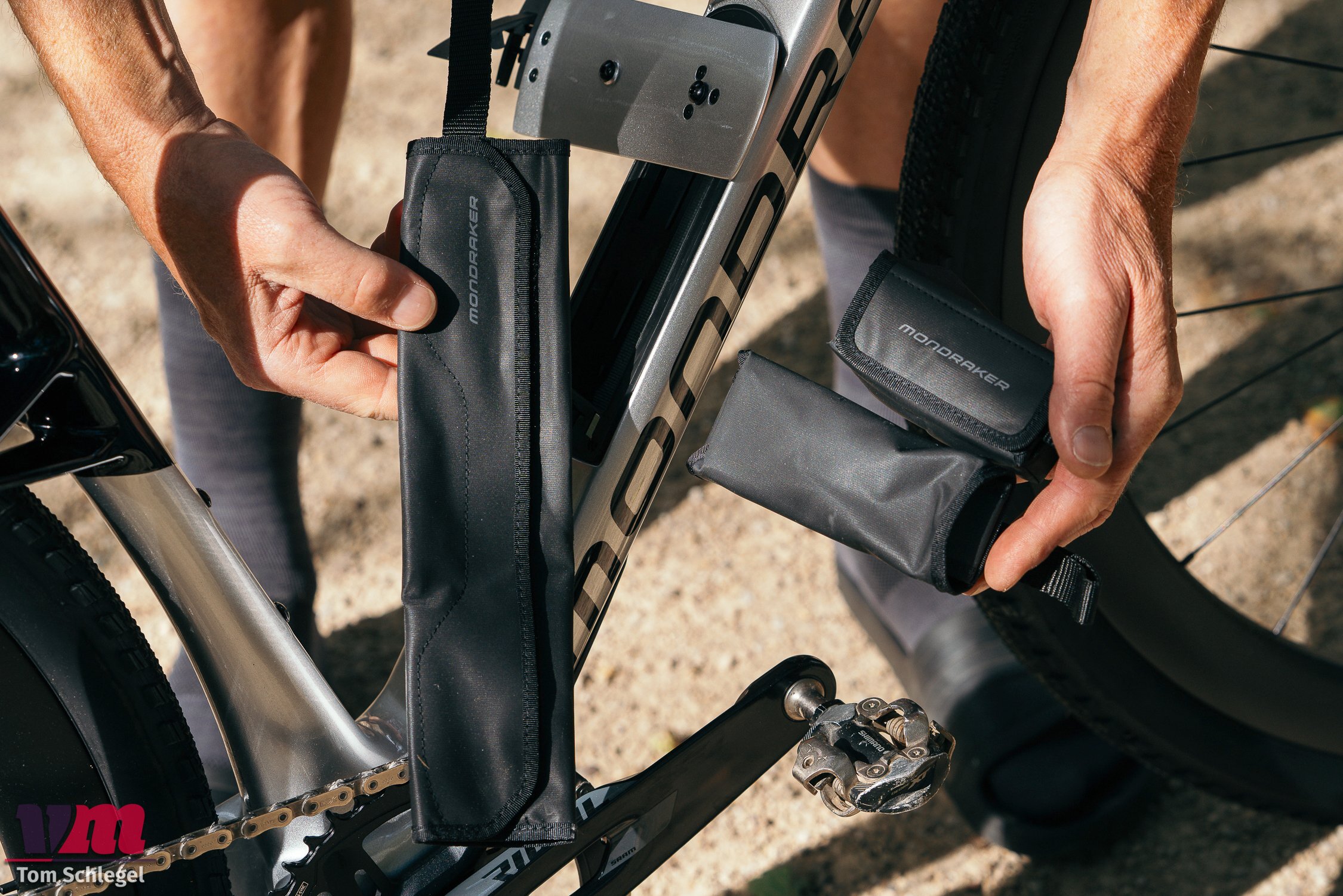
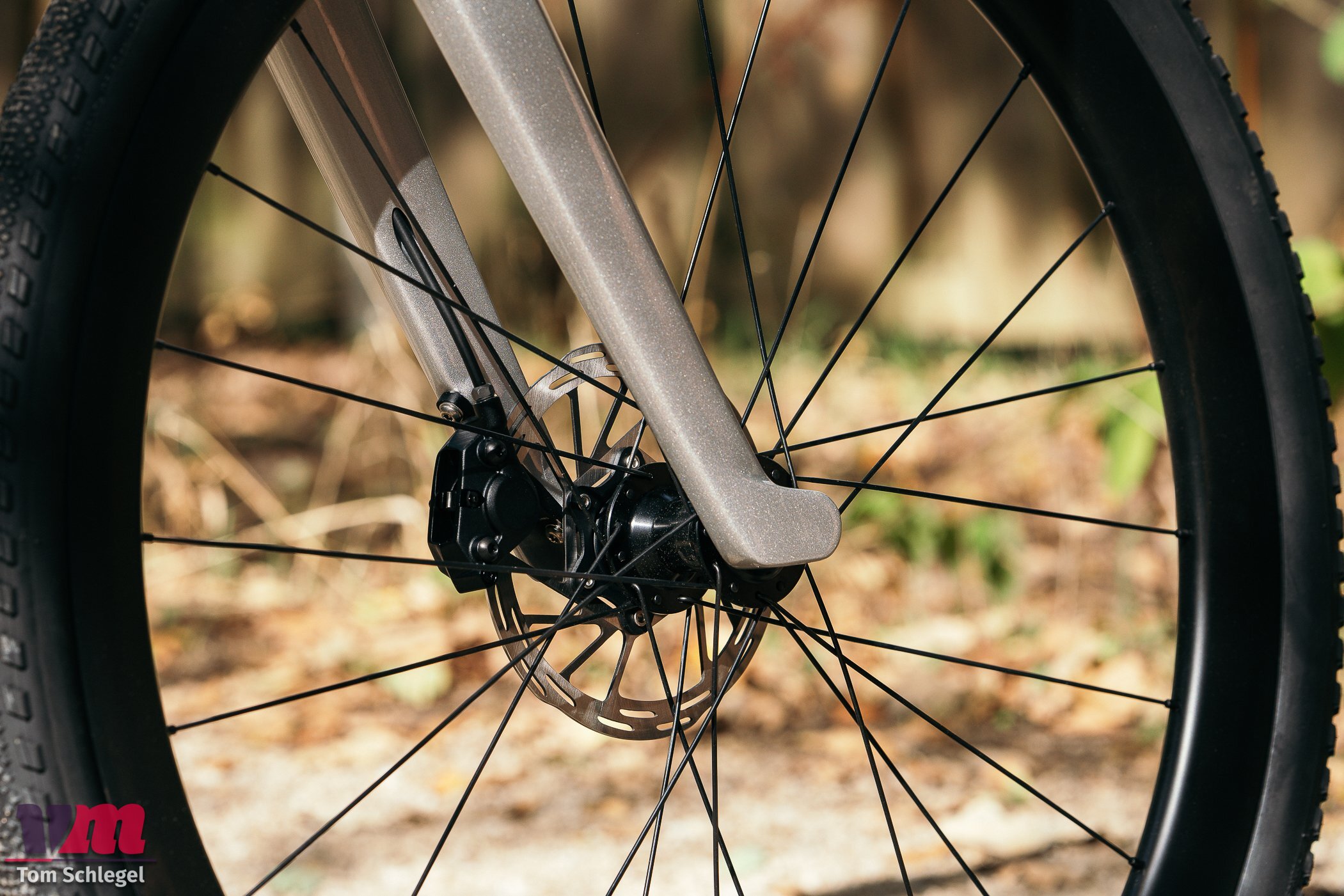
The frame features subtle aerodynamic elements such as a flat head tube, a low-profile top tube, and low-mounted chainstays. However, it has a rather bulky overall appearance, and the fork design also plays on the manufacturer's mountain bike DNA: it's aligned with the head tube and angled forward at the bottom like a suspension fork.
Special struts for increased comfort
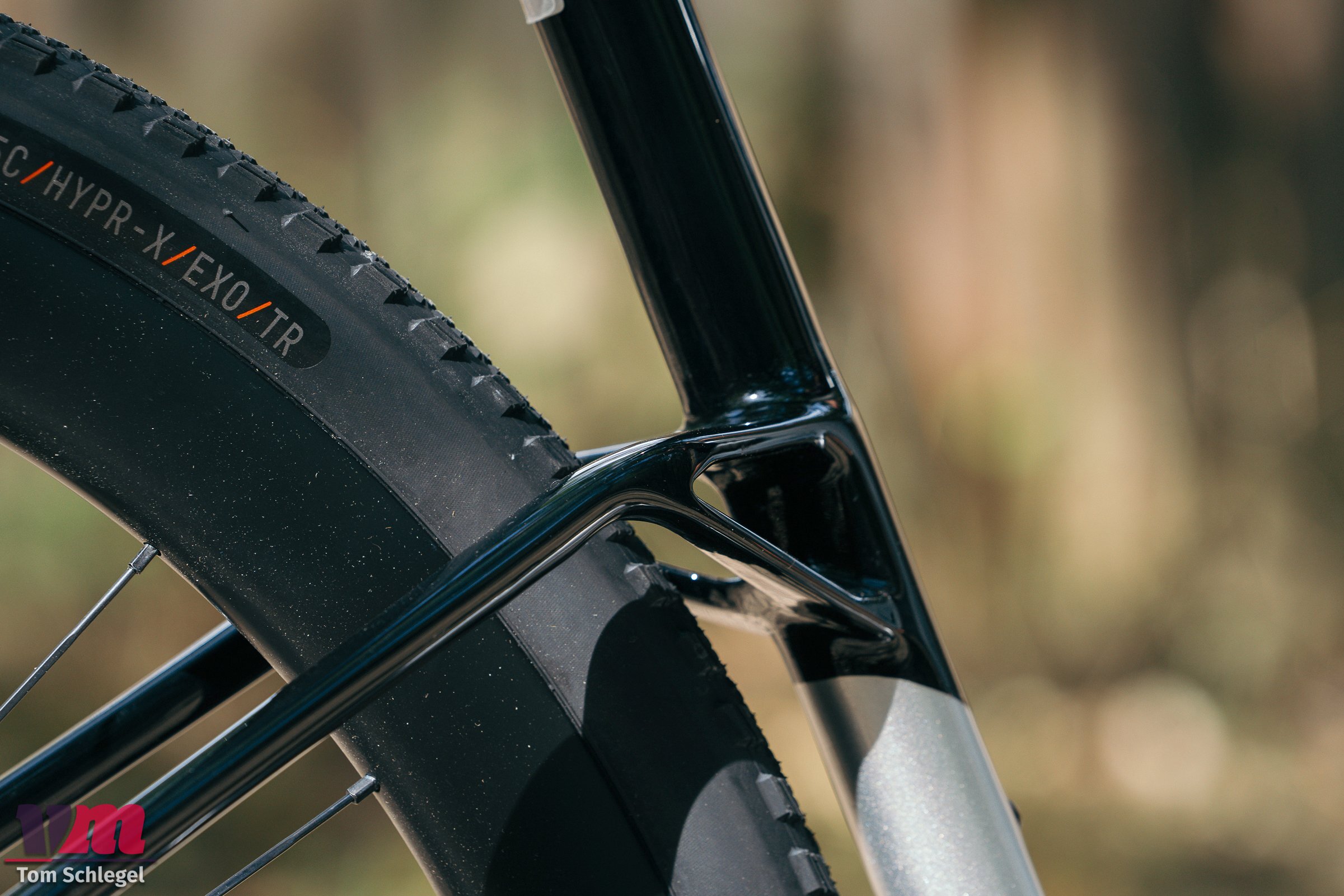
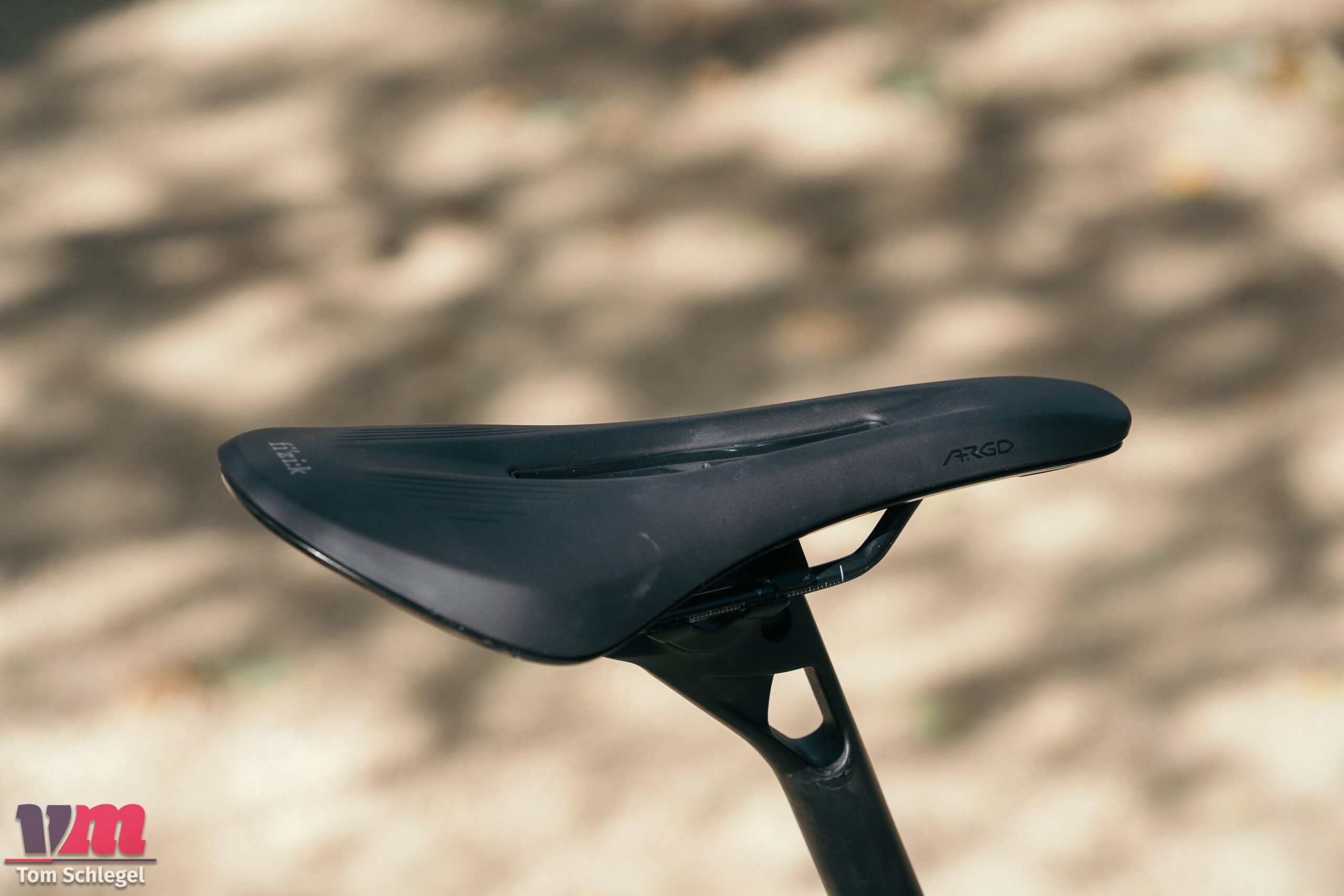
For the transition from the seat stays to the seat tube, Mondraker has devised a comfort-enhancing element: Each stay splits into two mini-stays, allowing the rear triangle to flex particularly well. The carbon seatpost is similarly constructed; given the short seat tube, it extends far out and should therefore be quite compliant anyway.
The Mondraker heritage is clearly evident in the frame geometry: the head tube and seat tube angles are a uniform 70° and 74° respectively across all five frame sizes; the chainstays are as short as possible with 50 mm tire clearance. This results in a slightly more stretched-out front end. A short stem ensures a comfortable riding position.
| Size | S | M | M/L | L | XL | |||||||||
|---|---|---|---|---|---|---|---|---|---|---|---|---|---|---|
| Seat tube length (mm) | 410 | 450 | 480 | 510 | 540 | |||||||||
| Top tube length (mm) | 520 | 550 | 580 | 600 | 630 | |||||||||
| Bottom bracket drop (mm) | -75 | -75 | -75 | -75 | -75 | |||||||||
| Bottom bracket height (mm) | 269 | 269 | 269 | 269 | 269 | |||||||||
| Chainstay Length (mm) | 425 | 425 | 425 | 425 | 425 | |||||||||
| Seat angle (effective) | 74° | 74° | 74° | 74° | 74° | |||||||||
| Steering angle | 70° | 70° | 70° | 70° | 70° | |||||||||
| Fork deflection (mm) | 45 | 45 | 45 | 45 | 45 | |||||||||
| Wheelbase (mm) | 1003 | 1035 | 1067 | 1089 | 1121 | |||||||||
| Head tube length (mm) | 100 | 125 | 145 | 175 | 200 | |||||||||
| Reach (mm) | 363 | 386 | 411 | 423 | 446 | |||||||||
| Stacks (mm) | 548 | 572 | 591 | 619 | 642 | |||||||||
| stem length (mm) | 60 | 70 | 70 | 80 | 90 | |||||||||
| Fork length (mm) | 420 | 420 | 420 | 420 | 420 |
The Mondraker Arid also takes its cues from mountain bikes when it comes to its drivetrain: all versions except the top model with a complete SRAM Red XPLR groupset come with wide-spaced 12-speed cassettes. The Arid R, therefore, doesn't use the SRAM Rival derailleur for 1x13 drivetrains, but rather a SRAM GX Eagle that handles the 10-52 cassette.
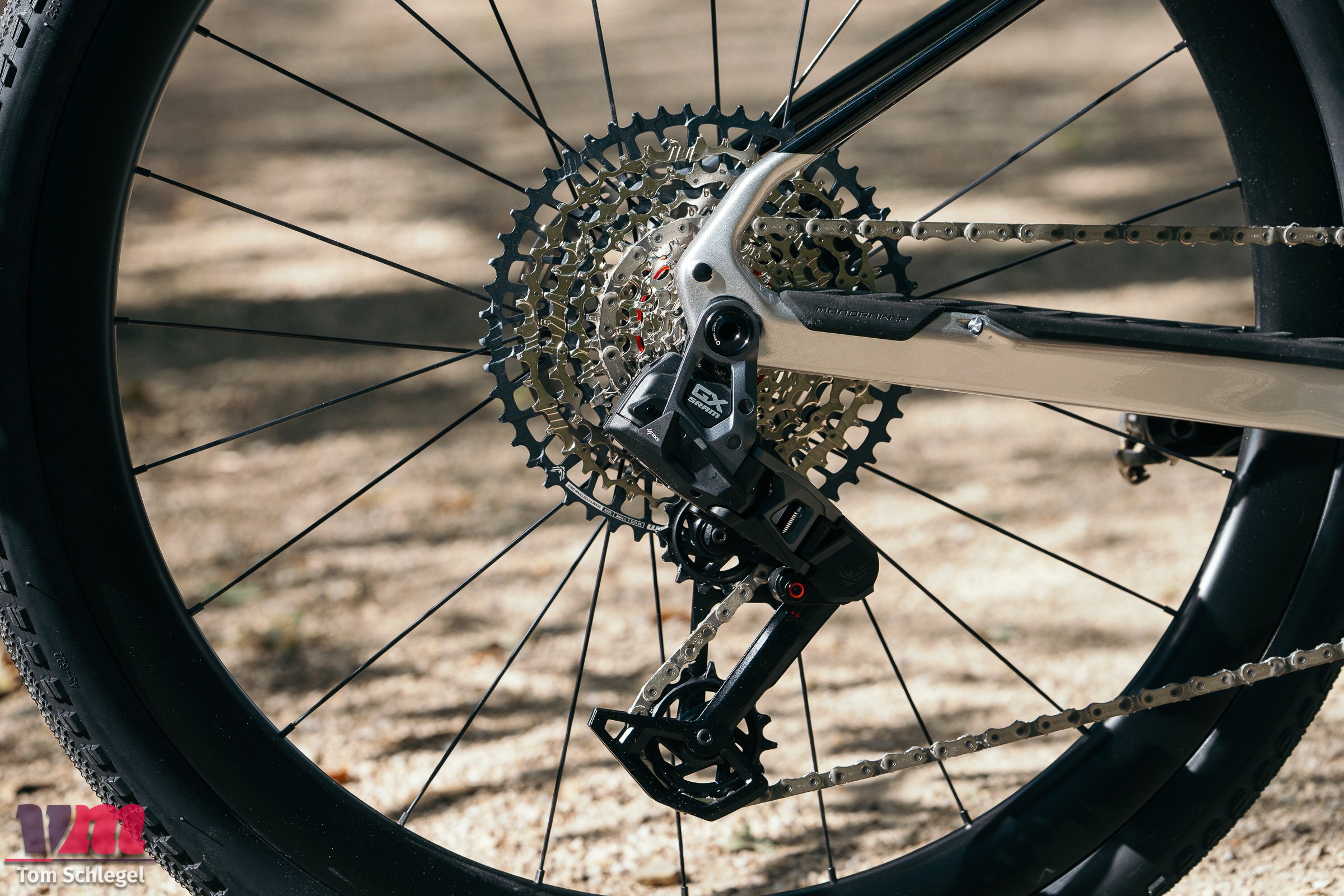
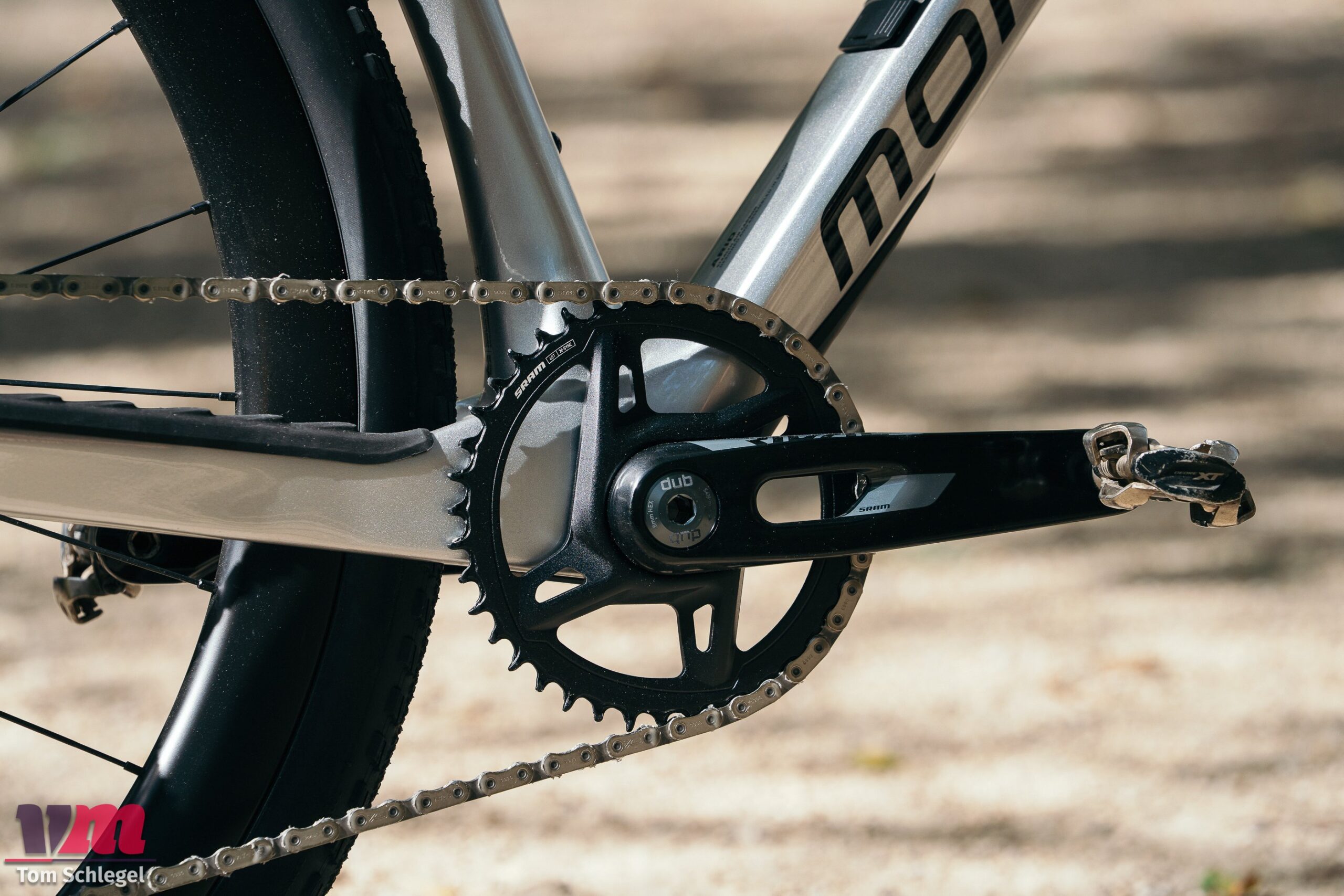
Mountain bikers won't mind this; however, one could argue that it's a missed opportunity. At higher speeds, it definitely makes a difference whether the four highest gears are spaced in single or double increments. On the other hand, you don't miss much on climbs with SRAM's gravel cassette – only six teeth, to be precise.
Plenty of power and precise steering
If you stay in the middle range of the cassette, the MTB gearing works quite well – and you'll be paying attention to other aspects of the Mondraker anyway. For example, the strong forward thrust of the stable frame, which reacts very directly and impresses with solid straight-line stability. This doesn't compromise the agile steering, however, and the robust fork allows for precise maneuvers on twisty trails.
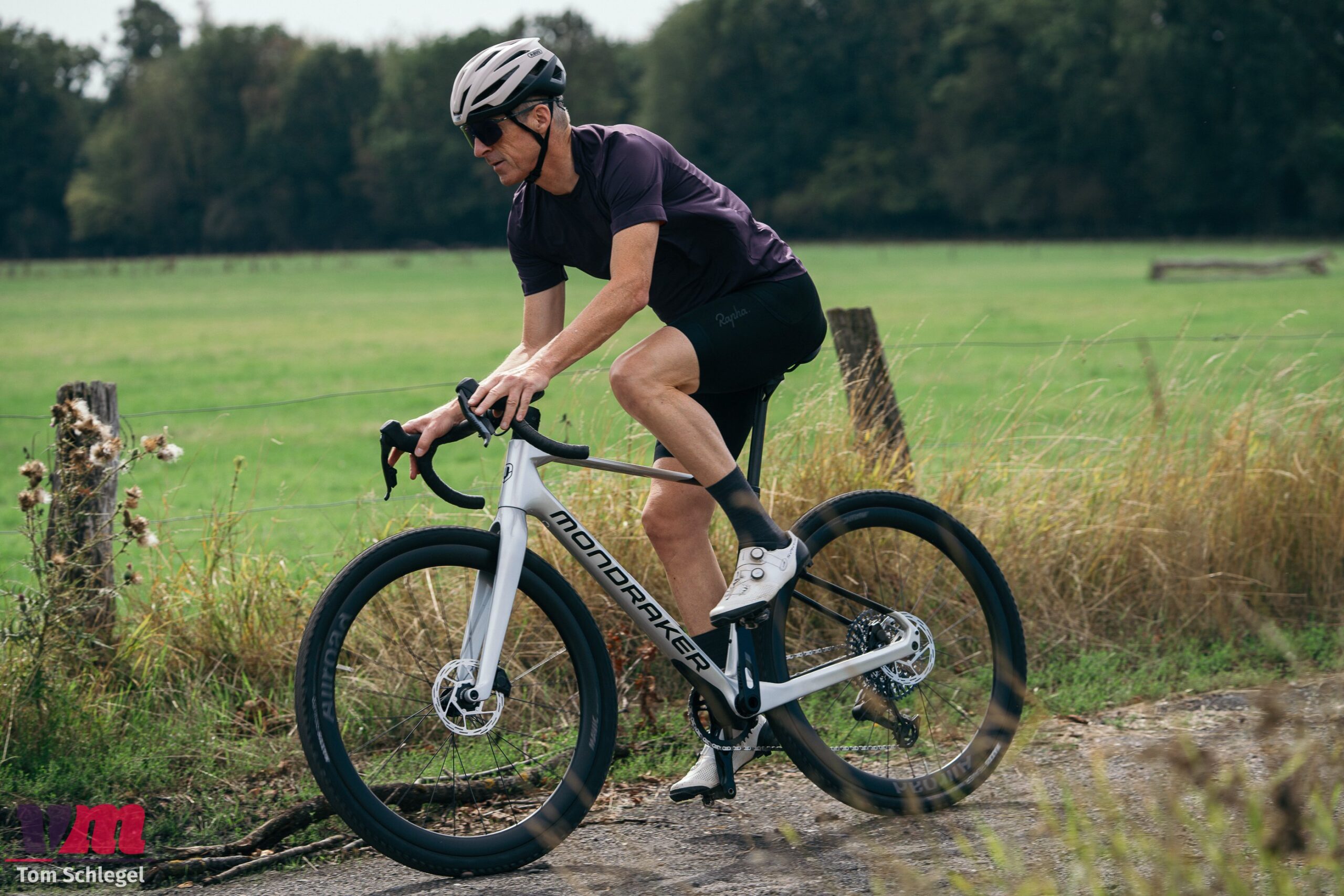
The fork's stiffness is also evident in the fact that even during hard out-of-the-saddle pedaling, no brake rub is detectable. On the other hand, it doesn't seem to be responsible for ride comfort – the Arid is quite firm at the front, while the rear offers effective shock absorption. This seems to be primarily due to the seatpost, as well as the 45mm Maxxis Reaver tires, which roll quickly and offer good grip on loose surfaces.
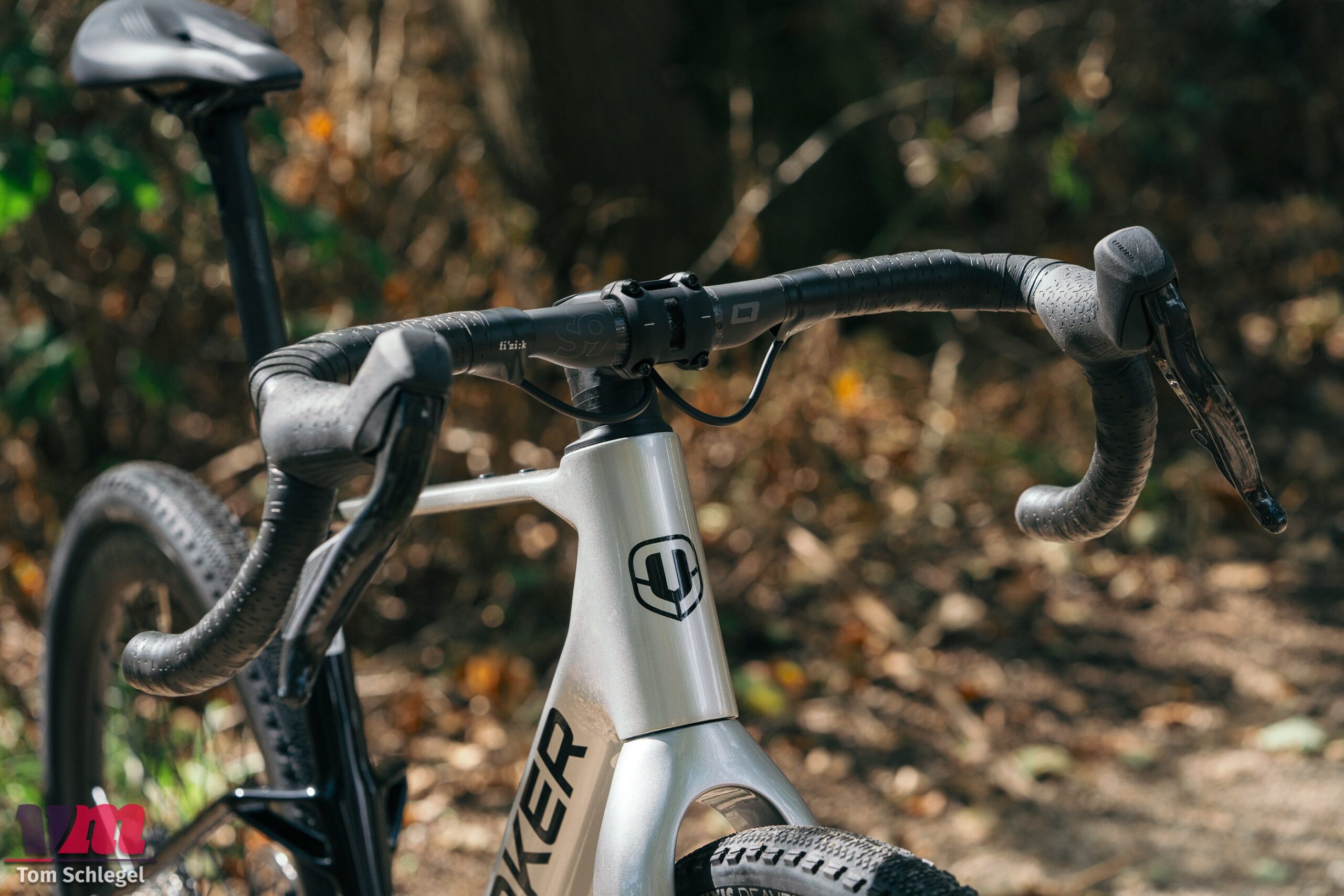
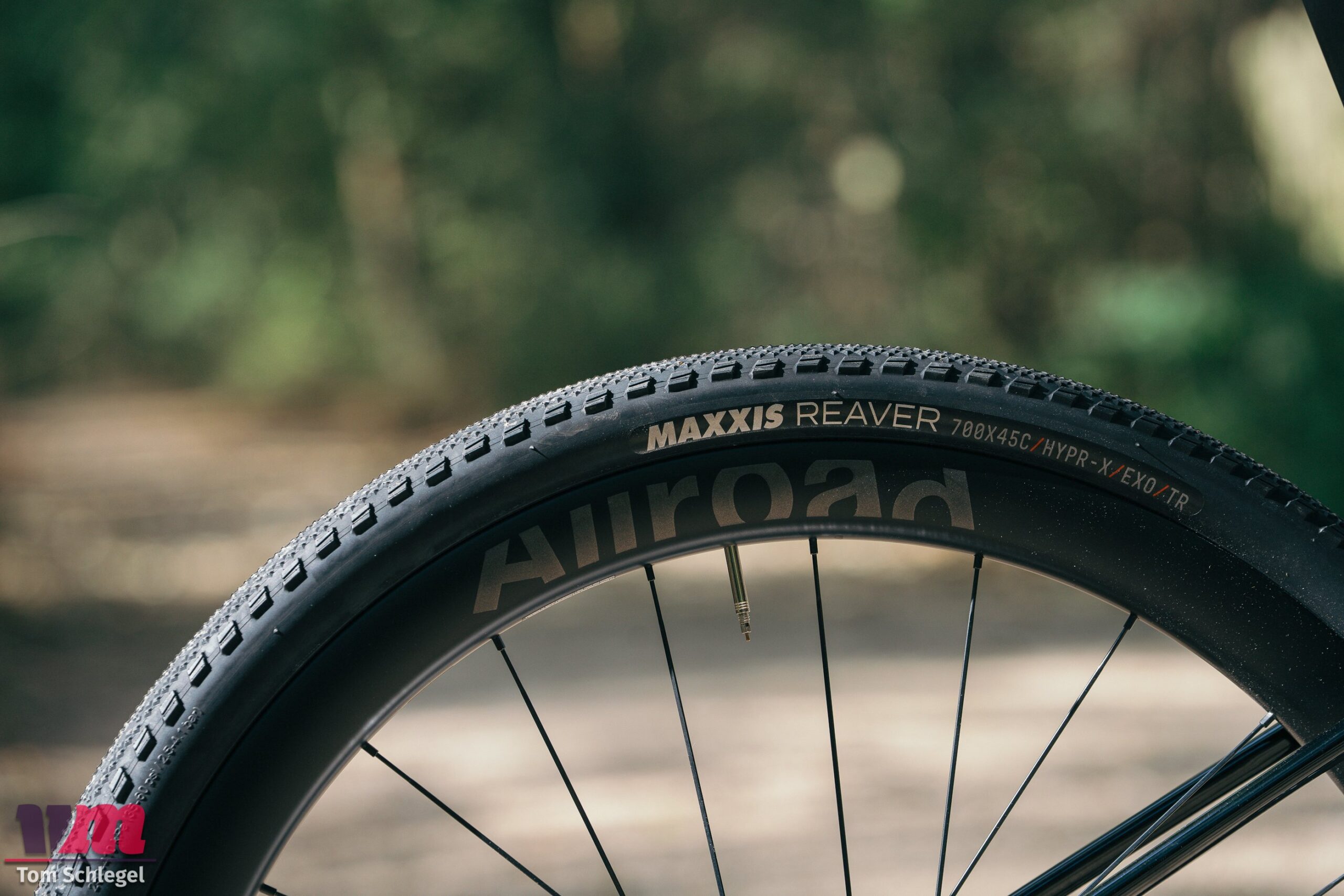
The bike also features carbon handlebars with a flattened top section, allowing you to comfortably rest your hands above the brake levers. The handlebars on the size M/L test bike aren't excessively wide – in this respect, the Arid is more "race" than "adventure".
High-quality complete package with carbon wheelset and handlebars
The Spanish gravel bike is completed by a high-quality Mavic wheelset with a 25 mm internal width and ratchet freehub, which isn't too heavy and should lose another 200 grams with the tubeless conversion. Then the complete bike weighs just over nine kilograms, plus about 90 grams for the three cases in the downtube.
And so, the first gravel bike from the Spanish MTB specialist delivers a thoroughly convincing performance; only the somewhat stiff fork and the small opening of the storage compartment could be criticized. Whether you're coming from a road bike or an MTB: you'll have a lot of fun with this bike. Especially if you don't care about carrying luggage.

