


Both on and off-road, power meter cranks like the 4iiii Precision 3+ have become established in cycling as a key tool for training control and pacing. These days, professionals and ambitious amateurs alike use such power meter cranks. We'll look at how to best benefit from a power meter and try to explain the technology behind it.
Are you interested in a crankset from 4iiii?
If you would like to buy this – or any other – power meter online, please use this link.
By doing so, you support Velomotion; this allows us to continue being free to read.
This will not put you at a disadvantage.
The market for power meters is diverse, but crank-based systems are among the most widespread solutions on road and gravel bikes thanks to their robustness, low weight, and ease of use. SRAM offers many of its cranksets with a power meter pre-installed. Shimano also offers power meter cranks, but many Shimano riders use aftermarket solutions, especially for cranks in the lower price range. This is where 4iiii comes in. The Canadian brand offers a range of power meters – the Precision 3+ model is among the most popular and is compatible with many Shimano crank models.
4iiii Precision 3+ Overview of power meter cranks
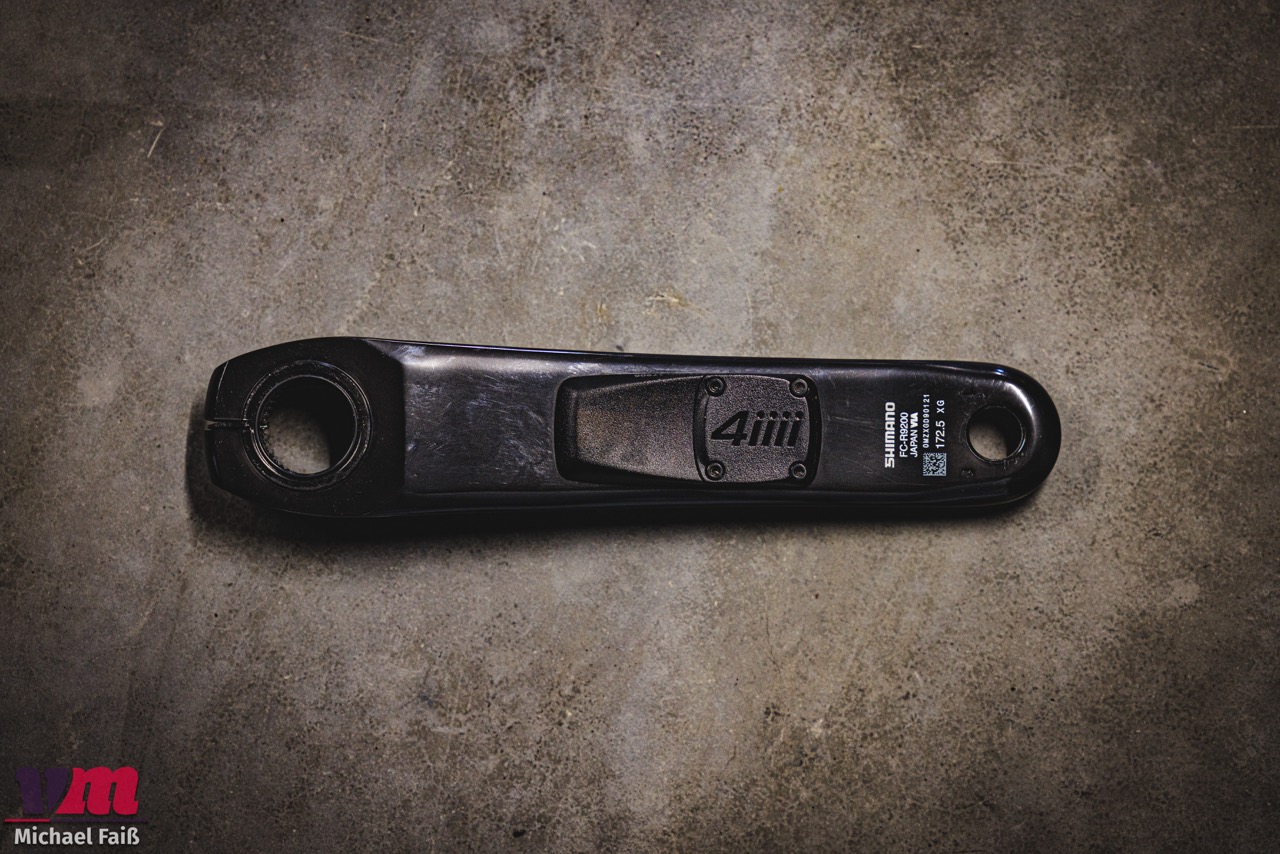
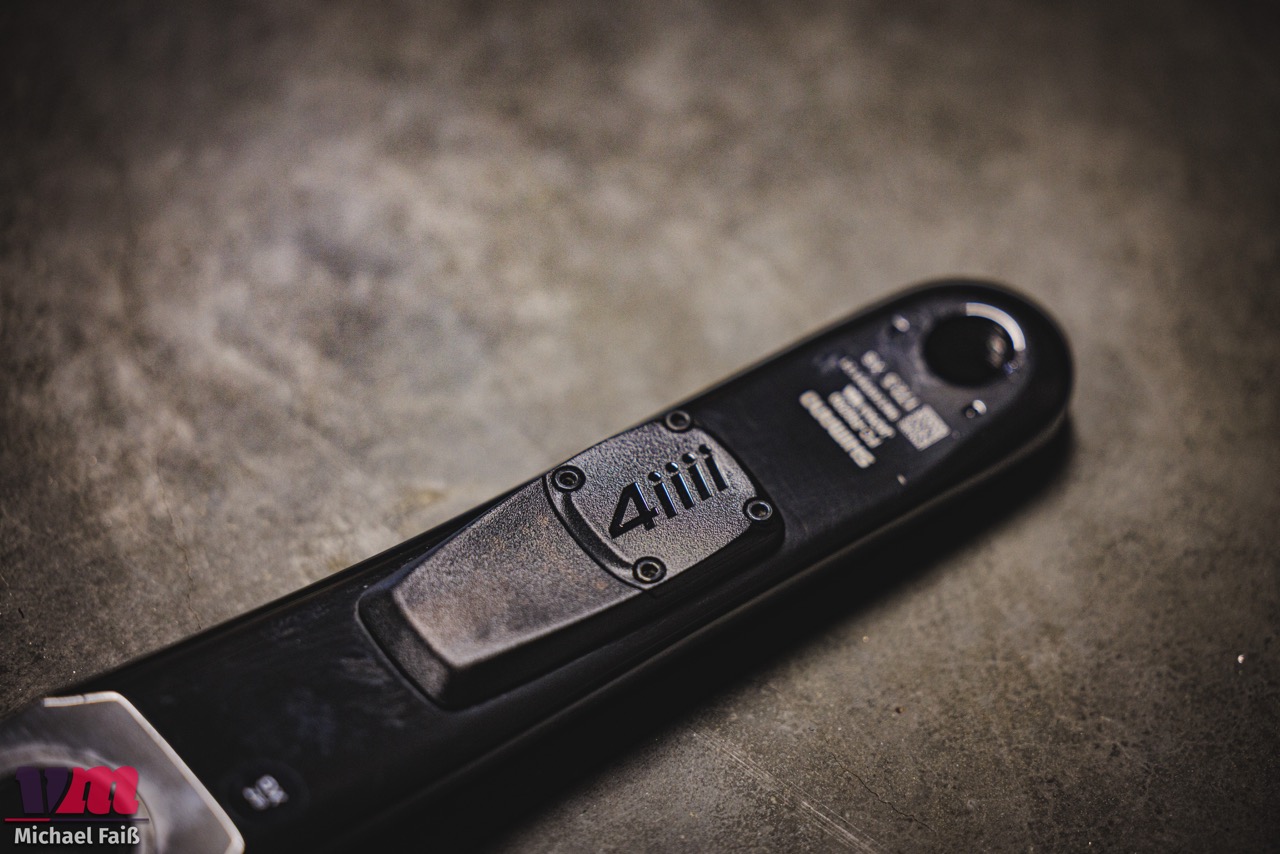
The Canadian company 4iiii has developed the Precision 3+ , a crank-based power meter specifically designed for road and gravel riders. In its standard configuration, the system uses a single-sided measurement, with the sensor permanently bonded to the inside of the left Shimano crank arm at the factory.
- System type: Left-side crank arm power meter (option for dual-sided factory installation)
- Additional weight: approx. 9 grams
- ±1,06% (manufacturer's specification: ±1,0%) tolerance
- Battery / Runtime: CR2032 button cell / up to 800 hours
- Connectivity: ANT+, Bluetooth Smart, Apple Find My
- Sensor height: approx. 5,5 mm (for high frame compatibility)
- Compatibility: Shimano Hollowtech II (Road & Gravel)
- Price (MSRP): approx. €335–530 (Ride-Ready) / approx. €330 (Factory Install with own crank)
- Website: www.4iiii.com
Design and frame compatibility
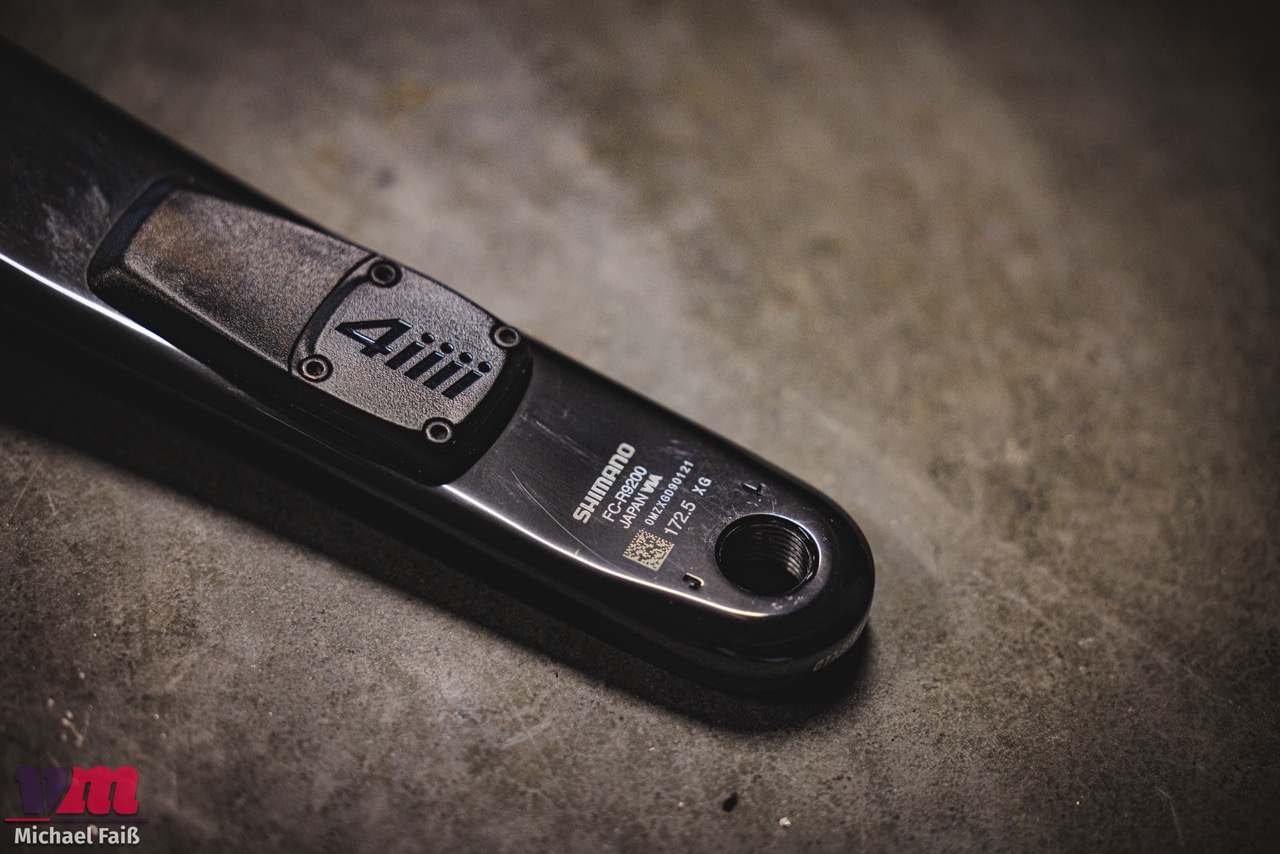
With a height of approximately 5,5 mm, the sensor unit on the inside of the crank arm is extremely flat. This is crucial for modern drop-bar bikes: in the bottom bracket area, tires, frame, cranks, chainrings, and often the front derailleur compete for space. There's not much clearance between the inside of the crank arms and the chainstays. A low-profile sensor prevents unwanted contact. Instead of a permanently installed battery, the Precision 3+ uses a standard CR2032 coin cell battery. 4iiii specifies a runtime of up to 800 hours.
A great feature of the Precision 3+ is the integration of Apple's "Find My" network. The power meter can be paired with an iPhone and located like an Apple AirTag. Whether the bike is in the basement, a hotel room, or being transported, its location can be tracked using the tracking function.
How do I attach the power meter to my bike?
The system is offered through two distribution channels:
- Factory Install: Riders using a specific crank length or an older Shimano model should send their own left crank arm to 4iiiiiiThe sensor is then glued and calibrated at the factory in the Netherlands. Cost: €329,99.
-
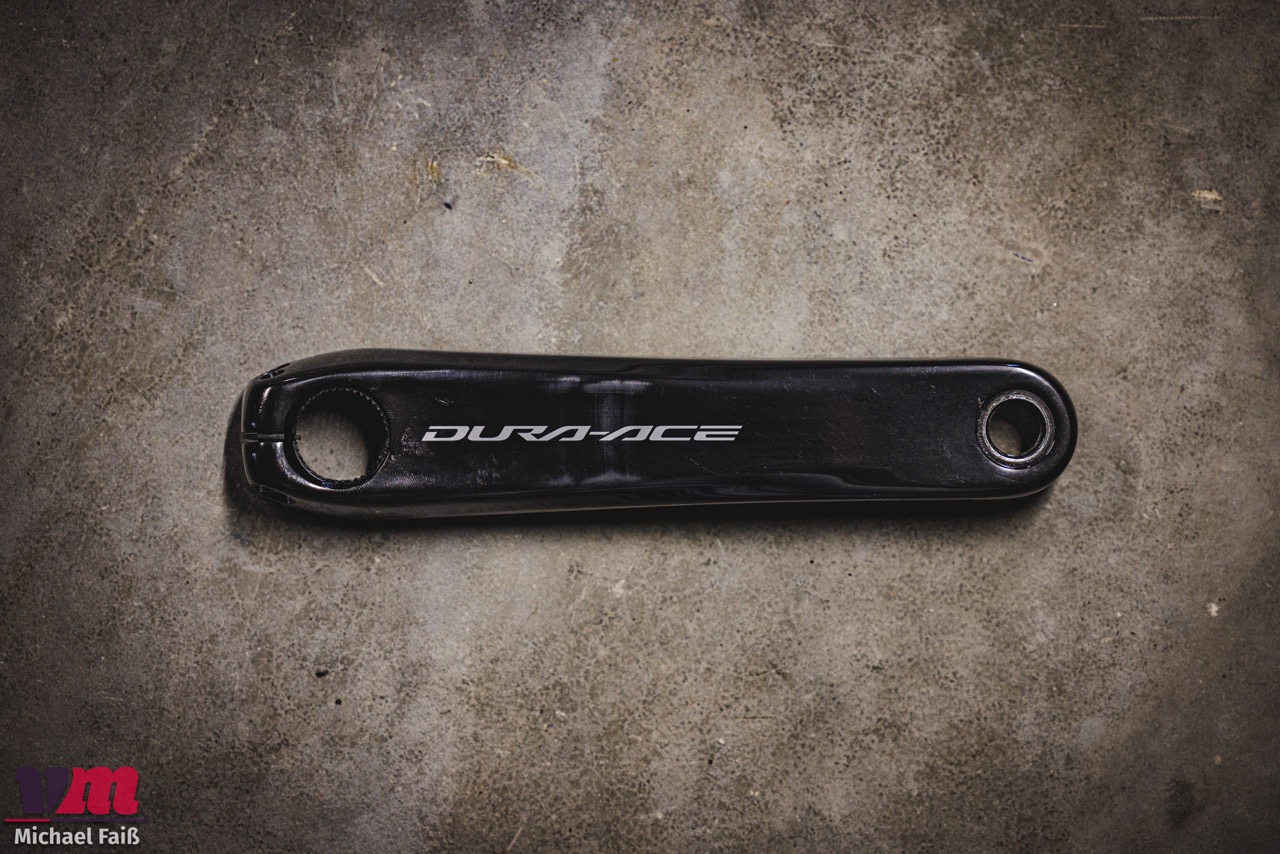
Ride-Ready: 4iiii offers a complete left crank arm including a pre-installed sensor (available for Shimano 105 R7100, Ultegra R8100, Dura-Ace R9200, and GRX RX820 and RX610). Installation is limited to replacing the left crank arm. Depending on the groupset, this option is priced between €334,99 (Shimano 105) and €529,99 (Dura-Ace).
No matter which method you choose, the crank needs to be reattached to the bicycle in the end. We'll show you how easy the reattachment is in this video:
How does that work out? 4iiii Precision 3+ In real-world use?
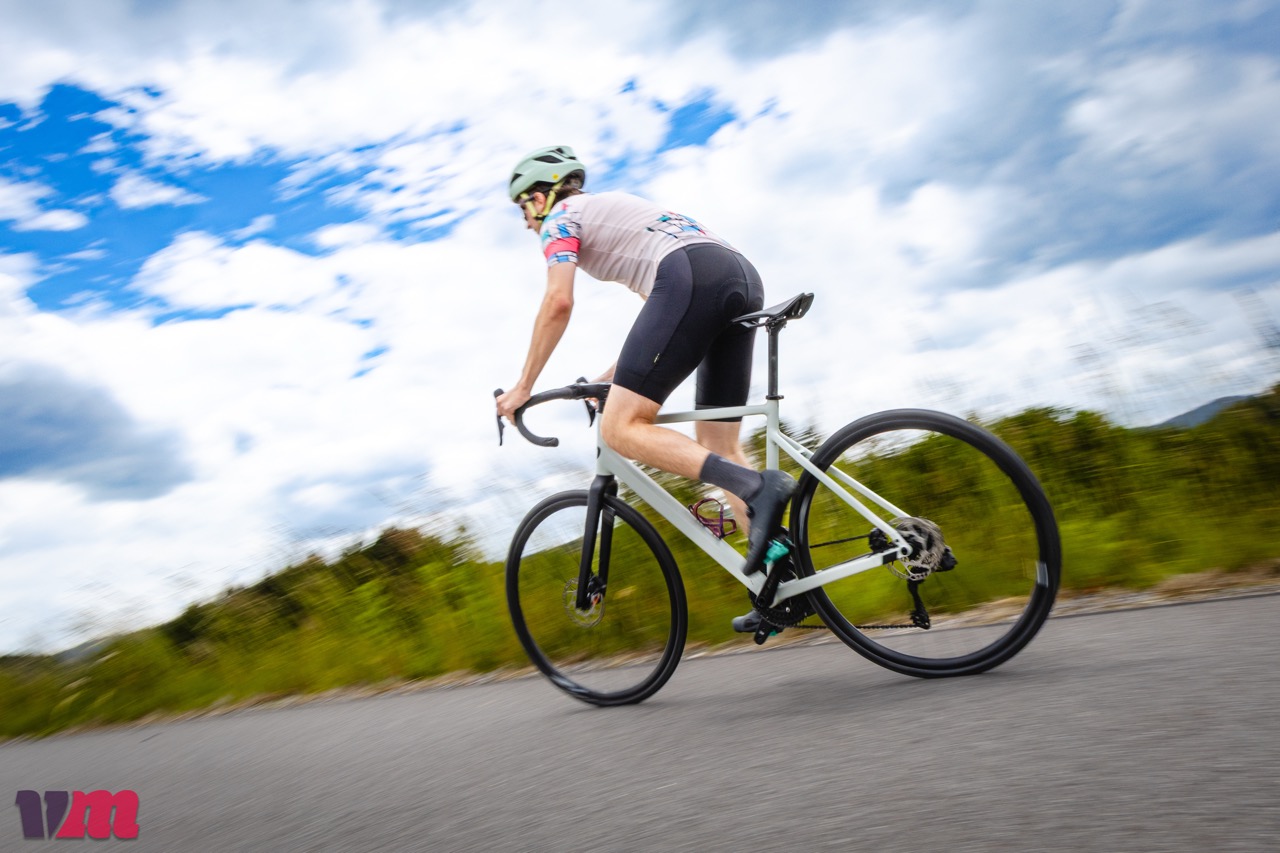
We tested the 4iiii Precision 3+ on a Rose Blend 105 Di2 for over 800 kilometers – ironically, the Dura-Ace version for the 105 crankset on the test bike. Odd looks aside, the power meter's performance is beyond reproach. Mounting, calibrating, and setting up the Dura-Ace crank arm with the attached sensor was quick and easy; connecting to the 4iiii app and the head unit (in our case, a Garmin) was straightforward. From then on, the power meter performed flawlessly, reliably providing power and cadence data for every ride. As soon as the Garmin is activated and the power meter detects movement, the two devices connect and transmit wattage and cadence. On my Garmin's data screen, I also displayed the average values for each ride, in addition to these two figures.
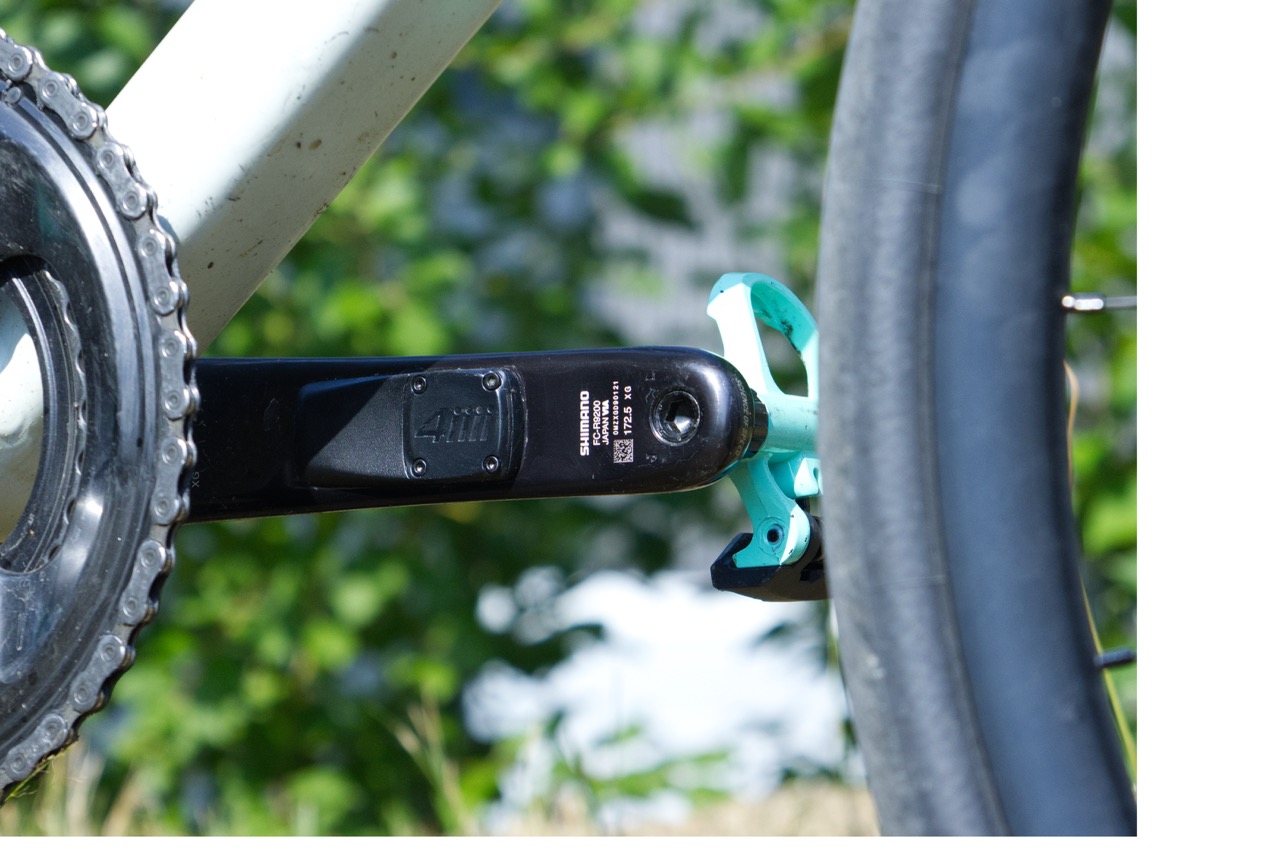
After each ride, power and cadence data appear in the Garmin Connect app and on Strava. After a few rides, you get a feel for your own performance and can better pace yourself on future rides. Seeing the power output in real time was particularly helpful on climbs. For example, I could deliberately tackle climbs with a specific effort by keeping my wattage output below a certain limit on the head unit. With some experience, you can confidently know how to conquer an uphill as quickly as possible without having to guess when you're overexerting yourself and need to slow down before reaching the summit.
What exactly is a power meter?
A power meter measures the mechanical power that a person transfers to the drivetrain via the pedals while pedaling. The physical unit of measurement for power is the watt (W). One watt is equal to one joule per second (1 W = 1 J/s).
To put this unit into perspective, it helps to look at everyday energy conversions:
A typical kitchen toaster uses approximately 1.000 watts It converts electrical power into thermal energy. It therefore consumes [energy] per second. 1.000 JouleA standard bar of milk chocolate (100 grams) has a calorific value of approximately 550 kilocalories, which is equivalent to about 2,218 million joules requirements.
If a toaster were to convert this entire amount of energy purely thermally, it would have to run continuously at full power for approximately 2.218 seconds – that is, almost 37 minutes.
An endurance-trained cyclist can maintain a sustained power output of approximately 150 to 250 watts over extended periods on flat terrain. A professional cyclist can produce 400 watts or more on long climbs, while peak outputs of over [missing value] are possible in short sprints. 1.500 Watts can be reached.
The human body operates biomechanically with an efficiency of approximately 20 to 25 percent. This means that to transfer 200 watts of mechanical power to the rear wheel, the body must burn four to five times that amount of metabolic energy (approximately 800 joules per second). A power meter directly measures the net power that reaches the bicycle.
Who would benefit from a power meter?
The use of a power meter offers several advantages, both in live application on the bike computer (head unit) and in the post-processing of training data.
During the ride: Pacing and load control
Cycling speed depends on external factors: surface (rolling resistance), gradient, and air resistance all distort the picture and can mean that you need to expend different amounts of power to maintain the same speed. Since it's precisely this power output that's crucial for managing your energy on a ride, focusing on power output makes far more sense. Anyone who rides uphill solely based on speed risks overexerting themselves on the steepest sections.
Heart rate can also be a parameter for pacing, but it reacts slowly to changes in effort. It often takes 30 to 60 seconds for the pulse to rise after a sudden increase in pace. The power meter, on the other hand, reacts instantly. As soon as the rider pedals harder, the value on the handlebar computer registers a spike. This allows for precise pacing.
-
On long-distance rides and marathons: Riders define target wattage ranges in advance (e.g., 70% of threshold power) and thereby avoid early lactate accumulation.
-
In gravel riding: Rolling resistance varies considerably on changing surfaces (gravel, sand, grass). The wattage reliably indicates how much energy is actually being expended, even if the bike appears slow in deep gravel.
After the ride: Training analysis and performance development
Recorded wattage values allow for a mathematical evaluation of training load. Parameters such as Normalized Power (NP) take power peaks into account more realistically than a simple average value, while metrics such as the Training Stress Score (TSS) quantify the overall load of a session.
Furthermore, the combination of power output and heart rate data allows for the analysis of aerobic efficiency. If an athlete maintains the same power output over several weeks with a decreasing heart rate, this is direct evidence of improved endurance performance. A significant increase in heart rate (cardiovascular drift) during long rides at a constant power output indicates fatigue, dehydration, or overheating.
How does a crank-based power meter work?
Strain gauges (SG)
Inside the sensor housing (on the inside of the crank arm in the 4iiii Precision 3+ ) are strain gauges. These are fine foil conductor tracks that are firmly bonded to the aluminum or carbon of the crank.
When the rider presses the pedal, the crank arm bends by micrometers. Important: This is purely elastic deformation . The material stretches minimally under load and returns completely to its original shape after the load is removed. Plastic deformation, on the other hand , would cause the material to bend permanently, resulting in a defect in the crank.
Due to elastic deformation, the electrical resistance of the foil conductor tracks in the strain gauge changes. A microprocessor measures these resistance changes thousands of times per second and calculates the applied torque in Newton meters from this data.
The cadence measurement
Power is the product of torque and angular velocity. To calculate wattage, the power meter must measure not only force but also cadence (revolutions per minute). Modern power meters like the 4iiii Precision 3+ use integrated 3-axis accelerometers for this purpose. Spoke or frame magnets are therefore a thing of the past.
Are you interested in a crankset from 4iiii?
If you would like to buy this – or any other – power meter online, please use this link.
By doing so, you support Velomotion; this allows us to continue being free to read.
This will not put you at a disadvantage.
Click here to go directly to the manufacturer: www.4iiii.com