


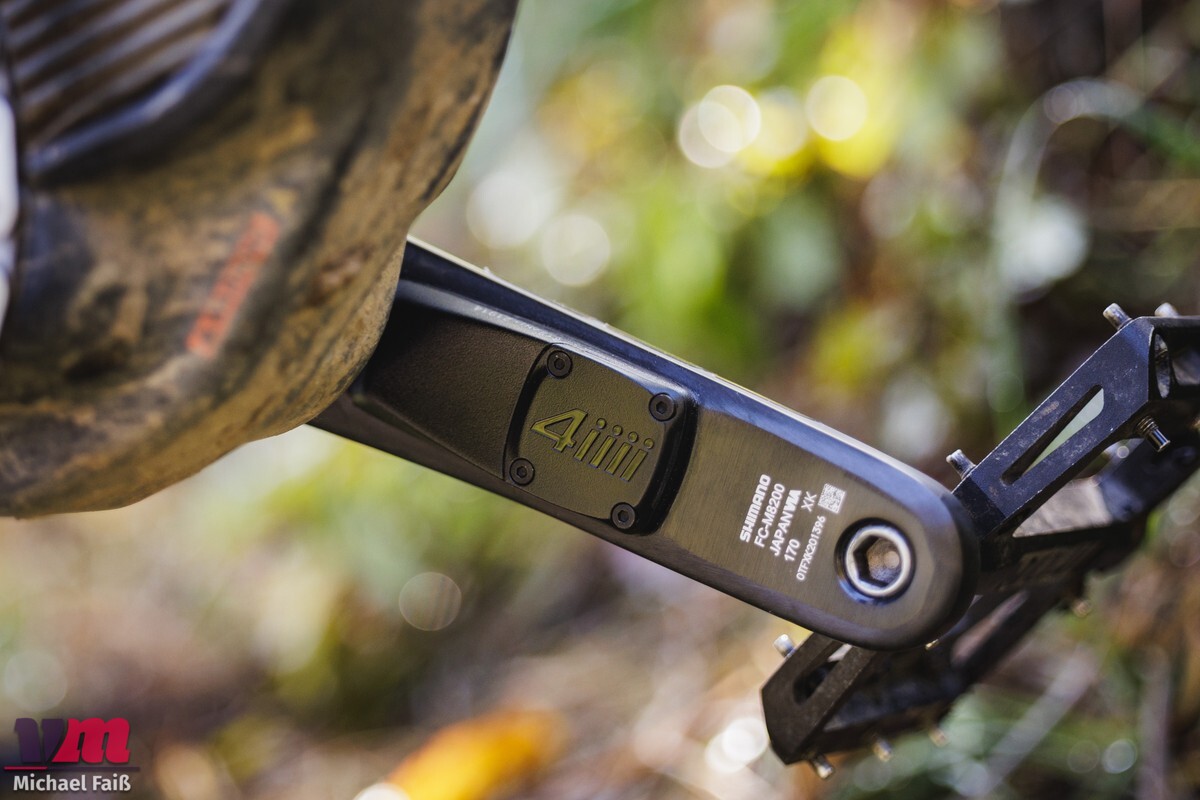
Test / Guide: The 4iiii Precision 3+ is a power meter that, in its MTB version, fills a gap for Shimano e-mountain bikes: While the EP8, EP6, and EP801 drive units measure rider power output, they don't transmit it externally. Therefore, anyone wanting to train on an e-MTB and see their wattage needs to retrofit a power meter. We examined how well this works with the 4iiii power meter crankset – and where its limitations lie.
All information at a glance
- Single-sided power meter, compatible with Shimano Hollowtech II cranks or Shimano mid-drive motors (EP8, EP6, EP801)
- Solves the problem that Shimano EP8, EP6 and EP801 do not output their performance data to bike computers.
- Very flat measuring unit – good for the limited clearance on the chainstay
- MTB crank arms are currently only available in lengths of 170 mm and above.
Power measurement on e-MTBs – why?
Power meters are not a new technology. They've long been commonplace on road bikes, gravel bikes, and increasingly on mountain bikes; they come in single-sided and double-sided versions, and we've already explained how they work in detail in a previous article . However, the topic is significantly less prevalent on e-mountain bikes. So the obvious question is: why would anyone want to measure their power output specifically on a bike with a motor?
The answer lies in the developments of recent years. E-mountain bikes were long primarily aimed at riders who didn't want to exert themselves too much – and that's still part of the target group today. But now there are all those who want to ride more trails in less time: people under time pressure who want to concentrate on the descent. So now even very fit athletes are riding e-MTBs, and many of them want to train on the bike. A modern e-MTB is actually ideally suited for this, because every drive system needs to measure the rider's effort in order to provide appropriate assistance.
The problem with Shimano EP8, EP6 and EP801
This is precisely where the problem begins. The widely used Shimano EP8, EP6, and EP801 motors are found in tens of thousands of e-mountain bikes worldwide and feature integrated power measurement – but they don't communicate this data externally. Users of Garmin, Wahoo, and similar devices won't see or record their own power input. Watt-based training control? Forget it. This has long been a source of frustration for ambitious riders. It seems highly unlikely that Shimano will add this functionality so many years after the motors were launched.
Retrofitting a power meter to an e-MTB isn't so easy. One option is power meter pedals, which can generally be attached to any crankset. However, in our research, we only found manufacturers for mountain bikes that use the SPD system. While this clipless system is widespread, it's not the right choice for everyone: those who use flat pedals or a different clipless system like Crankbrothers are simply out of luck when it comes to power meter pedals.
Power measurement via the crank arm
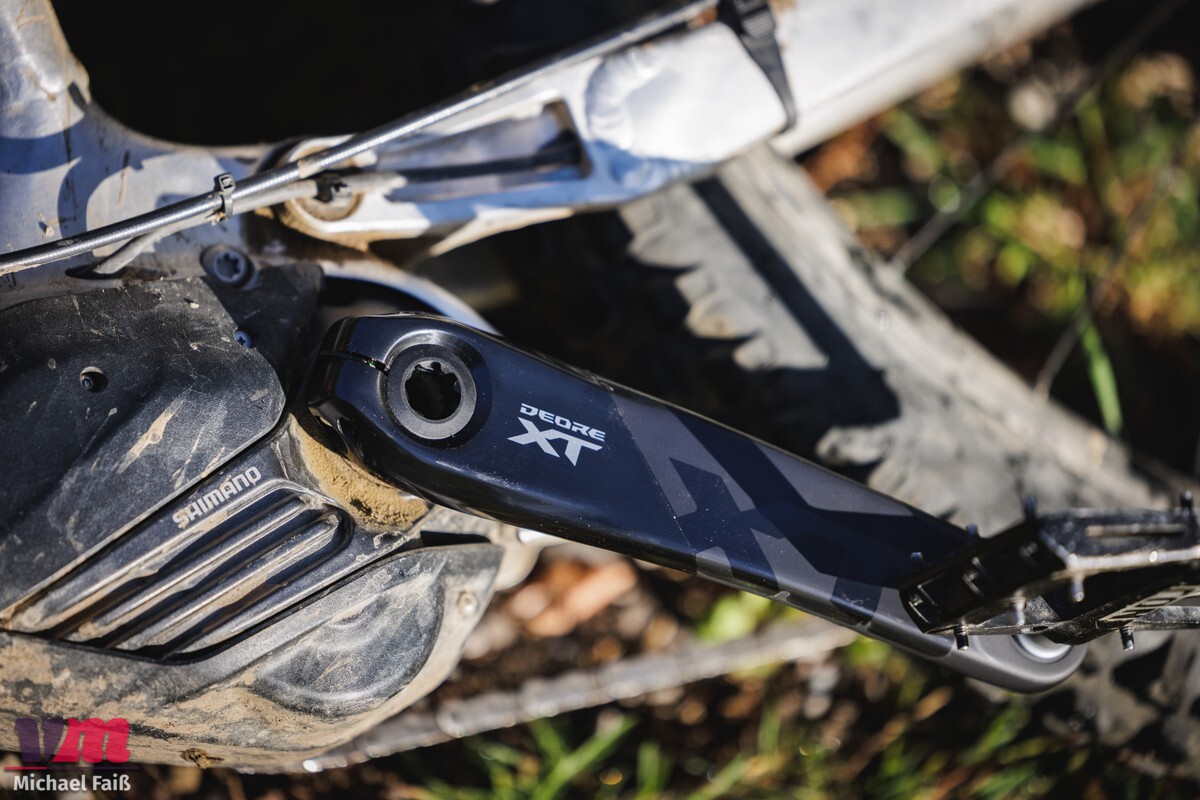
The measurement remains in the crank arm. Conveniently, Shimano motors use the same axle mount as Shimano's established Hollowtech II cranks. If you choose a single-sided power meter and mount it on the non-drive side, you can install anything there that also fits a standard Shimano Hollowtech II crank.
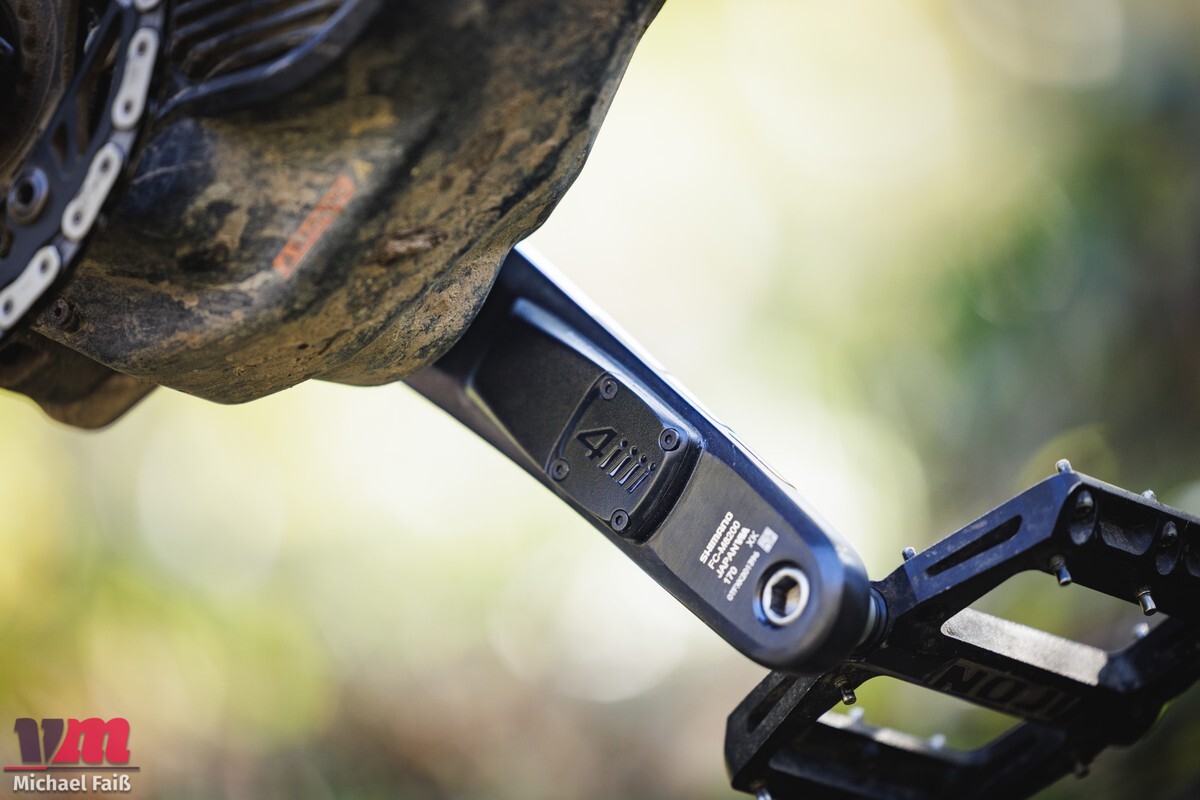
There is one limitation, however: With all manufacturers, the measuring technology is housed in a small box on the inside of the crank arm, containing strain gauges, electronics, and a wireless module. If this box is too thick, the crank arm won't clear the chainstay. This is where the 4iiii Precision 3+ shines: At around 5 millimeters thick, the unit is very low-profile, so clearance issues are unlikely on most e-MTBs. Nevertheless, you should still double-check the measurements – the 4iiii website provides a template and instructions on how to correctly measure your own bike.
Price and classification
The price advantage compared to power meter pedals is another argument in favor of the crank-based solution. Depending on the model, the 4iiii Precision 3+ costs around 300 to 400 euros for a single-sided measurement. That's still a lot of money, but for retrofitting an e-MTB, it's the only significant investment – and for many, the only practical option.
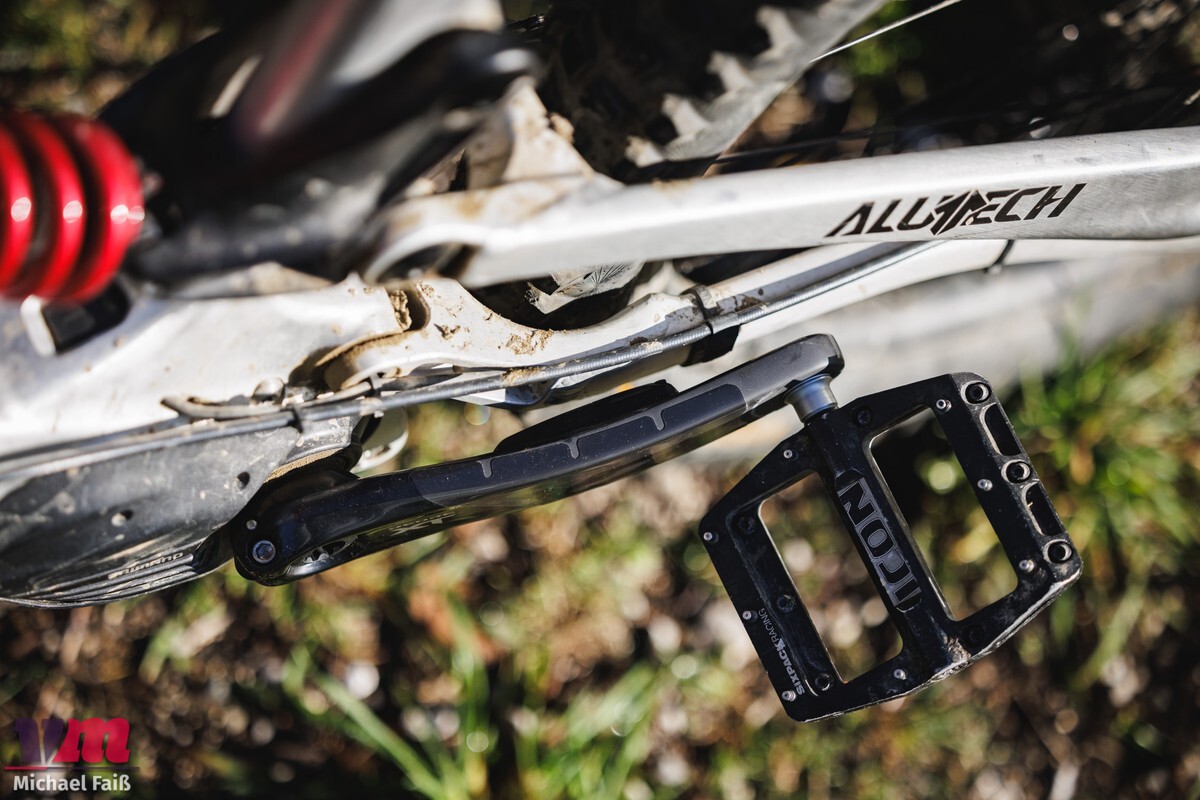
One small task remains: Since the crank arm on the drive side remains the original e-bike arm, you have to make sure the lengths match. And this is precisely where a problem lies: MTB cranks are currently only available from 170 millimeters upwards. For a modern e-mountain bike, that's almost too long; 165 millimeters, as offered by 4iiii for some road and gravel bike cranks, would be the sensible minimum.
4iiii Precision 3+ review: How it works on the Shimano e-MTB
We tested the retrofit – and the result is pleasingly straightforward. Installation is plug and play; the crank arm is installed in just a few minutes, and afterwards everything works exactly like a normal crank. Connecting to the bike computer, whether Garmin, Hammerhead, or another device, worked without any problems.
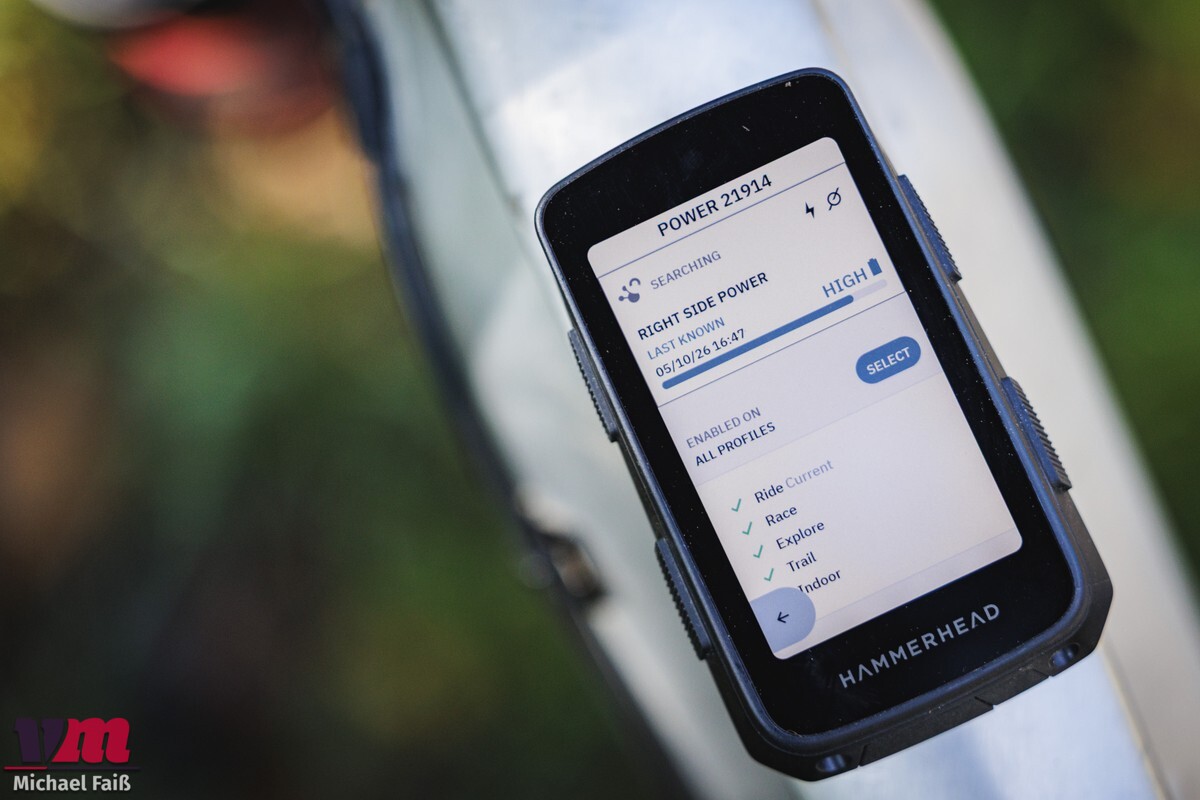
The display now shows not only the usual data provided by the e-bike – such as the battery charge level – but also the rider's own wattage. After the ride, this data is transferred to the training app as usual and can be analyzed. This is precisely where the effort pays off for ambitious riders: the e-MTB becomes a bike on which structured training is possible.
Who is the 4iiii Precision 3+ suitable for?
From our experience and online discussions, we know that many e-MTB riders are looking for exactly this kind of solution. Anyone wanting to retrofit a power meter to a Shimano e-mountain bike will find a functional, relatively affordable, and, most importantly, pedal-independent solution in the 4iiii cranks – a real advantage for those who don't want to be tied to SPD.
The limitation on crank arm length remains the only significant drawback. Those who can live with 170 millimeters, or already ride with that length, have a viable option. Those who prefer shorter cranks will have to wait a little longer. And in any case, it's essential to check the chainstay clearance before buying, even though the low-profile 4iiii Precision 3+ has historically been known to have few issues in this regard.

