


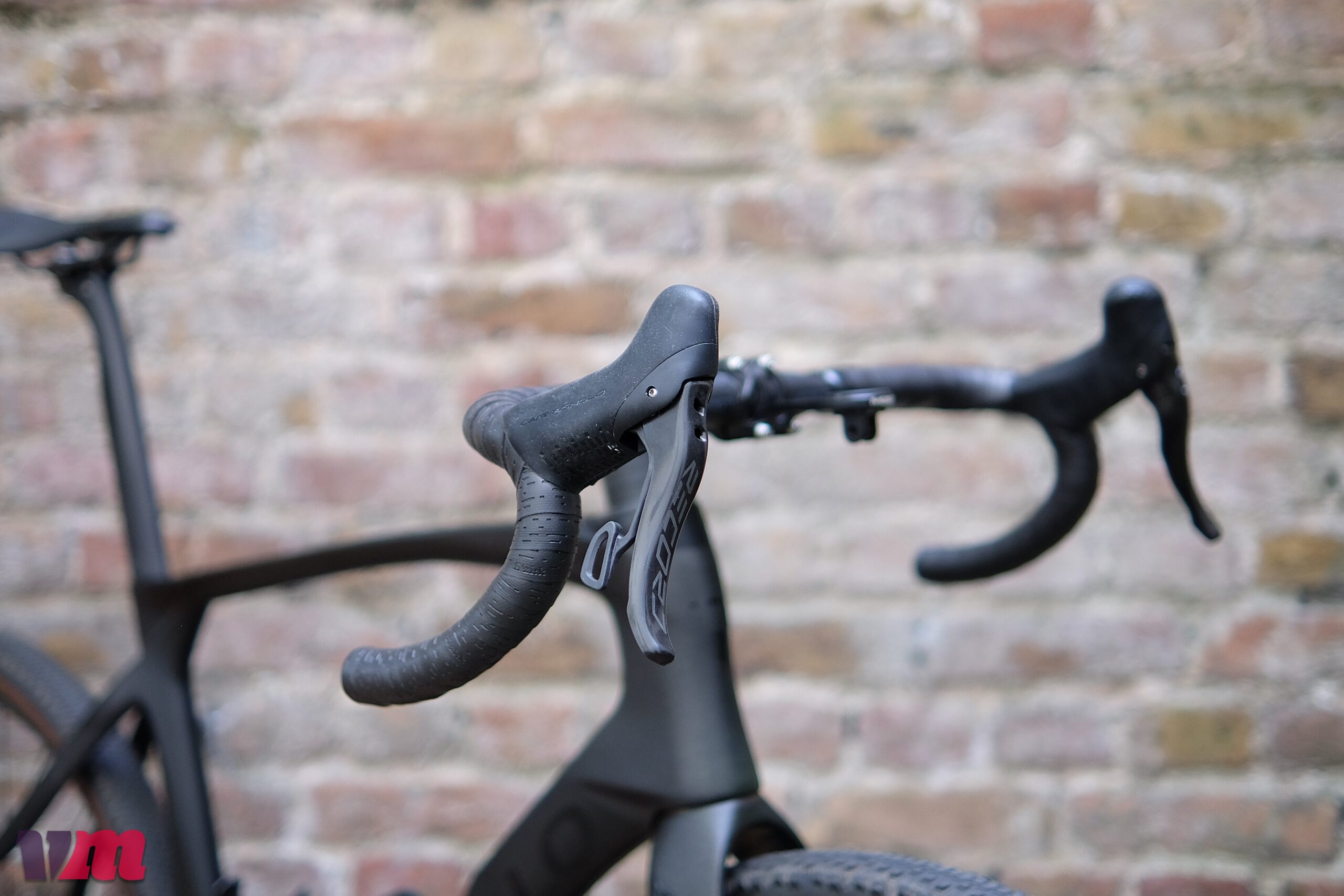
Campagnolo Record X Gravel Groupset: Exactly six years ago, Campagnolo achieved a sensation: With the Ekar, the Italians launched their first component groupset for gravel bikes, which was also the very first mechanical drivetrain with 13 speeds . At that time, the mechanical gravel groupsets of their competitors were still limited to eleven speeds. With closely spaced cassette sprockets and precise shifting, the new technology was an instant success and was well received by the market: Campagnolo estimates that up to 60.000 units of the groupset were sold across Europe.
With the Ekar, mechanical circuits appear to have reached their final form.
However, this new development also represented an endpoint. While the Ekar functioned quite well, it required precise adjustment and occasional fine-tuning. This demonstrated that mechanical systems with 13 gear ratios had reached their limits; in terms of shifting precision and maintenance, the groupset was inherently inferior to electronic gear shifters.
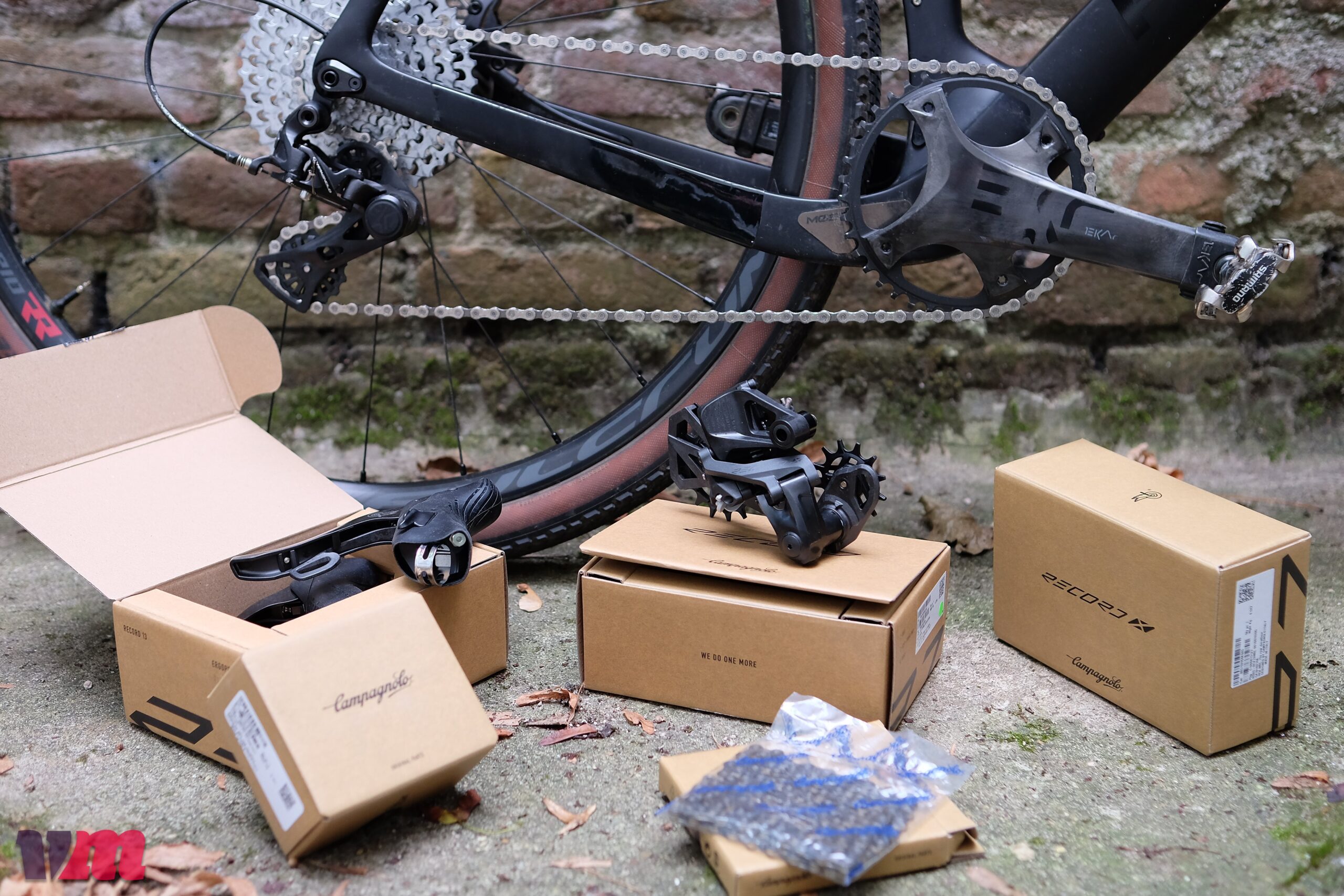
The Campagnolo Super Record X, introduced in autumn 2025, provided a solution – but with a complete price tag exceeding €3.300, it was only for well-heeled gravel enthusiasts. Functionally identical, visually almost indistinguishable from the expensive top-of-the-line groupset, and around €1.200 cheaper, is the Campagnolo Record X, which the brand presented in spring 2026. This groupset, or rather its individual components, are now slowly becoming available on the market – and this might pique the interest of all those who own a gravel bike with the mechanical Campagnolo Ekar groupset. Is it possible to combine parts of the mechanical groupset with the new electronic components?
Campagnolo Record X: the highlights
- Electronic 1x13 groupset for gravel bikes
- Can be combined with components of the Campagnolo Ekar.
- Components required for the conversion are available for approximately 900 euros (plus approximately 40 euros for the venting kit).
Velomotion tested it, and we can confirm: It works and isn't even terribly expensive. Those who limit themselves to the minimum required new parts will need to invest around 900 euros, based on current market prices, to convert a mechanical Ekar to an electronic Record X. The process isn't particularly complicated, especially since, thanks to the functionality of the Campagnolo levers, no work needs to be done on the brake system.
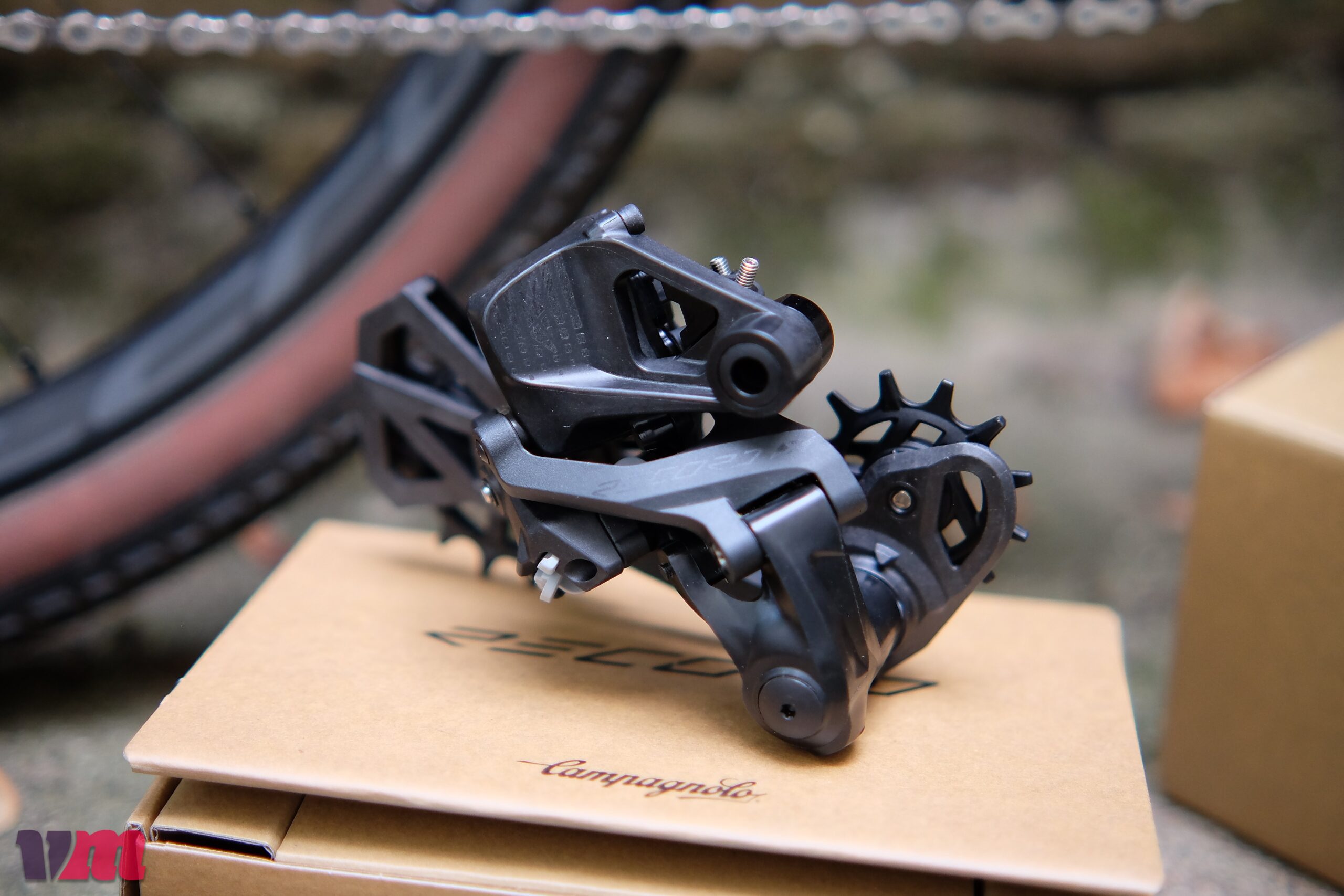
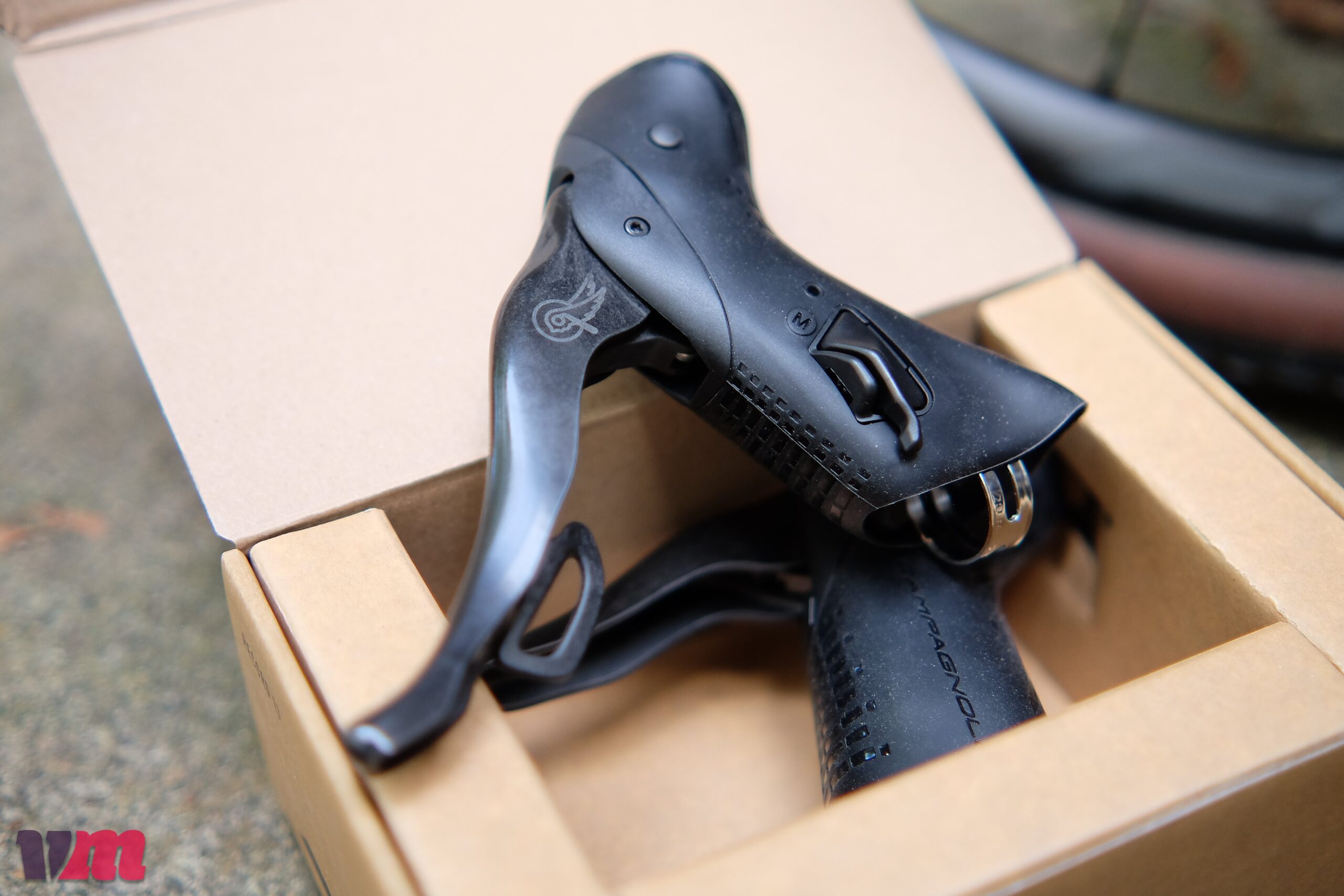
Upgrading from Ekar to Record X: at 940 euros, not too expensive.
What components are needed for the conversion? First, of course, the new Record X rear derailleur, which is available from around €340 – plus the battery, which costs an additional €96. Next comes the lever set, consisting of a right Ergopower shifter with electronic shifting (around €250) and a left brake lever (around €160) – after all, you don't want to be holding two differently shaped levers. You'll also need a new chain (around €55), as it needs to be longer for the electronic shifting system, and finally, a brake bleed kit. All the individual parts together can currently be ordered from the usual online retailers for around €900 (plus €40 for the bleed kit). For comparison: The corresponding components for the SRAM Force XPLR cost around €800.
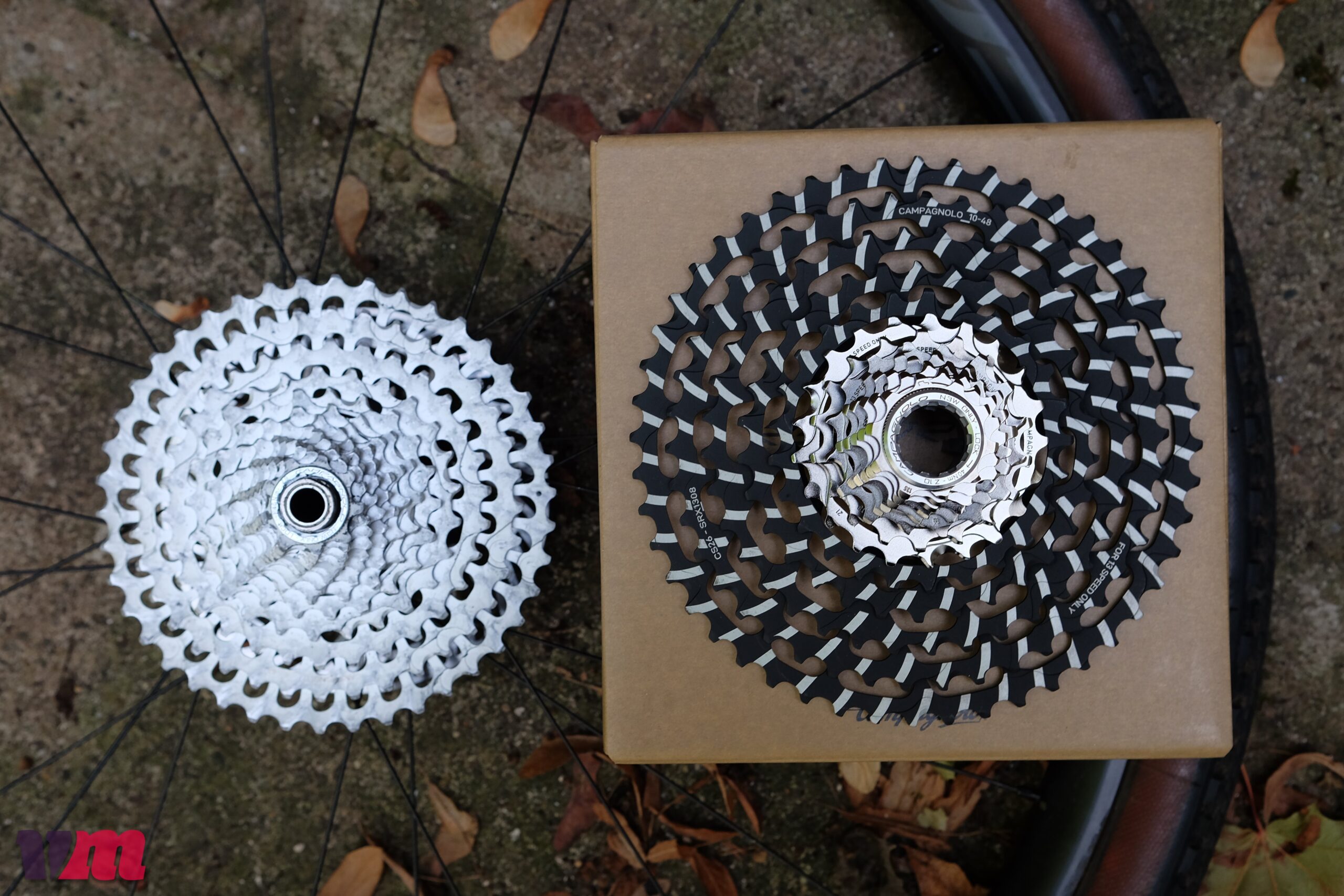
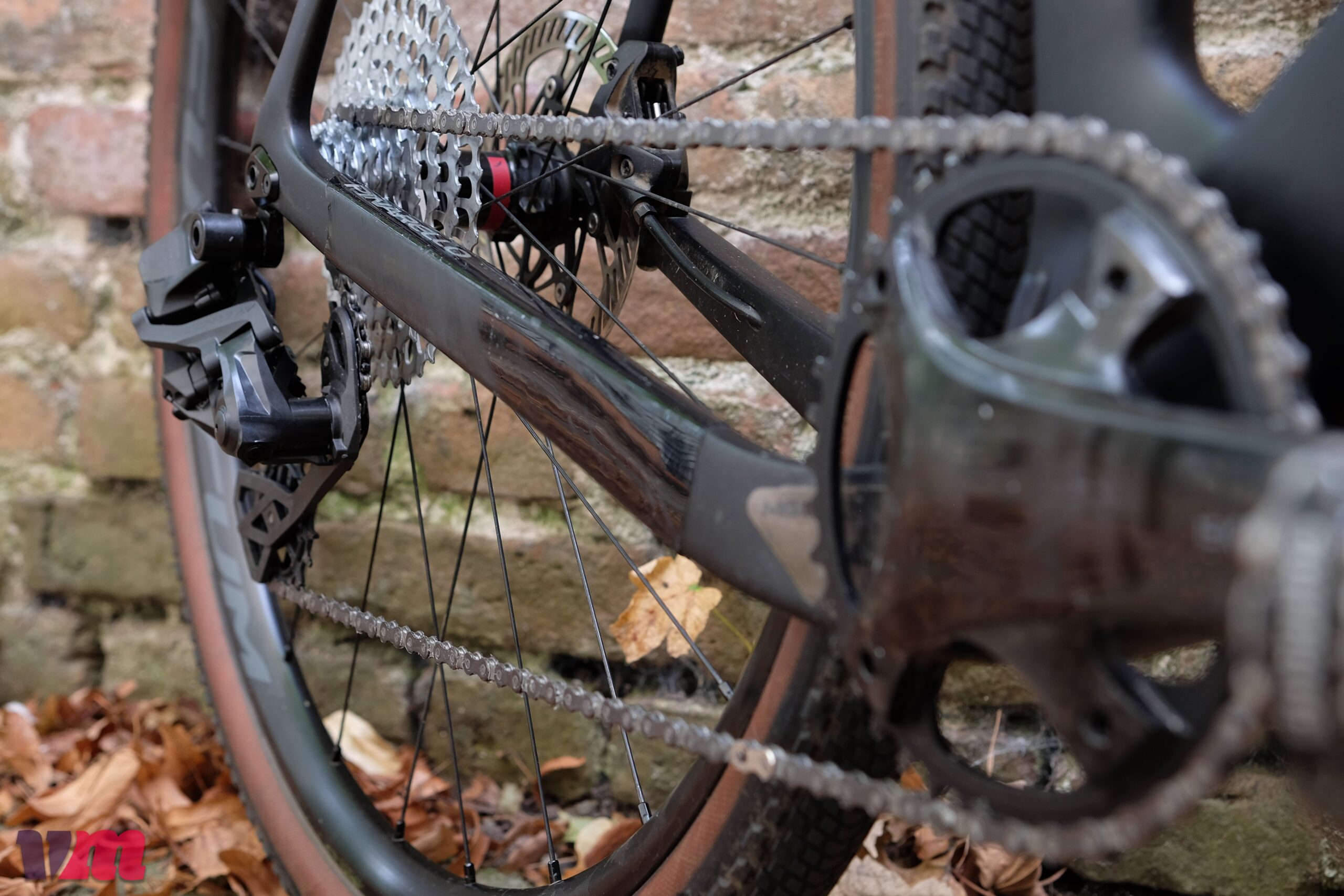
The Ekar cassette can be reused if it's not too worn to accommodate a new chain. The crankset can also be left on the bike, as well as the brake calipers and hoses. The hose connection to the master cylinder, which is located in the lever body, is made via a banjo fitting on both the Ekar and Record levers. This is a ring-shaped end piece on the hose that is secured to the master cylinder with a hollow bolt. Relocating the hose is therefore possible, although Campagnolo recommends a different approach due to the delicate threads at the connection point: the Record lever's master cylinder is equipped with a short piece of hose that terminates in a hose fitting. The old brake hose can be attached here after being shortened by the length of the hose on the new lever. You will also need a banjo fitting, insert pin, and olive.
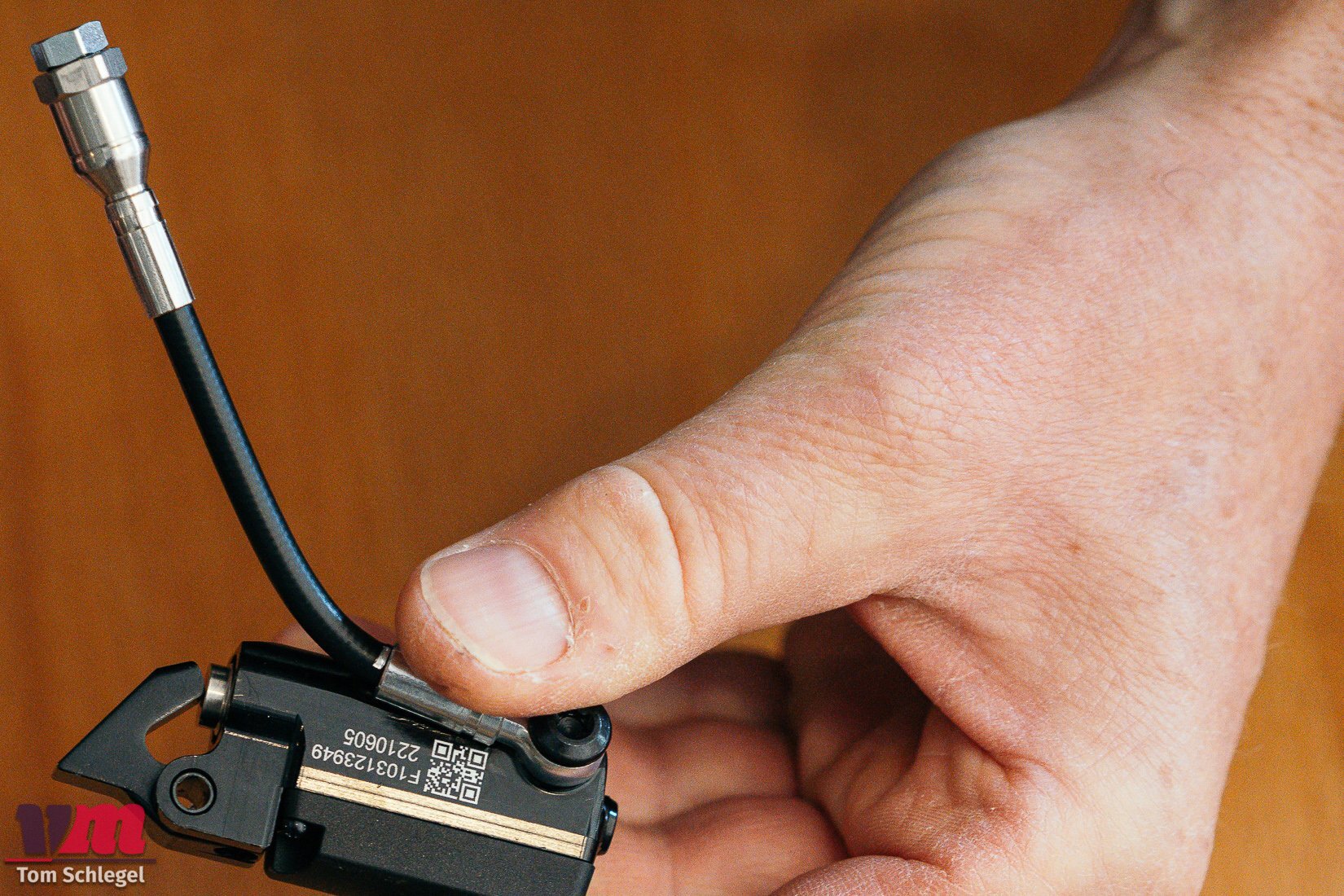
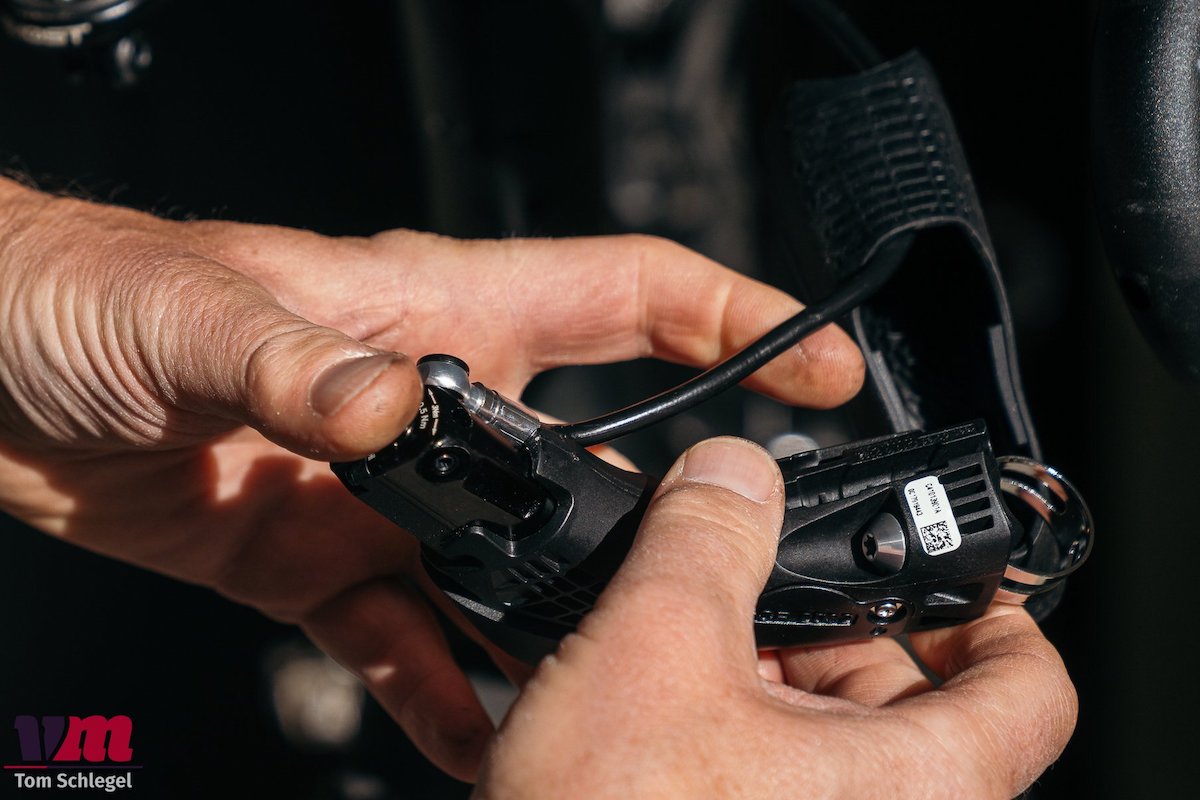
Connecting and bleeding the brake system is not for amateurs.
Both options require bleeding the brake system, which, in addition to a bleeding kit, naturally demands a certain level of expertise. Therefore, before starting the work, you should critically assess your own abilities – and consult a professional if necessary.
There's little to say about the derailleur's installation. As is typical for mechanical systems, there are adjustment screws for the lateral range of motion, as well as the B-screw, which regulates the distance between the upper pulley wheel and the cassette. The individual shift points are determined starting from the sixth sprocket from the bottom, with each gear allowing for separate fine-tuning. Even if you continue using the Ekar cassette – a 9-42 in the case of our test bike – a longer chain is required; for a 10-48 cassette, the chain needs to be even longer.
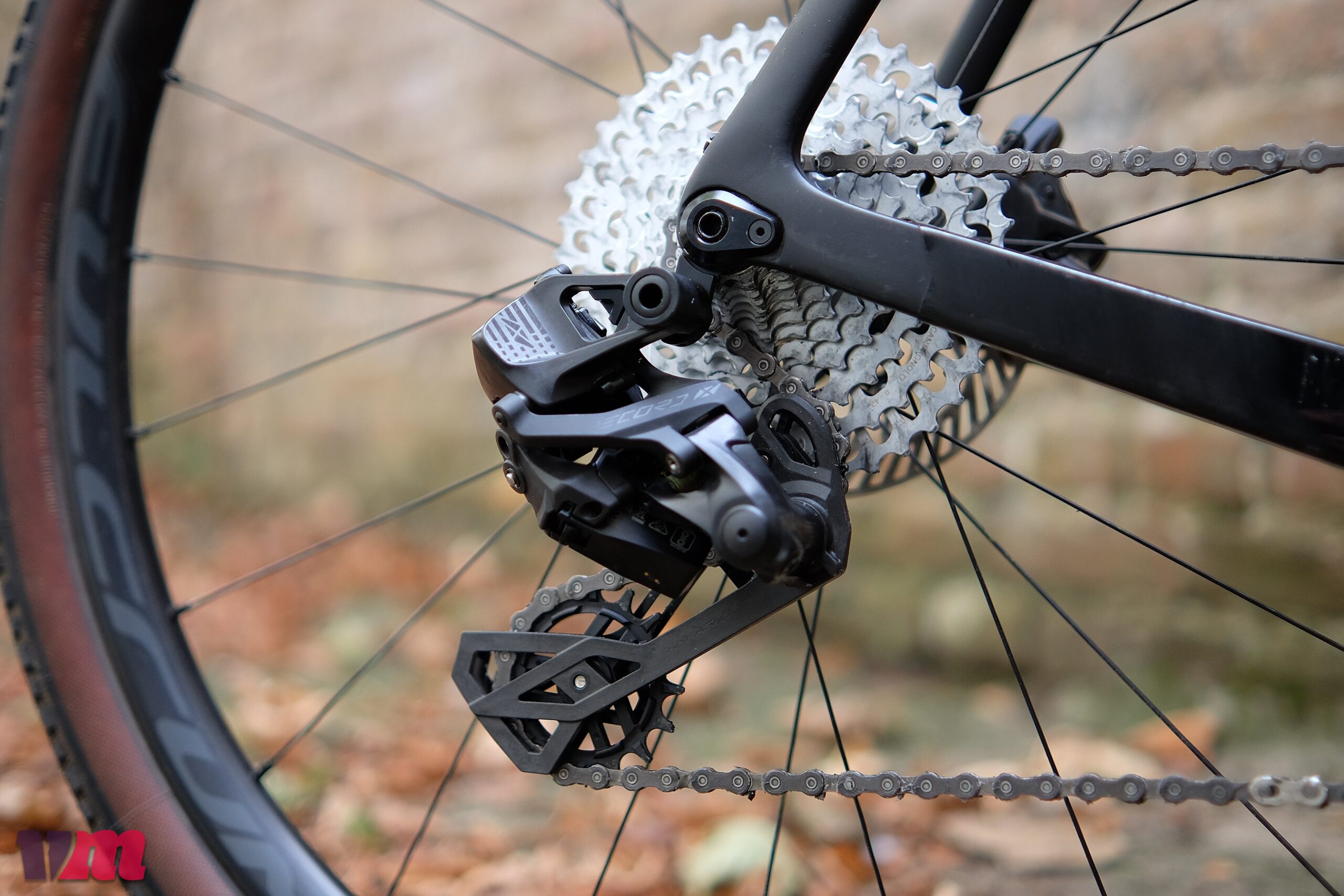
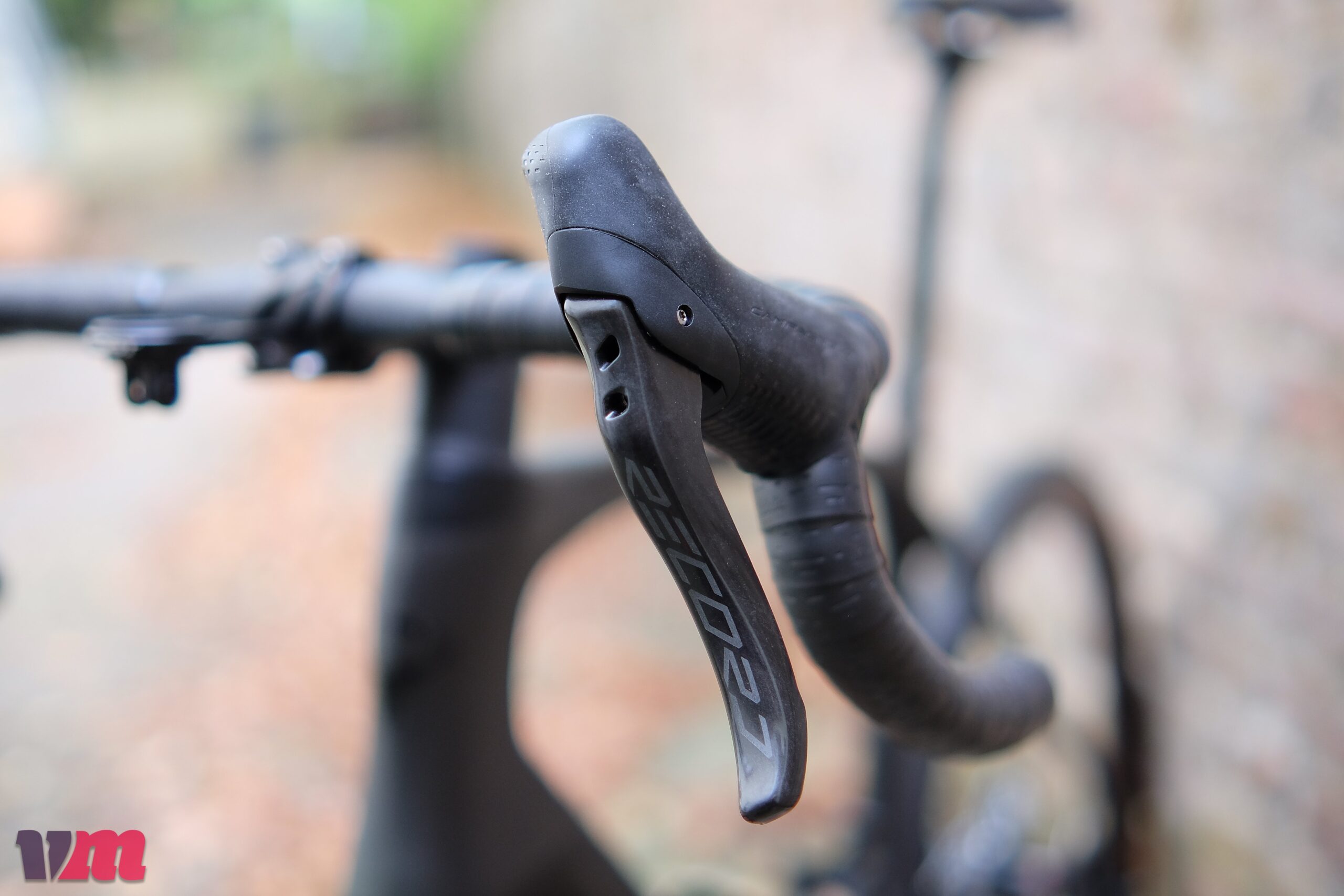
The performance of Campagnolo's electronic gravel shifting is superb. Even though it uses the older Ekar cassette, gear changes are quick and smooth; with the revised tooth profile of the Record cassette, shifting might be even smoother. Anyone switching from the Ekar (where the thumb shifter required a fair amount of force for upshifting, while shifting to the easier gears required a delicate touch to avoid skipping a gear) can look forward to an unparalleled level of shifting comfort and precision.
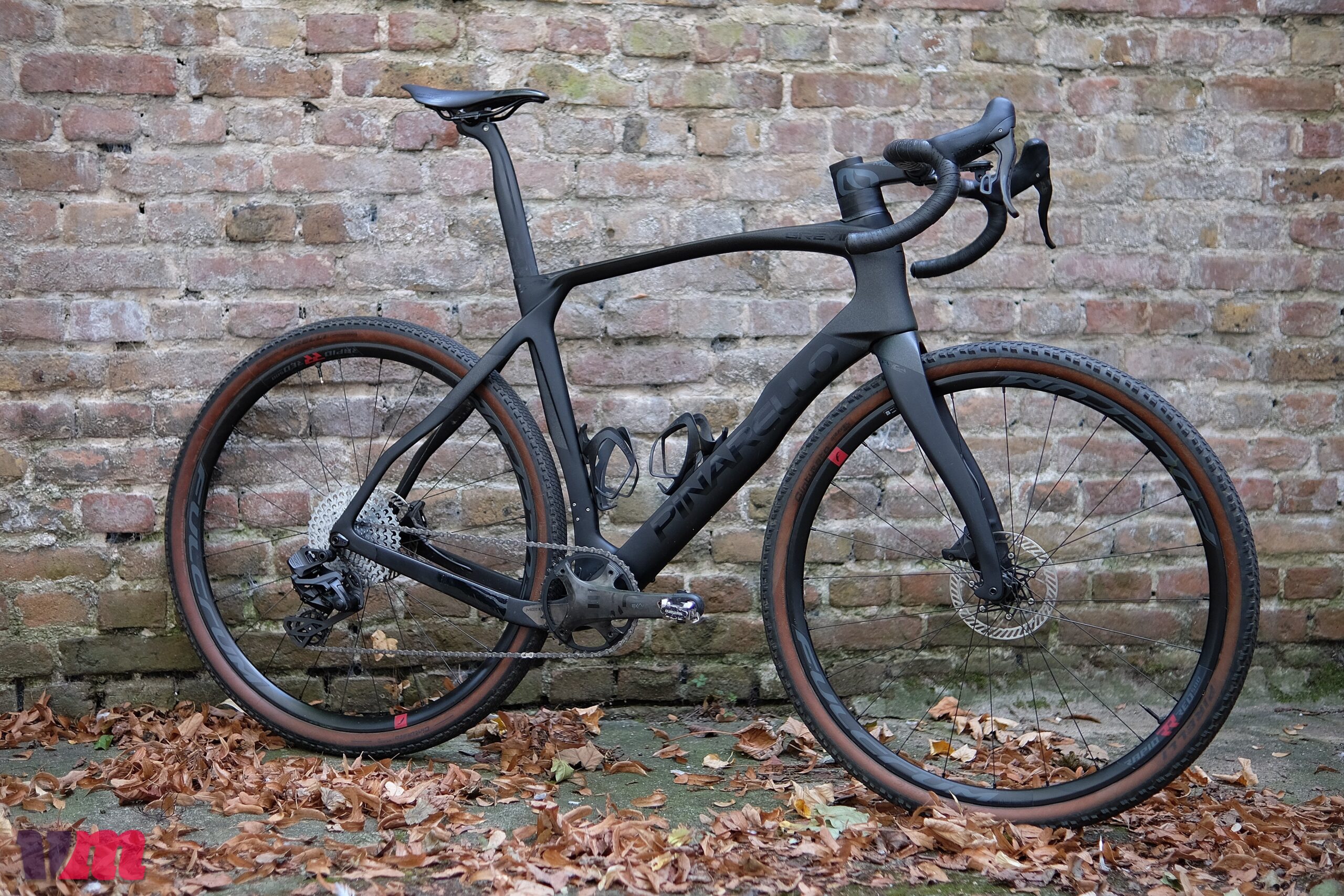
The Campagnolo Record X gearing: closely spaced and broadly positioned.
The gear ratios remain extremely impressive, with Campagnolo offering only two options since the Super Record X: 9-42 (as with the Ekar) and 10-48. The former features six sprockets with single-tooth increments, the latter five. For comparison, SRAM's 13-speed 10-46 cassette has four sprockets with single-tooth increments; Shimano's narrowest 1x12 cassette (10-45) has no single single-tooth increments. Campagnolo thus offers both the widest and closest-spaced gravel cassette on the market, which also speaks in favor of the new electronic groupset.
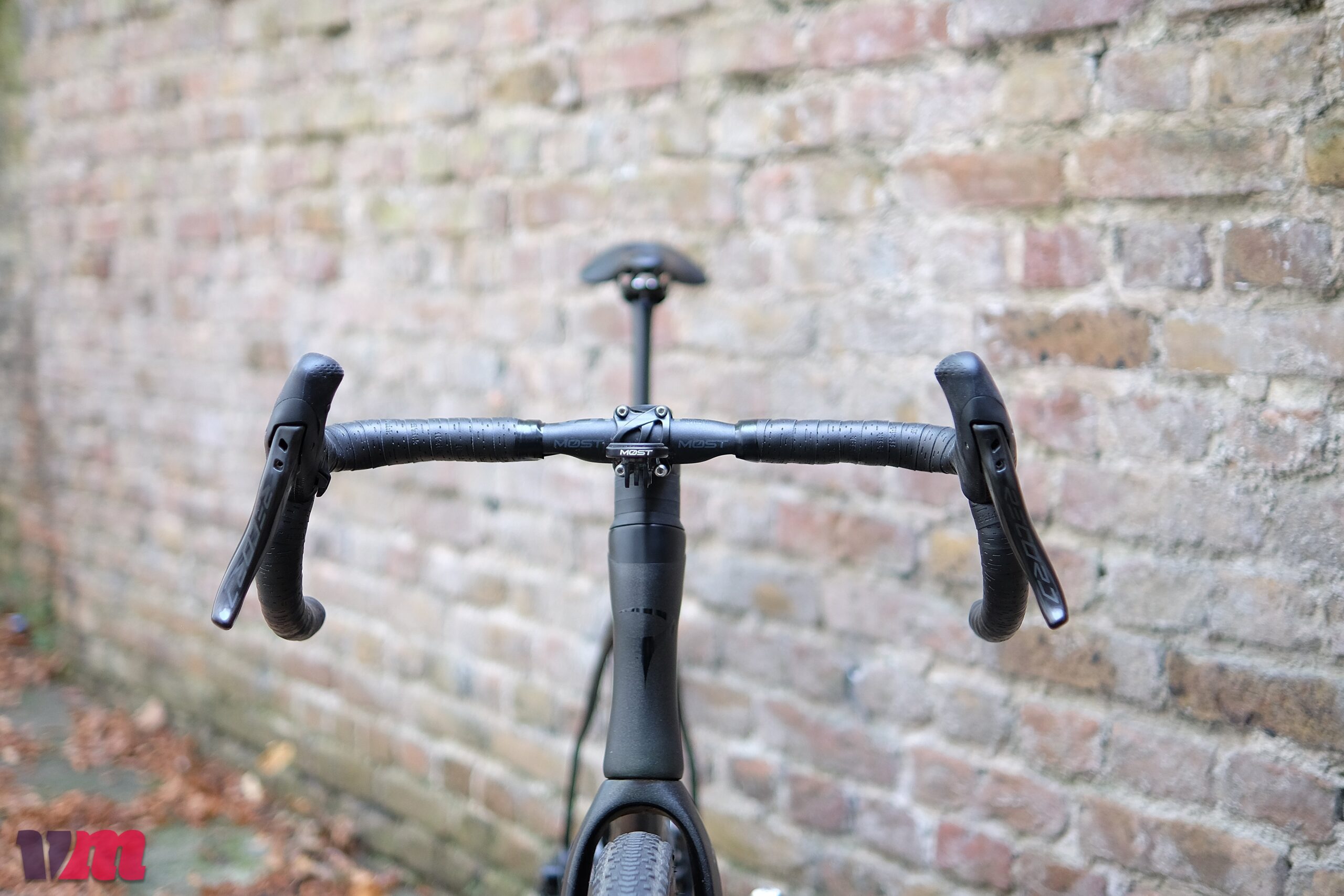
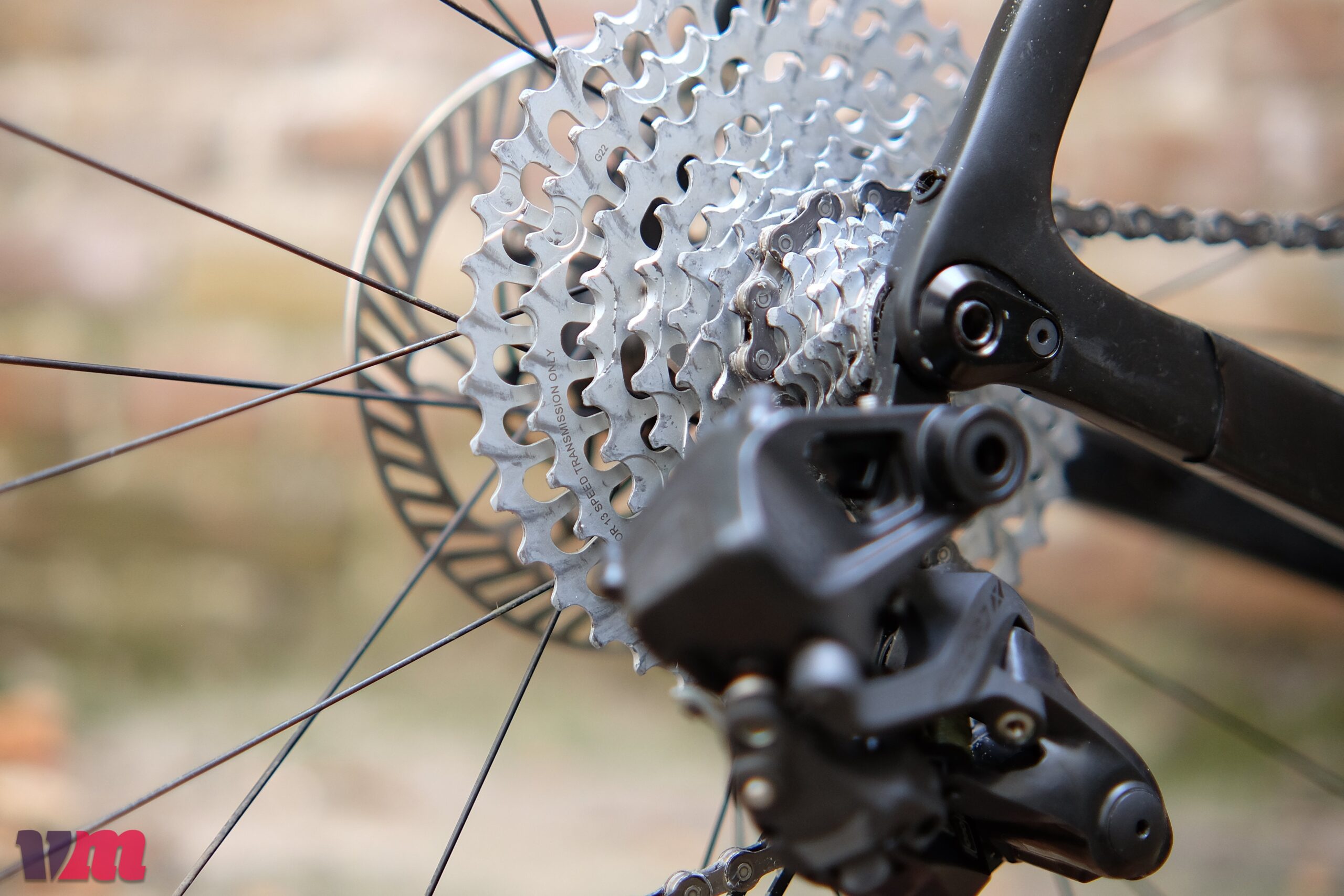
Campagnolo Record X: State-of-the-art technology even for frames without UDH
Sure, in the gravel scene, SRAM currently sets the standard with its XPLR system. However, this can only be mounted on frames with a UDH rear triangle, and this standard has only been available on drop-bar bikes for about two years. Anyone with an older model will have to consider something else – and for an Ekar bike, that could mean the upgrade described above, or for a bike with different components, perhaps a complete switch to Campagnolo Record X. That wouldn't be prohibitively expensive either: with a recommended retail price of around €2.100, the groupset is only slightly more expensive than the SRAM Force XPLR, and street prices should settle at the same level as the US groupset.
Opting for the new Campagnolo Record X is definitely not a compromise – now you just have to be patient until the new components are widely available in stores. For frames with a conventional rear dropout, the groupset from the traditional Italian manufacturer is currently the most technically advanced option; it's quite possible, then, that interest in the successor to the Ekar will soon increase rapidly.